Creating Through Collaboration
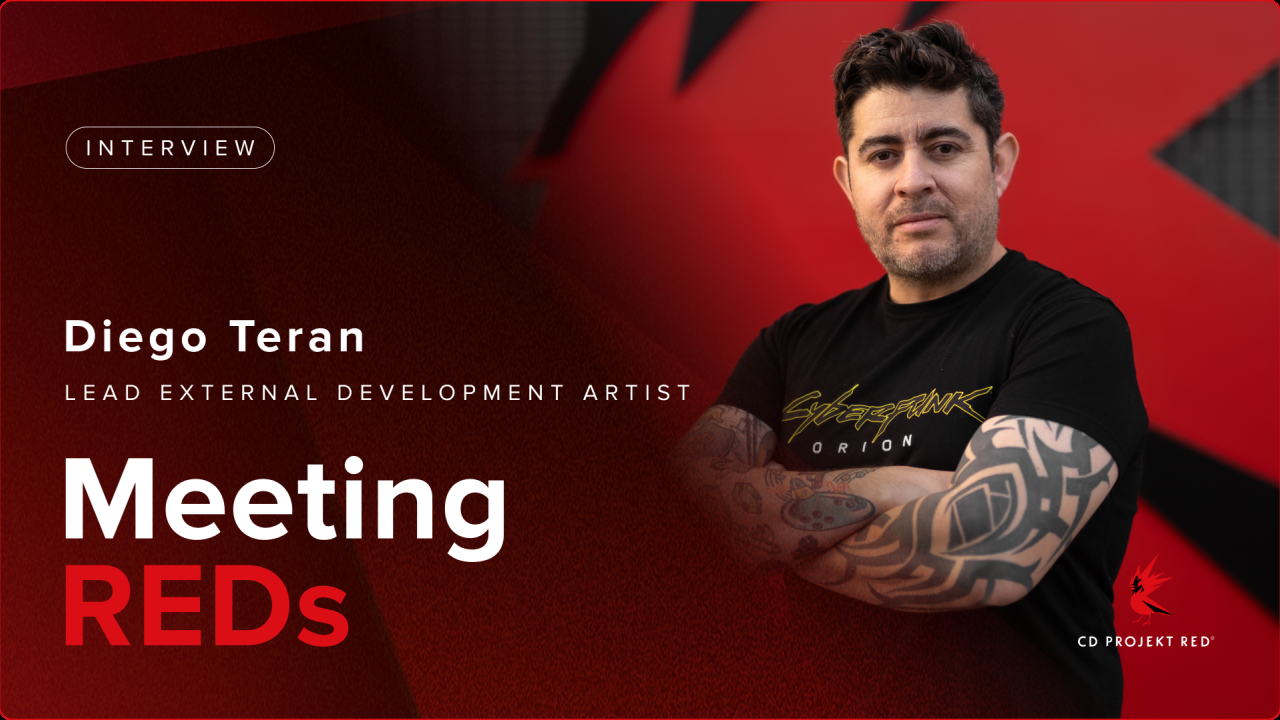
Our Lead External Development Artist Diego Teran relocated to our Boston Hub with his family in 2025. With more than a decade of experience in game dev, learn how he collaborates with teams both internal and external to create the best possible work.
What do you do as Lead External Development Artist?
I manage the team that reviews work from external partners. Our client might be, for example, our own Environment team, and they say, “Hey, we need a table.” So we collaborate together, figure out what the table should look like and what size and height it should be, then create a brief. Then we go to an external partner and say, “Make me a table please,” and after discussing it with them, we eventually get it back and review it. That’s my team’s responsibility. We review everything, making sure the table looks right and matches the specifications we gave, then provide feedback and work with the partner until it’s perfect. We can then go back to the Environment team and say, “Hey, We hope you're happy with this.” So overall, my job is to oversee the quality, ensure communication is clear, and make sure both the internal and external teams are satisfied with the work. And I used a table as an example, but this can be any asset in a game.
How much consideration goes into each individual game asset?
A lot. After all that initial work I talked about, we might get back 10 different concepts. Those concepts then go for review, and as an example, our Environment Art Director might say, “I like this corner, but I don't like that corner.” We feed that back, get new concepts, and go through this multi-phase revision of a single asset again and again until we have a perfect concept. Then, once this is done and the asset goes through our team's process and then into the game world, you need to make sure it fits with everything else. I might notice that when I put a chair under the table, the chair doesn't go all the way in because the legs are in the way. That kind of thing happens, and we start over, because we want everything to be of the highest quality and make sense in the world. Because it’s when things don’t fit perfectly that the player notices and loses immersion.
Has this work changed over the years?
External development art has been around for a long time. It used to be more commonly called outsourcing. Back when I started in the industry about 10 years ago, there was a very clear separation between internal and external. I would send the table to some artist somewhere in the world, but I didn’t know who. I knew the company, but I didn’t know the artist. So I’d send the request, and then somebody would get back to me and say, “Here's your table.” That was it. There was zero other involvement apart from the usual review process. But external development has been getting bigger and bigger each year, and this caution around sharing with external artists is changing. When I became a lead, I tried to change some of those things. And when I started working at CD PROJEKT RED, I said I wanted to work with them closely as trusted partners.
Does increasing external involvement improve the work?
Definitely. I want these artists to be excited about what they're working on, right? I want them to talk to my team if they have any questions and same with my team to theirs. I want them to be proactive and find sources and inspiration if they need to by looking at the Art Bible, so they can see not only what they're making specifically, but what we’re making together. And instead of just knowing what company they’re from, I want to know their names. I want to see their portfolios. Having this really close relationship, talking almost every day, is much better for collaboration. And it’s just a cool thing to do!
Does your team create art or just review external work?
Similar to the internal and external divide, this has changed a lot over the years, at least for me. For a while, all I was doing was reviewing, but that’s the job, right? So sure. But I noticed I was falling behind on knowing what I needed to do as an artist. Yes, I was looking at art, but I wasn't actually creating any. An artist would ask me a question that I didn’t know the answer to, or I didn't even know a certain feature existed! So I introduced an 80%, 20% rule for my team. 80% of the time is spent reviewing art, and 20% is just being an artist. They should still know the programs and still create art themselves. So when we have multiple assets planned to be sent out, my team can choose one they would like to create themselves. This helps ensure they remain artists, not just artists who review art.
What does an artist need to pursue a career in external reviewing?
It can be very difficult to find somebody who’s a really good artist and tell them they’re not going to make that much art. But when somebody is a Character Artist they do character work, when they’re an Environment Artist they do environment work, and Weapon Artists do weapons. For us, even though we do have some discipline separation, the majority of people we hire are generalists who can switch between different disciplines. So in this team you get to work with vehicles, characters, weapons, and everything else. Finding someone to join our team usually means finding an artist who can pick up any discipline at any point and switch between different workflows.
What was relocating to CD PROJEKT RED’s Boston Hub like?
The company helped me out a lot. I came up from North Carolina, with all our stuff in a truck, plus two dogs, two cats, and two young children. But CD PROJEKT RED made everything as easy as possible. I was flown over and had the chance to look at a few places, and the relocation support let us easily get everything in a truck and make the 18 hour drive up.
What advice would you give someone looking for a job in your field?
For me, somebody who is simply motivated to learn is important. Being technically skilled is one thing, but we also want someone who fits the company culture and has a good, positive attitude. I know a person like that is ready to grow into something even more incredible, instead of coming in with one particular mindset and not being open to change. I like being involved when we do the initial recruitment calls because I genuinely enjoy getting to know people. One piece of advice I always give people preparing for interviews is to think of it as a normal meeting with coworkers, where you’re just chatting and asking questions. And just speak honestly. I always like asking: “If it came down between you and another candidate, what would you tell me to pick you over with the other person?” I tell them it’s not a trick question, I just want to see what they honestly and genuinely think. It’s the best way for us, and them, to know this is a good match.