AnsweRED Podcast Episode 31 — People and Purpose: Shaping Studio Culture [Transcript Included]
![AnsweRED Podcast Episode 31 — People and Purpose: Shaping Studio Culture [Transcript Included]](https://common.cdn.cdpr.app/cdpr/news/main/03c393163707ede7eb317faf34c397d7_q90_1280x720.png)
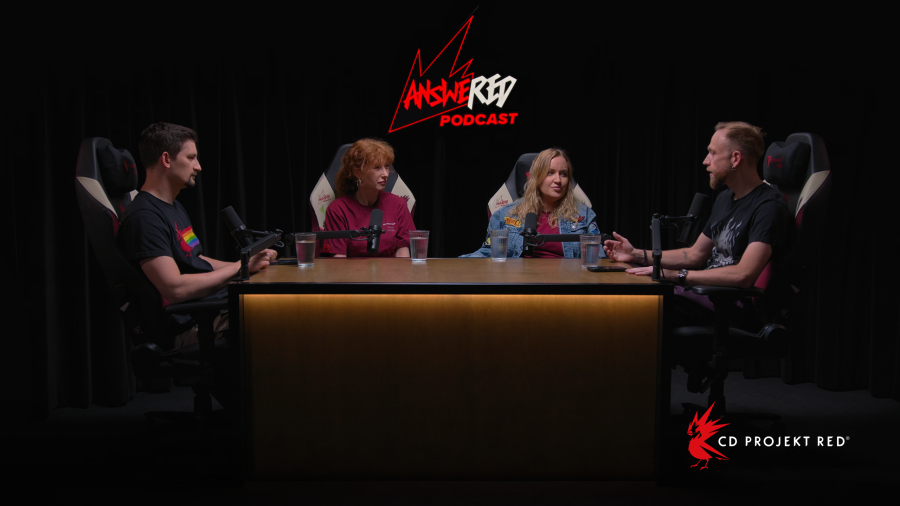
In Episode 31 of AnsweRED Podcast, hosts Paweł Burza, Senior Communication Manager, and Paweł Mielniczuk, Art Director for Project Hadar, sat down with Chief People Officer and Board Member Karolina Radziszewska and VP of People and Culture Marta Fortuna to discuss the role of People & Culture in the game dev industry, how they support leadership growth, the value of diverse perspectives, women building careers in game development, and fostering connections between our Warsaw and Boston teams.
You can listen to or watch the episode now. If you prefer reading, the full transcript of the conversation is waiting for you below. The text has been lightly edited for readability and split into sections for easier navigation.
Intro and guest introduction
Paweł B: Hello and welcome to the AnsweRED Podcast. My name is Paweł Burza and I am joined by my friend and co-host, Paweł Mielniczuk.
Paweł M: Hey everyone. Today we'll be talking about trust, honesty, leadership, and all the things we need to build healthy things. Everything that's in the topic of people and culture in CDPR. We'll be meeting Karolina Radziszewska, the Chief People Officer and Marta Fortuna, VP of HR.
Paweł B: And this episode is going to be about much, much more like Paweł just mentioned, than just HR. But I think our guests will explain it the best. So let's meet them. All right, all right. Cool. Karolina, Marta, officially welcome to the podcast. If you could introduce yourselves to the people listening so they know your voice with the name and then we can get started.
Marta: Sure. Great to be here, guys. Thanks for inviting us.
Paweł B: Of course, we're happy you're here.
Marta: All right, so we are all happy. I'm Marta, I have the privilege to be VP of People and Culture.
Karolina: And I'm Karolina. I'm Chief People Officer for CD PROJEKT RED, and I’ve been here for only 15 months. So I'm relatively new.
Marta: Well, I'm here only for over a decade now.
Paweł B: So we're gonna have a nice conversation here cause we have someone who has been here for a long time and someone who is fairly new, but you're part of the Board. So I think apart from Adam Badowski and Marcin Iwiński, who we had, I think you're the next in line when it comes to the Board member that we had on the podcast. So that's exciting for us. Because it's always cool to get the perspective — because we always talk about games in the sense that, okay, we make revolutionary RPGs and stuff like that. People know our games, but they hardly ever get to see the people behind who have the big vision behind it. Because we always talk with developers, we talk about how games are made from like different perspectives and different departments, but having someone come in and also from both of your perspectives to talk about people and culture in the company, I feel like it's so important because we have developed an incredible culture within CDPR, and I really want to like get into the weeds. So people kind of outside understand how we do these things.
Marta: Sure.
Paweł B: Yeah. That's going to be it. I'm gonna let Paweł throw the first question.
Meet Karolina Radziszewska and Marta Fortuna and find out more about their roles and history at CD PROJEKT RED.
People and culture in CDPR
Paweł M: I guess let's start from a very general picture. So people and culture, what does it really mean in the context of a game development company like ours?
Karolina: Okay, I will start with the self-explanatory “people are people”. And I will start with the fact that in game development, this is so important to recognize that. Because of this creative element in what we do, like we need to somehow embrace the humanity in every single person that comes here. This is not that we shouldn't do it also outside of game development, but here it translates directly into the quality of the work that people are doing. So we need to understand them as individuals, as people, not as resources.
The second part is culture, and this is about the fact that we need to have our way of doing things — like this is probably the easiest and the truest of the definitions of the culture. This is how we do things. What's good, what's not good, what gets rewarded, what gets punished, why we do things in a certain way. And we need to intentionally create it. So people who come here can be the best versions of themselves and consequently can produce the best version of the game that they can possibly produce. So I would underline this humanistic aspect of it, and I would underline this aspect of creating creative freedom that we would like to somehow create for people who are joining us.
Marta: Yeah. To build on that, it's easy or easier to find talented people out there in the market because this is a big industry. There are talented people, definitely. And then throw them all together, right? And just assume that magic happens — and it does not. You have to be very deliberate about the kind of environment you build for them. To your point, to allow them to be creative, but also to collaborate well. And this has been an interesting journey for us as we grow and the complexity, the diversity internally also extrapolates and we need to find ways to still be connected. Right? And then — when we started, I mean, I was not here, but with few people here and then slowly growing, then being over a thousand, those numbers matter. And the environment built here, built in different countries, built in an environment that is now remote work also. And that changes the way we collaborate, we communicate.
So yeah, thinking of how we build it, we do it like every day. Everybody has a part in it. But to what Karolina said, thinking how we shape the way the processes are built — and it seems like not important, but it's there every day. The rituals around that, how we meet, when we meet, when we send a message to each other and so on and so on. And that all shapes it. And what I like about our company is that there is a core that remains like that. Like it was from the moment I started here, it still is there, but then the little tweaks around it are changing constantly and adapting because also the new generation comes in, the new technologies are available to us, ways of communicating. So the culture is a thing that is like, non-stop changing for us. And we try to catch the moments, the opportunities there to shape it into the best version possible.
Paweł B: Yeah, I think a lot of guests that we have always highlight that we kind of thrive in chaos. And I feel like that is something that has stayed with CDPR for a long time. But we're also becoming more structured when it comes to, like you mentioned, the processes, the things that we do, the pipelines, how we do work across teams and stuff like that. So we're also evolving. But like you said, there is this element that is kind of there of like chaos, of craziness, of pushing boundaries and doing things like people wouldn't even imagine. We always like to put the bar high for ourselves, and we kind of have high expectations when it comes to the people joining us. But also when it comes to just the overall culture, having people, like you said, come in from different generations, but also from different countries, bringing their own experience from different companies, which they kind of have seen how other companies operate versus how we operate.
So it's a lot of moving pieces, but there are things which are still the same. And I really like what you said, the thing that human resources really sounds like a disposable resource that you would think that you kind of use and then you throw it, it works. You make a game, done. But it's not. It's like, you need to build a long-lasting culture. And I feel like it's super important. If you take into account the fact that we're working on triple-A RPGs, these are like big projects that span across multiple years, take a lot of money and a lot of resources in terms of like, you know, hard work, determination, all that jazz. And how is it to kind of keep the culture happy and like, have people still want to come into work every day when they know it's going to be stressful? It's going to be a lot of things that need to get done, and somehow everybody's still smiling, everybody's happy. You see people in the corridor, everybody's like, "Yeah, I'm having a great time!" But you're working on the next freaking Witcher game. And it's like, "Yeah, it's all good. It's all fine." So how do we keep that culture sane, let's say?
Karolina: There was one thing that you said that actually reminded me of the metaphor of this culture. When I joined and I saw what's going on here, I was like, oh my God, this is a fractal. So, you know, the fractals are this organized chaos. Like you have all the small things that are coming together and somehow they create a shape that is stable and makes sense. So this is a very fractal culture, I would say. And that's great because it allows all the people who are here to move like electrons, to have this individual feeling of contribution, of meaning, and at the same time to participate in something that gets together. I'm not sure if it's not too metaphorical, what I'm saying.
Paweł B: No, it makes sense.
Marta: I got you. And the point about chaos is very important here. I remember when I started a long time ago, I was kind of stressed by it, like confused. Like it seemed at first that nobody knows what they're doing. There is no structure. And a few months in, I understood that this is not the case. And what was unique in my renewal of motivation here when I started was that we give everyone so much impact and they have a say. And that's the source of the chaos there. Because if we all have something to say, we have different perspectives and they bounce into each other. It seems like it's chaotic, right? But this is the creative process. And whether the conversation is about, say, AC in the room, which is always the hottest topic that we have —
Paweł B: Or the coldest topic, depends.
Marta: Yeah, exactly. Here it is, to my point. Or this is some feature in the game. This is the same magic, what we call magic and sometimes use it sarcastically is exactly that. So then our challenge here is to build process structure and shape it around it, but not to overdo it because then we limit that, and then not leave it completely without some rules around it, because then it will collapse. Right? So that is amazing.
And then for the second ingredient for me, and that is to actually encourage people to take the ownership, right? Because the motivation that we both gain here, regain here, the drive that we see every day, this requires this bold step of, okay, I will risk it. I will say, okay, this is my take, right? And I might be wrong. And you know, people might challenge that and I might feel stupid for a moment there. And then I will learn. And then we will learn as a team from that. And this is something that through the onboarding of all the new people that are joining us in such big numbers every year, we see how they change. How they are realizing, oh, God, this is allowed and this is allowed.
Like my favorite thing from the beginning was when I was told in my onboarding, that here everybody can have a say, even the most junior person. And I was like, right. Everyone says so. And then I ran into, a few weeks later, like Adam Badowski running around and like, "this guy has this idea." And I was like, "What guy?" "Oh, I don't know." "I don't really know him, we talked over coffee," "he's some junior somewhere, but I invited him to this meeting and he will share his perspective." And I'm like, okay, so that was not like, a corporate slogan there. That's the real deal. And, you know, embracing it and understanding it, for us is like the first step to really be able to shape the culture.
Paweł B: Yeah. I think you need to cultivate a space within a company to have people actually feel like they have a say, they feel like what they do matters. But I also feel like it's a sense of belonging, kind of like you mentioned, that if you go to a place where you find people who kind of are on the same wavelength as you are, you understand each other without anything. You feel comfortable enough to actually have a say, to have your own opinion on things and actually start pushing for things that you feel like would be cool, because you have a space in which you feel comfortable. So I think that's super important. So keeping that going is important.
Marta: Yeah. That's all about building teams there, right?
Karolina and Marta explain what “people and culture” really means in the context of a game development company and reveal more about the culture at CD PROJEKT RED.
Cultivating company culture
Paweł M: So we said about diversity. Our teams — to make an RPG game, it takes a lot of people. Like 400 to 600 people from different countries working, some of them in-house, some remotely, different specializations. You have like software developers, artists, back office people, business people. So many different specialties and backgrounds and experience of people. So what are the tools to actually cultivate this culture and make sure that the people we hire can be properly embedded into the system and this creative chaos will have some kind of boundaries?
Karolina: I would start with a shared goal. This is one of the things that brings people together. And actually, this is the strongest possible bond between people when they share the same goal. The second are the rituals, the way we work with each other, the way we shape our identity, the fact that we stand for something, that we represent something, the fact that we share values. I would say that these are the main points. In practice, of course, it translates into many activities, processes, etc. But when you look from the helicopter view, like, let's have a shared goal. We do. We want to make really, really great, meaningful games. On top of that, we have the rituals here. We have the identity that we share. We stand for something, we have values. So that's how we create it.
Marta: Yeah. And for me also to add on to that, the important part is to understand each other's role in the process, right? So every day we work on something very specific. We aim to have it in the best possible version, to deliver something of the highest quality possible. But then this is a part of something bigger. And I like how you started that question because you painted the picture broader than the game dev part, including also the other supporting functions. And this is all like, a big organism that — it's really hard from an individual perspective to understand and see that. And this is a role for us, leaders. Because we do collaborate in this narrower group of the leadership of the company every day together. And this is our role to be able to understand each other, each other's roles, and build those bridges. The rituals that Karolina mentioned, the tools, but also, like, the basics. The basic communication, understanding, and also the learning moments of that, right?
So how we need to be balanced. Where are the bottlenecks? Me waiting for you for five months to deliver on something is way worse than me helping you out in some moment that we can start sooner, etc. And then those things add up into one game. We all want, to Karolina's point, like, the shared goal is bringing to our gamers the most amazing product, right? So to do that, the collaboration is the key. And this again, sounds like a slogan, right? But it's easier said than done. Like really? And we all think that, okay, I know how to do that, right? And then I look at your job and it seems that I know how to do your job as well. And the thing here is that we actually try to change it into an advantage.
Before, in the companies I have been working for, the idea was to set clear boundaries, sort of walls, right? So you won't tell me that I do something wrong. You will focus on your job and you will excel at it, which is great for some companies. For our company, as you asked about specifically for game dev, it's actually better that you take a peek on my side, give me a comment that I will hear and maybe, you know, take into account. And then things start changing and benefiting from the complexity instead of struggling and tripping over it. That's the hope. So we do a little bit of tripping, a little bit of learning, and then we move forward to our shared goals.
Paweł B: Do you feel like it's more difficult now, especially that we're working across multiple projects? We have multiple teams and — or do you feel like there is always, within every team, doesn't matter if it's The Witcher or if it's Cyberpunk, or if it's Hadar, if it's Sirius, or if it's whatever, that there are people there embedded as people who kind of share the culture, so all the cultures are pretty much the same? Or would you say that the cultures within the different teams are a little bit different, but there is one common goal that kind of is like an umbrella that brings it together?
Karolina: There are local variations, I would call it, but there is a core. There is something specific about us all that we share. And when you were talking, I started to reflect on two things. One is that we very intentionally bring people on board who are able to have this open mind and open perspective to actually understand that others are others. It doesn't mean that this is wrong, or this is right. So I'm not talking about some kind of b[__]. This is a necessity for us to actually have this ability to embrace different perspectives. So this is the only way to do something that is as complex as creating and shipping a game. And definitely the more people, the more perspectives, the more interactions — it's getting harder and harder. Are we perfectly organized? F[__] no. Sorry. Are we sure that every single person within the company buys into our values and our way of work? Of course not. But what we need to have are the mechanisms to actually catch it and somehow deal with it. So this is the trick here.
Yeah, and I was also reflecting on my own journey. As I said, only 15 months and I started from the point, okay, this is a super interesting job. My kids love to play The Witcher. Actually, I'm a cool mom now, and I want to keep it that way. But it was still a job, and I got to the point where I was maybe willing to die and kill for, you know, delivering the game. So there is something within the company that really helps us to get together and to understand this goal and to increase our motivation with time instead of getting bored with what's here. And if I were to define it, I don't know what it is, but it's there. I experienced it.
Paweł B: Something special in the air that motivates people.
Marta: Yeah, the passion is contagious. And I've seen how it was changing you, I remember how it changed me. And also like for me, I thought that being a gamer is enough. And then, to your point about complexity, I was so blind, I had no idea how difficult it is to make that game. And I'm still learning. It's wild, really. And again, you asked about like the diversity, complexity of things. How does it change? Is it hard? It's very hard. It's very hard because for us not to miss something crucial and, you know, to not be blinded by my own perspective. I've been here ten years, so I don't have a fresh eye. We don't agree often, we discuss things, and so on and so on. I need that. Karolina needs that as well. So the challenge is higher. But that's why I'm here ten years. I haven't been bored a single day at CDPR. I come to the office and I like the people I meet. And I really like them, like, it's not like politeness. I want to spend time with them here. And I think they're amazing human beings, right? So they inspire me. They p[__] me off sometimes, but again, I feel alive here. And I'm not just doing my job — this is the difference. And I might be, you know, sometimes happy to, to Karolina's point before, like, permanent happiness is not a thing. It can never happen.
And then actually, the controversial point that I want to make is that through struggles, we bond. We don't create the struggles, but this is how the teams come together. Like, okay, the idea, the goal, it sets the ground. Then we see each other, what we bring to the table. But then we struggle where some problems occur. And how we handle that, how we support each other, how we learn from that, again. And how we behave when we actually trip over them. Right? And I mean, the obvious turning point for our company, the Cyberpunk release and everything around it. We've talked about it so much from the higher scale, the high-level scale of the whole company. And when I think of CDPR as an organism, this was the biggest learning opportunity. And the company jumped on that. We were like, "we will never do that again, we will never do those mistakes." So we need to — and it was happening on all the levels. Like the Board was discussing it, the VPs, directors, all the leadership levels, and then all these individual contributors, those teams. And like you before, Biz Dev was thinking, HR was thinking, and all the teams were trying to get something from it to never trip like that again. And this changed our company so much and now we benefit from it. And now we have to never forget it and keep on learning throughout. Less mistakes in future. And that's fascinating.
Karolina: Actually, that was one of the things that brought me to the company because we were discussing with different Board members, me joining the company for a pretty long time. I think it was about a year or something. So we were discussing it and discussing and — what actually made me realize that this is the company that I want to work with were two things. One thing is how the Cyberpunk situation has been handled, what kind of reaction has been to it, because that gave me an understanding that this is a company that actually is willing to look deep into its heart and conclude and act upon it. And the second thing was this... Okay, I will call it passion or drive to quality, for a better word. After meeting all the people in my very, very long discussion slash recruitment process, I realized that all these people are deeply concentrated on delivering something that they believe is good. And I was like, okay, these are the people that I want to work with. These are the people that are inspiring for me. Like, this is not like a commercial endeavor. This is really a creative endeavor. So that was something that definitely brought me on board. And I think that anyone who needs this kind of environment will thrive here.
Paweł B: Well said. I think keeping quality in the back of our heads is always there, but also, like I mentioned before, pushing a little bit the boundaries of what is good enough for us because we always say like, "good enough is not good enough." It needs to be super awesome. And then we're maybe happy with it, but then we move on to the next project and it's like, how can we top ourselves here?
Paweł M: I think it's incredible. It's the most beautiful thing about this company that we are always brave enough to make change, right? It's never following the same path. Every single project is a different story, different things happening, different ways we can try to make things better. And I think it's absolutely fantastic. And it's both in terms of organizing our teams, but also, like you said, with the games, right? So if we are close to release, but we are not happy, what do we do? We change things. You know, we flip the table, because it's not about the date. It's about the quality of the game that we want to make. And this is great.
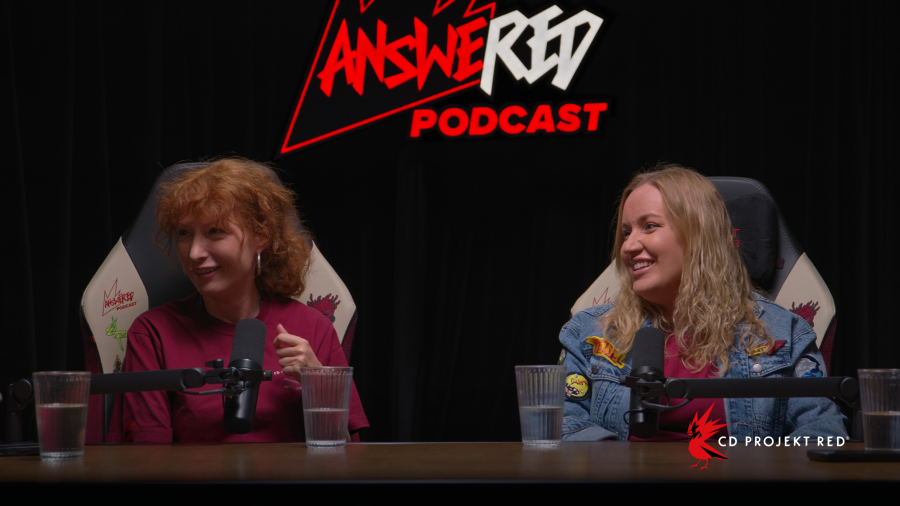
Having a well-defined company culture is one thing—making sure that it works in practice and that every team feels included is quite another. Karolina and Marta explain how company culture is maintained and cultivated at CDPR.
Building leadership
Paweł M: So a lot of this culture, I guess, is part of the leadership of the team to build the teams, to get the right people, to make sure that they all cooperate as a team, because this is like the most important aspect. You also mentioned team-building, working together, sharing experience, also being open for communication with others, like helping them when they need that, etc. So, what kind of leaders do we need in CDPR?
Marta: Yeah. So first, to our point before, we have diverse teams. So there is... generally I would say there is no one box that you need to fill and that those kind of people only will make good leaders here. I don't believe that's ever the case. Teams vary, their needs vary, different phases, different times and so on and so on. But the first thing about being a leader here that I've learned, and I really see it as a core here, is to allow yourself to be authentic. It's not about skills. It's about the boldness of actually being yourself with everything that comes with it. So first step is, of course, admitting "I don't know everything," so "I don't know what you mean, explain that," or "I don't have to be the expert."
The challenge in our industry in general, but specifically, of course in our company as well, is everybody is so passionate about their work and they want to be the experts in it, the principals, the top-notch creators. And then from their perspective, sometimes the leader's role seems not that great: "I have to deal with those people, not with the product." And it's actually the opposite in my take. So you need to be the most passionate, and the skill we need is for the leader to be able to get the talent from the people, to help them collaborate. And they have the vision. They have the vision for either the game, depending on the role, or specific feature or something they are working on, but they're holding it and they're making the whole team work toward it. And that is so satisfying. But at the beginning, for most of our experts or seniors who have potential, who have this boldness to be themselves and are passionate enough about the product, they don't really think that. They don't really see yet, the connection there and the kind of influence you can have on the actual product.
Paweł M: It's difficult to switch.
Marta: But more and more, that's changing — how they see their own leaders through that. Because always, the saying is that people come to the company and leave from their boss, and here they stay for the boss as well. Hopefully most of the cases at least.
Paweł M: So how do you help them? So someone is a first time manager switching from the role of expert, for example, or senior to a first time manager getting a team, getting all these responsibilities, having to switch from craft to a team-oriented approach. How do we help them? Do we have any tools?
Karolina: Before we go into it, I would like to add on the previous topic, because there are certain qualities that you could easily say are the qualities of a decent human being that are super important when it comes to being a leader. Because you have influence, you have some power over somebody else's life. So you wouldn't like it to be a very authoritarian, very egotistic person. So we need — I think in general as a society, but also as a company — we need leaders who are authentic, who are vulnerable, and who are caring, but also know how to set boundaries whenever the boundaries are needed. And who also have integrity. So they have integrity, they have courage to admit their own mistakes. They are not building things for themselves, for their own recognition, or for the credits at the end of something. But actually they take into consideration that there are also other people involved whose lives are equally important, who are equally valuable as they themselves. So I think that this is super important.
And honestly, we are not perfect. Like we all make mistakes, and this is a very, very high expectation from a human being in general. It's a really complex process. So there are, I would say, two parallel processes happening. There is this maturing as a human being who is able to actually have decent relationships with others and to use the power that has been given to them in a good and smart way. And there is a parallel process of learning technically how to manage, how to show it, how to respond to different conflicts and to different situations. And there are areas where we as a company can help, and there are areas where we as a company can't.
Paweł M: It's experience. You need to go through the situation.
Karolina: Self-awareness, you know, your work with yourself, your readiness to actually do it. And as a company, we do a lot. So back to Marta.
Marta: It's great because you're bringing a very important point. And to your question about how the journey starts when you're becoming a leader, it actually starts way earlier because those traits, those qualities are important in whichever role you are holding at the moment. And we see the potential, we give the tools, the psychological tools, the team tools, the individual insights of different kinds. This is a feedbacking company. So we feedback each other not only about products, but also about the way we collaborate, the way we communicate all the time, which is something that, yeah, you build this openness towards. You see that it's okay, that I can benefit from it. It's not like the end of the world when I get bad feedback; I have material to work on, and that's the great opportunity to get more and more self-aware and mature.
And we have many roles in the process, like coordinator, product owner, or, you know, just take a topic, take ownership of the topic. And those are like little leaders. They're not maybe titled that just yet, but they're already learning and growing those skills. And so the process is kind of smooth there. And then there are specific individuals that are willing and eager to take on the formal responsibilities. And actually we — the year before, we do a lot. There is like the acting period. It's deliberately designed to, a bit, take the pressure off.
Paweł B: I'm just gonna say like before you become a manager or a lead in this case, you get the title of acting for a year where you're kind of like — it's like an additional trial period for you to, first of all, get all the training that you're supposed to get in order to get ready to lead, which is one of the trainings that we have. And then you actually become, once the year passes, you are fully equipped to take on your role. Sorry to cut you off.
Marta: No, it's great. I know you speak from experience. It's more representative when it comes from you. But yeah, that's the purpose. And it's not only like for you to train, it's also for you to allow yourself to make mistakes and learn from them, right? Because this need for being perfect is there. The ambition is there. So yeah, over that year there is a lot of attention, a lot of feedbacking, a lot of small steps that you can reflect. And also the tools and processes that we set for our leaders. And then also there are ways that you can try and take a step.
There are two paths, the expert path and the leader's path, and they go hand in hand, right? And often enough, people are switching here and there like, "Okay, I've been a leader and now I will be in that project, I'll be the expert," and then, "I lack that influence, I need to come back to that." And they grow into a director's role, for instance. What I like about our company is that we build all the workshops and trainings from scratch. We very rarely buy off the shelf. For specific skills, like "Okay, I need to learn Excel," there is a thing on the shelf out there, right? But for all the others, we build them with our people, with our managers, people who are aspiring, and with team members. And then they change as we go, as the needs change. So they are tailor-made for us and for our leaders, and they grow as they grow. So the growth does not end after the year, as we all know, right? You keep on being pushed. HR partners are coming to you: "Okay. You are now a director, right, Paweł?" And then they say, "Oh, we have this 360 that you could do. Oh, there is a program where you can actually show your skills in action and you get feedback from all around," and so on. So there are many tools. And then again, we give our leaders an individual proposal. There is, of course, a path that is set because it's built on the crucial skills for us, for managers at RED. But apart from that, everything is being based on your actual needs, and we never end on the growing. So it's fun.
Paweł B: Yeah, I really liked what you mentioned about fluidity when it comes to moving from becoming a lead or an expert in a given field, that we allow people really to have this openness. Like there's this openness for you to try different things and kind of see, depending where you are in life at a given moment, if you want to be more working with people and managing a team, or do you want to be the person that excels at one thing and push the boundaries on that. And then maybe after that, like you said, move into the lead role, and then maybe from that, move on to a director role. Like there's so many possibilities that if you're a person that kind of likes this, let's say, more of a loose structure where you can kind of fluidly move from one point to another, this is a space in which you will thrive. You can really shape it to be something that suits and fits you. But also potentially in the future, you can kind of mold yourself in a sense to fit a different role and kind of like be in between roles and stuff like that. So I really like that — that there are no strict rules. Like if you're a lead, you need to do from A to Z and that's only like your wiggle room, there's actually more room for you to kind of create your own path.
And kind of what I've also really liked about CDPR is that if you feel that you're good at something or you're passionate about something, you just have to pretty much go and grab it and try to wrestle with it. And if it works out, this could be your path and the direction that you have, which is also very freeing because sometimes, you know, you go to a place, you're given a role and you need to kind of stay within that role. And it's like, you feel like, "I'm not really evolving. I'm just staying in one space that has kind of boxed me in and I can't really move any other way, but if I want to progress, I only can progress in one way." So it's like a similar comparison to a game. Like there are games that require you to go through a corridor, but there are games that open up and you can do whatever you want. So I feel like it actually applies to how we work with people and leaders and teams. And it gives you so much energy and a lot of freedom. And I think freedom is important here.
Marta: Yeah. And one thing to add there is that also for team members, individual contributors, this means working in feature teams, strike teams, and this often results in them changing their path of expertise. So it's not only for managers and experts switching back and forth between those two paths, but also for individuals: "Oh, I see that animator, he's doing cool stuff, we are collaborating more and more and I'm learning more there, and I'm actually thinking, okay, now maybe I can go more in that direction." Here you have this ability to take ownership of your own path within the needs, of course, of the project, of the company's possibilities. We can do that.
And actually, what is happening in our industry recently, it feels like such a privilege to be able to offer to our team members so many possibilities. We are constantly growing, breaking records of new hires every year. And it's so great that we can invite all those new talented people to the company and also give so many different opportunities, different projects to those that have been with us for longer.
Karolina: That's actually, apart from the genuine intention to do so, part of the reason why it's possible here because, you know, for people who worked in the corporate environment or in an environment where the industry is not developing, they might feel that it sounds too good to be true. But there is definitely an element of good fortune for us. Like the fact that we are growing opens up so many possibilities. And this is something that allows us to allow people to choose their own path and to be flexible in what they are doing. And we have multiple examples — like I even think about our colleague from internal communication who switched into the role of producer, right? So that's not a very standard approach or standard possibility. But let's be honest, part of it is the fact that we've been super successful and therefore we also can grow and therefore we can expand the possibilities also for other people. So what I want to say is that it really is true. This is not just a propaganda speech, but part of it is actually the circumstances that we are in, which is great. Let's take advantage of it.
Paweł B: Awesome. If you had to give advice to someone who wants to join CDPR on a senior role, let's say, what would it be? What kind of mentality should that person have coming into the company? What are the type of people that thrive here versus people who might feel like they might not thrive here?
Karolina: I would start with authentic. I mean, I've heard it so many times that if you're authentic, people will get you. They will accept the fact that authenticity also means that you are showing your vices. But you do have to be authentic and communicate well. One of our colleagues when I joined told me, "Just be an expert in the field," and if you are an expert in your field, then you will do just fine. Later, I understood that it's not only about expertise, but it's actually about being passionate about something. Be authentic. Those were two things that stood out for me.
Paweł B: You need a passion. I mean, skills are one thing, but passion is something that you can't really learn. Skills you can learn, but passion, you need to just have it, and you need to feel it. So like you mentioned, so it's authentic. So it's not something that is just crafted as, "Oh I really like this." But do you really like this? Yeah, I love this. So if you love it, then you will gravitate towards it. Yeah, it shows.
Karolina and Marta go into detail on how leadership develops over time within CDPR’s company culture and what tools help leaders achieve their full potential.
Women in the game dev industry
Paweł B: I want to also tackle the overall stigma, which I think doesn't exist anymore, which is the fact that games are an industry that is male-driven, male-dominant. Of course, it's changing throughout the years. But what do we do in order to empower more women and have more women joining the gaming space as a company?
Karolina: Okay, so let's start with the statement that men are the majority in this industry still, right? So there is a certain legacy. And historically, men were also the majority of the gamers. And while the industry developed, the society developed and it stopped being only a men's thing to play. This is not only boys who are playing right now. We are approaching probably more or less a half-half gender split when it comes to gamers. And this is not like, "Oh, my mom plays Candy Crush." It's also RPG gamers, right? And therefore it means that this is not our want, this is not some social justice thing — this is actually a necessity to bring this perspective into the company. So this historically male-dominated industry has to learn how to create an environment where women feel welcome and they can bring their perspective and actually be as effective and creative as they should be to have that perspective in the games that go also to the female gamers. So as I said, it's a necessity.
For me, this is the way: working on the environment that is embracing diversity in all its aspects, including gender diversity, creating an environment where people are willing to understand each other, make mistakes, yes, but at the same time are open to these different perspectives and working on bringing more to the beginning of the funnel. And this is really almost an existential challenge for us. We really need this perspective inside because this is also the gamers' perspective.
Paweł B: I like it because it feels very organic and it is supposed to be organic. Like you said, it's not filling a quota. It's reacting to what is happening within the industry and actually giving a space in which people can thrive. And that applies to everyone. Doesn't matter your beliefs, your gender, whatever. Everybody has a space where they can thrive and feel like there is a space for them, and that space is not created artificially so you can go there, but it's more like, hey, this is a space for you where you can actually feel like you're yourself 100%.
Marta: Yeah, I like how you phrased that because what makes me really, really angry is when I see talent go to waste. And it can go to waste in many different ways, but in some cases, it's — to your question before — like being a good girl, doing girly things would be wasting talent. It was so eye-opening to participate in the first Girls in the Game summary and have the girls show their work with their mentors. It's incredible. It's incredible. And then the same thing — and this is not about gender, it's about the culture that we've been building, the stereotypes like... and maybe they are not valid at this point, but they were shaping for decades who we have now on the job market, right?
So the first thing is like the mission there — the program is to say to everyone, "you all are welcome to our industry." You just have to have this talent and passion and drive, and we don't really care what kind of gender, what kinds of views you have on life. We welcome you, we can collaborate, we can do something amazing together, right? And then for me as a leader, as a female leader, and through my own path, it's about giving myself the right to take a stand and risk being wrong, not going for perfection. And it's not only for leaders, but this is a very womanly trait, though not reserved only to us — the imposter syndrome and all those. And for artists, for people who create, they're constantly being reviewed. Their work is being assessed by so many people. So getting into that, if you have this approach of like, "Oh, I want to avoid being pointed at in a negative way," it shuts down that path, right? So that's what we want to be shaping both externally — inviting new people to the industry, in our company — but also internally, giving them the "yes, you can apply, you can give yourself a try." And also like, for instance, the internal recruitment processes — we really encourage people to take part. The worst that can happen? You'll get valuable feedback. It's not like you failed, right? You tried, and that's already a success. And again, sounds cliché, but this is what shapes us, right? We take chances.
So, yeah, I had to break through my own limitations several times to take bigger responsibility, to see that, okay, I have this potential, I can take that and put all my efforts into it and grow, and deliver value for the company. And all of us have that one way or another, so we build bonds with each other on that. And yes, specifically, of course, the female aspect of it as I'm female and I'm passionate about it, but there are so many different ways that we connect on that topic. So it's the basic human thing, right?
Karolina: We need different perspectives, including gender perspectives. We need to open up to different perspectives. Like think about, I don't know, a stereotypical IT person versus stereotypical artists, right? They also have to find a way to understand each other and to somehow bond over something. So gender difference is not the only one. And I would say that probably is not the most difficult one to overcome. It's not the gender difference per se, but the behaviors that come from different socializations of different genders. So what we need to do is to create the environment where people are willing to kind of embrace these differences at the same time that they understand that embracing ends when you are hurting someone, when you are crossing somebody's boundaries. Don't be toxic. Don't hurt other people. Don't do stuff that a decent human being would not be proud of, basically. So it doesn't mean they don't have differences of opinion. It means don't do things that are harmful.
Marta: Just listening to you, my mind went to the cultural differences that come from different ethnic backgrounds and different nationalities and how now, with our growth in Boston, that becomes such a bigger topic. And now I will publicly say that I'm ignorant — or I was, at least — because I really thought that I did get the American culture. I really thought, I've been there so many times, I have so many friends, I've been living with my uncle for 20 years in one house like, "yeah, I get it." I'm such a... I had no clue. I'm really opening my eyes more and more. And those are like similar cultures, but we have so many different ones from my first months in. I remember how we were trying to think, what kind of rules do we set for each other when it comes to talking in your own language, say in the canteen, right? So we have people who speak that language, that language, and how to make sure that people are not shutting down from others. They cannot join the conversations because they don't know that language. At the same time, they want to feel that this is their home, right? And there are so many people from all different nationalities here in Poland, in Warsaw, right? They want to feel at home here, but also with what they bring — their language, their bodies, who they... they come from their own country.
And I remember how it was changing, how we were experimenting, how we were trying to say, "Okay, don't do it in your open space when your teammates cannot join the conversation. But then when you go on a coffee, surely." And now it's so natural. That's not an issue anymore. And now another layer of it is like, okay, we have been multinational for years, since I joined at least, and probably many years back, but now we have those two hubs: Warsaw and Boston. And the dynamic is changing, the complexity is growing. That's why we realized that, and we started flying there more and more for longer, really to breathe the air, to feel that in our guts to change the perspective. It's really sometimes hard to explain. You have to experience it, right? So there is a learning opportunity here for me as well.
Karolina and Marta touch on the topic of women building careers in the game development industry and explore the value of bringing together different perspectives.
RED culture between the Warsaw and Boston hubs
Paweł M: It's been almost three years since we started the North American Boston Studio. And how would you say — what are the biggest challenges actually there? And what surprised you in the process of creating this studio and propagating this people and culture between the continents?
Karolina: Well, as Marta mentioned, the cultural differences are bigger than we expected. And I loved one thing — how our American colleagues found a life hack on how to communicate with Polish people. They realized that if they are too optimistic and everything goes too well, then we stop trusting the message. So they said that they sneak one bad thing into each and every thing that they are saying, because they know that we need it to feel that this is trustworthy. They started to do it intentionally, but I loved it. I mean, it was like they recognized it and we found a way to communicate. We sometimes still don't fully understand each other. And we do things that are somehow insensitive to the other side, but we are definitely getting there.
Time difference doesn't help. I mean, speaking of challenges, you probably thought about something much more sophisticated than time difference, but the thing is that the overlap does not allow for the amount of interactions that creates this bond, because there is no way to create bond and trust without the interactions, and the time overlap, just because it's so short, then it requires more time to build this amount of interactions. That's the second thing. Probably we are new as an employer on the American market, and also convincing the market that we are there to stay, which is the case, by the way — that we are actually investing, that we are... something, that we are not just this unknown brand from the far, far East where the polar bears walk. Did we actually know what we are doing? That we can create these great games together and we can invite you into this world and you can actually grasp it. This is something that has been a challenge, and we've been working on it for three years already with successes, because I know that our employer branding and brand awareness is, I think, doubled since we started. So more people know about us, but now we have to convince them that this is really a safe and sane place to work. That's definitely a challenge, and we are doing it.
Marta: Yeah, I mean, first from me, since I've been trying to convince many very experienced American professionals to come to Poland, to move to Poland for years, this is such a sweet moment that I can actually "only" be convincing them to come to Boston. Of course, sunny California and all that — the weather thing — but I love Boston. It's such an amazing city and it's so safe. It's the safest place that I've been in the States so far.
Paweł B: It's very European so it kind of, like —
Marta: Yeah, the vibe there is great. But jokes aside, we are very well known and renowned for our products, but as a stable company who hires people and they grow there, not yet. And it's a new thing because in Europe we are so well-established and we have such a strong position that we have so many candidates that are trying and trying, growing on feedback they got on recruitment, and then eventually they get in. And then this is really sad to watch, what is happening with all the layoffs around. People are really cautious, and having to risk a lot by relocating to a different part of the States to a company that is coming from the East... some are hesitating.
And now it's much easier because we already have a big team there and there are so many stories and, you know, people in this industry, even in such a huge group as it is in the States, they talk to each other. So there are many who have heard from someone who is working already at the company, or their friend, that it's actually great and that you can go there, you can start there, and you can grow there and have fun and enjoy. But yeah, the cautiousness — understandable, of course — is something hard because you know, only so much we can say, right? Yes, we are in a privileged situation as a company, but it's too good to be true, almost, from their perspective, right? The way bigger companies than ours are shutting down projects, whereas we are growing. So sometimes they need someone who they trust, who they know more than some recruiter they've met for the first time, to hear it from. That's why we need tools like employer branding to put those messages out there and make sure that all those talented individuals can just make a decision based on facts. And yeah, the challenge is interesting.
And you asked what surprised us. So my first focus when we started, when we formed this little group of veterans that built The Witcher game and really have the CDPR DNA in their heart, we shipped them there. And then around them, very cautiously, we hand-picked very experienced directors to be the core of the team there. But the main thought in our heads then was how to make sure that RED culture will be there. It sounded like the thing to be doing at that point, and don't get me wrong, it's still valid, but this is a back and forth now. Like it's really, I mean — to the point before, like the nagging of Polish people, which I don't like, by the way, I'm very optimistic — but you know, those little things that for starters were a source of misunderstandings and confusion, now we are like, "Hmm, okay. Maybe that's something we actually can consciously take into the CDPR culture and reshape it here and there." Right? Have us here in Poland be changing things, more to that note. And it really took us like the first two years, I think, to broaden the perspective and open ourselves up.
Karolina: Without losing identity, because that's also a challenge.
Marta: Exactly, the identity, and in such a pace of growth. This is still like our main focus because no matter where, if the team grows so fast, there are so many newcomers — like half of them are working below a year, right? So it is always very difficult. And they come from different companies, they were shaped in a different way. So it's not about the product, the culture, the mission of the company, and then the ways, the little things, like Karolina said before — the basics, how we do that. I'm convinced that we do it like that, but you come from a different company and you do it very differently. So there is a benefit there because we can learn, we can consciously pick which approach is better for our product and so on. But it's very confusing. So yeah, there are many challenges. It's so interesting.
Karolina: Also working in a team when like 90% are relatively new hires. They are in — from our perspective — they are in a different country, they are new hires, they are from different companies with different habits.
Paweł B: Different walks of life.
Karolina: Different walks of life, yes. And they all come in masses, right? Right now. So it's like, oh my God, how are we not flooded by all these different perspectives and experiences? How do we keep our core? How do we make sure that we actually also teach them and somehow pass on to them these things that do keep us together here? So this is a challenge. It's not easy. I think the Pole in me just kicked in, so I'm looking for the downsides.
Paweł B: Something negative.
Paweł M: But it's fantastic that we're not trying to push our ideas and culture there, but we're also adapting something, learning as well.
Marta: And building a team, because the RED culture — I mean, the RED culture is very strong, so it's not like, in general... and we want, we will stay, like, it will stay with us. But with the proportion like that, it's not there. Like, it's — for a fact, it's not there. So we cannot lose that. This is what makes our games so special. So this is like a no-go, like this is zero-one. And in those frames, we can learn a lot. But yeah, definitely the core will remain and the craziness, the ambition, the chaotic creation, and so on, and working on the quality till the end and so on and so on.
Paweł M: It's interesting, I think, because especially in the States, as you mentioned, the industry is way older, much more established. There are certain rules, companies operating in similar ways for years and decades. And in Poland, we are relatively new on the market, so this is something that might be interesting and refreshing for people from the States joining our company, seeing how we do games in our Polish, European way.
Karolina: Yeah, now I realize that you can describe it as replacing judgment with curiosity.
Marta: Yeah, exactly.
Karolina: So like before making a judgment, let's just explore what's that. Sometimes our freestyle can have an upside and sometimes, you know, ways that are well-established and work can bring something to us. So it can be a two-way exchange, but it does require suspending judgment for at least long enough to find out what's on the other side.
Paweł B: Yeah. You also mentioned kind of like this field of employer branding, and I feel like sometimes it's used to showcase or paint a picture that is not entirely true. And what I've seen, and actually the feedback that I got, which was like super surprising to me, is like when new people join, they would like hit me up on Slack and say like, "Hey, I watched the podcast, and everything that you guys talked about there really is the thing that is happening within the company and it's so genuine, it's so true, it's so real." I don't want to toot my own horn. Like we're doing this podcast because we want to showcase the people behind the company, but in a realistic way. Not without... this is our agenda for this episode: "We want to sell these five points to you, and you, person watching, you need to like get those five points in your head." We're not doing that. It's not like a hypnotist trick that I'm trying to do.
But people actually came to me and I was like, wow, this is actually working. I never thought about this. I just want to show like my cool colleagues that we work together and we have fun and we do cool things and showcase the culture behind the company. But that's pretty much it. Like, I didn't think it would have that big of an impact. And it's really cool to see like people come from, you know, years of experience from different companies and say like, "Wow, the stuff that you guys do here is just so freaking genuine, so cool. You're so open to feedback. Everything that you talk about is real." It's like, that's amazing. So it's really cool to actually hear that and that we're doing this not in a way because we want to just lure people in and say like, "oh, here, I have cookies, come on over," but it's like... it's real. It's true. It's genuine. And everything that we talked about today, I feel like is about just being genuine, being real, giving people a space to be themselves and not trying to create an artificial kind of thing around it. And that's what I also love about it. So yeah, it's really cool. Awesome. Perfect.
What are the main challenges of building a cohesive culture across continents and time zones? Karolina and Marta discuss working with the Warsaw and Boston hubs and how both teams can learn from one another.
Outro
Paweł B: I think we have it.
Paweł M: Yeah. Thank you very much.
Paweł B: Super interesting conversation. Thank you both, and I hope everybody will enjoy this episode because I feel like it's a really nice deep dive into how we operate and how kind of the strings in between move around in CDPR. So thank you for taking the time. Super awesome.
Marta: Thank you.
Karolina: Thanks for having us. Thank you.
Paweł M: Thank you for joining this episode. I hope you enjoyed it.
Paweł B: We had so much fun talking about people and culture. I hope you learned a lot about how the company is actually run and how the people influence the culture, how we build leaders, and everything that was mentioned in this episode. I hope you enjoyed it, once again, and don't forget to comment, like, subscribe, all that jazz. Let us know what you're thinking about the episodes. And of course, we'll see you in the next one. Bye!
Wrapping up the conversation with a few closing thoughts.
![AnsweRED Podcast Episode 32 — Beyond the Feed: Community and Social Media [Transcript Included]](https://common.cdn.cdpr.app/cdpr/news/main/94ac2489f40cd24d3f49f3c55710bb39_q90_1280x720.png)
![AnsweRED Podcast Episode 30 — Paths and Possibilities: The Art of Level Design [transcript included]](https://common.cdn.cdpr.app/cdpr/news/main/41e6bae69f58881b2f5c3eba49e909a1_q90_423x238.png)
![AnsweRED Podcast Episode 29 — Capturing Movement: Performance and Motion Capture [transcript included]](https://common.cdn.cdpr.app/cdpr/news/main/0749613a7c79aefb764c296138ed058a_q90_423x238.jpeg)