AnsweRED Podcast Episode 30 — Paths and Possibilities: The Art of Level Design [transcript included]
![AnsweRED Podcast Episode 30 — Paths and Possibilities: The Art of Level Design [transcript included]](https://common.cdn.cdpr.app/cdpr/news/main/41e6bae69f58881b2f5c3eba49e909a1_q90_1280x720.png)
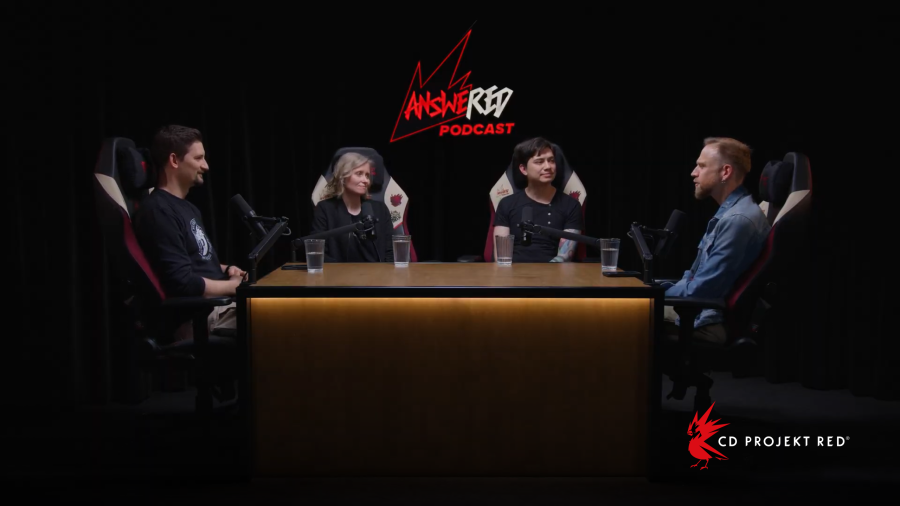
In Episode 30 of AnsweRED Podcast, hosts Paweł Burza, Senior Communication Manager, and Paweł Mielniczuk, Art Director of Project Hadar, welcomed Senior Level Designer Marta Dobińska and Level Design Lead Miles Tost to discuss all things level design. Together, they explored everything from the origins of level design at CD PROJEKT RED to the challenges designers face in their day-to-day work.
Marta and Miles had plenty of examples to share from The Witcher and Cyberpunk 2077, offering a behind-the-scenes look at the design process for some of the games’ most recognizable spaces. Check out the full episode now or, if you prefer, read the transcript from their talk below.
For easier navigation, we’ve split the transcript into sections — and for readability, the text has been lightly edited.
Intro & guest introduction
Paweł B: Hello, welcome to the AnsweRED podcast. My name is Paweł Burza and as always, I am joined by Paweł Mielniczuk, the art director for Project Hadar.
Paweł M: Hey everyone. Today we'll dive deep into level design here at CD PROJEKT RED and our guests will be Miles Tost, Lead Level Designer, and Marta Dobińska, Senior Level Designer, both from The Witcher 4.
Paweł B: It has been a super interesting conversation. We covered everything from The Witcher 3 to Cyberpunk and Phantom Liberty, and we talked about designing levels. So without further ado, let's meet our guests. All right, Marta, Miles, welcome to the podcast officially. Could you, for those listening to the podcast, could you say your name and your position here at RED?
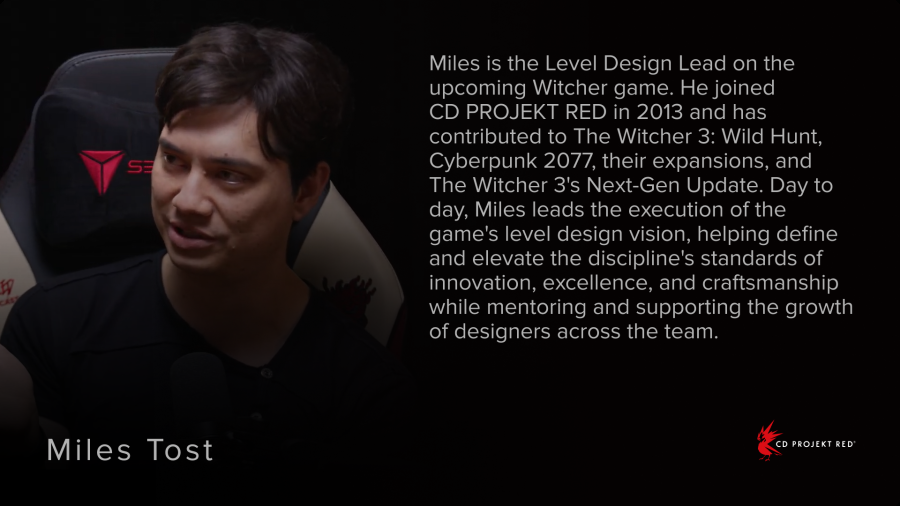
Miles: Yes, I'm Miles Tost and I'm the Level Design Lead on The Witcher 4. I've practiced this a few times in front of the mirror.
Paweł B: I can tell.
Miles: And I have been at the company since 2013, starting on The Witcher 3.
Paweł B: Perfect.
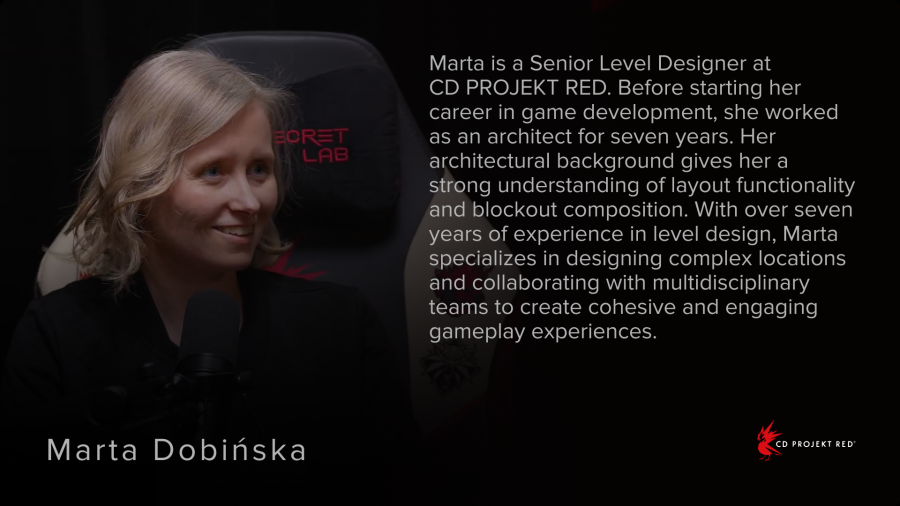
Marta: And I'm Marta Dobińska, I'm a Senior Level Designer. I joined CD PROJEKT RED five years ago, and I'm happy to join you today.
Paweł B: Awesome. Thank you for being here.
Meet Marta Dobińska and Miles Tost as they outline their experience in level design at CD PROJEKT RED.
Origins of level design at CDPR
Paweł M: Welcome to the podcast. Okay, so let's start from the origin of the level design team. As far as I remember, back in the times of The Witcher 2, level design was not a thing in CD PROJEKT RED. The responsibilities of that team were handled by quest designers and environment artists. And then it became a thing. So what was the moment when the level design team was formed and the roles and the responsibilities of that team were defined?
Miles: Yeah, that was interesting because I kind of joke that I was the first level designer to join the company. But the truth is, our dear colleague Adam Wrotek was number one. And I have to say this also because his onboarding for me, sort of training, was really great. So it was very welcoming. Yeah, but when I started, we were basically just the two of us. And the fun thing is, there was no clue what to do with the level designers. It was pretty much like I started out as an intern. I remember the first task I literally got on the day was, "Yeah, we have a black box, right? And can you just plan the world?"
Paweł M: It was our internal tool with a map. And we were supposed to set the pointers where the quest elements and interesting things on the map will happen in the future when the map will be created.
Paweł B: Was this in the Witcher 2 times?
Paweł M: It was Witcher 3.
Miles: It was kind of like a... the easiest comparison would be to talk about like an internal Google Maps, right? So you had these markers and you could open them and have a description with reference pictures of what this could look like. So intern Miles was sat there basically looking at, I think it was Ard Skellig and going, "Hey, all right, I guess there's a forest here maybe, right?" And you just kind of started doing these markers, and you'd be shocked, impressed, and surprised, all of these, by how much of that actually made it into the final game, right?
The thing is, the way the discipline sort of developed is that Witcher 3 was very much a project in which we were trying to figure out how to make level design function in the studio. A lot of the stuff that I was doing was very sort of... like back then we had the locations team, right? So it was environment artists who were working on locations, and in that were also the two level designers. We were basically doing identical work for a lot of the project. "Level art," I guess, is the term you would use today.
And, you know, more and more, the farther we got in the project, though, we would be doing things such as planning the world, right? Later we had other people join with whom we basically did a much more earnest approach at saying: okay, POIs, density, you know, all of these sort of topics of defining how the world actually looks and plays like. And then at the end of, I think, Witcher 3, we were kind of like five or so level designers. We really revamped the process, I think, for the expansions where we tried to think about the dungeons also more in a sort of design kind of way.
And for Cyberpunk, I think this was really the moment in the studio where it was a breakthrough for level designers because the complexity of gameplay went up so dramatically, right? Geralt can walk around, do like a sword and a fire trick. His big achievement in Witcher 3 was jumping, which did not leave a lot of room for level designers to really do compelling, engaging locations. But with Cyberpunk, the palette of abilities and skills that you could use, and the ambitions of sandbox gameplay, really changed everything and also made the discipline much more necessary. Nowadays, I would say we've really established ourselves as a sort of force in the studio that covers a wide ground of responsibilities.
Paweł M: So Marta, right now, what are the main goals of the level design team? What do you want to achieve in the game, in the big picture?
Marta: Well, the answer will be quite long. I'd say that the level designer role is quite broad. The simplest way to describe level designers would be to say that they are architects of game locations. But there's more to that. It's about shaping the space that players move around in, and doing it in a way that they know where to go so they are properly guided. It's also about directing players' experience gameplay-wise, right? So all the obstacles, all the challenges that we put in front of players, we control the flow of exploration, pacing of events, and so on. Apart from that, we also set the stage for all narrative elements for the biggest impact.
And finally, we prepare the space in a way that all game systems or gameplay features work as intended and actually with the best effect, right? So you could say that level designers are kind of in the middle of any content that is anyhow spatially located somewhere. We kind of prepare this canvas where all game elements need to come together to create this final, cohesive experience. And if level design is done well, then it actually elevates those elements. So it's more than the sum of its parts.
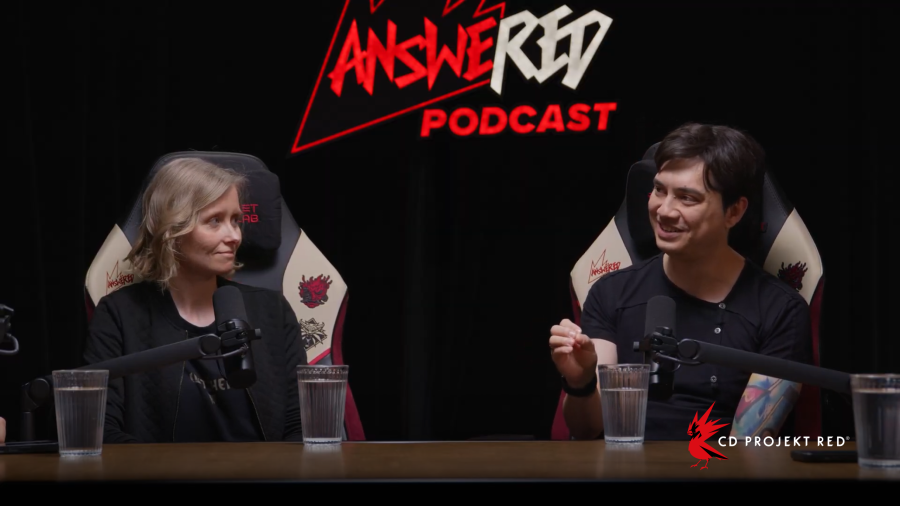
A look back at the earlier days of level design at CD PROJEKT RED and it became an essential part of our game development process.
Challenges in level design
Paweł B: Yeah. When I first discovered level design, it was when I was a kid. I had a NES, I played Super Mario Brothers. I remember there was an underground level, there was a lava level. And then in later games, you had a water level, you had other things. And this was like basic level design, right? But now if you think about how games are made now and how we make games, they're big, sandbox open games, and there are multiple things that go into it. There's environmental design, there's gameplay design, there's the narrative part, and there's level design, which kind of, for me, takes all these things and puts them all together, kind of glues them all together.
Because as a player, once you're moving and traversing the world and you have a story tied to it—which is super important for us—you need to know where that player should be going in order for the experience to be really cool, right? So I feel like, correct me if I'm wrong, but it's kind of like gluing all these parts together, having the narrative golden path be there. But also, if a player wants to maybe not do the golden path and go to the side, there is still something interesting there that can be placed in that specific spot so the player still has that cool engagement with the game.
Sometimes, with the environment, you just go to a spot and you're like, "Wow, this is so well designed." And even though this is not the main part or the main quest, it still is super interesting. So can you talk a little bit about having player freedom in level design? Because sometimes we think, level design? Well, that's kind of like the Mario thing. Like, you're supposed to jump here, then jump there, jump here, and this is the path you're supposed to go. Sometimes you want in a game to direct the player just to go straight in a corridor. But I feel like with how games are made now, you want to kind of open it up so the player has full agency and can do whatever he or she wants to do.
Miles: Yeah, that's a big one. It's probably one of the most important day-to-day challenges that our discipline faces: this sort of interplay between providing agency to the player, but also directing a narrative experience, right? Because, at RED, we do both of these things where we try to marry these, and it can be quite complex, right? The reality is that in practice, we never do just one thing. So we will have moments in gameplay that will be much more open and free-form, and we will have moments that need to be a bit more controlled and linear because they drive an important narrative theme or literally just make a point.
I do think, though, that as we have gotten more experience over the years, as our capabilities grow, we're looking at more and more merging of these spaces. So the question we constantly keep asking ourselves, whether it's Witcher 3, Cyberpunk, Phantom Liberty, or even our future project, is: how can we provide maximum agency while also telling a good story, right? And I think the cool thing for us, no matter which project we look at, is that making RPGs, oftentimes the most interesting parts happen in the convergence. Those places where you can think of, "Okay, but what if the player decides to do something entirely different? How does the game react to that? Do we need to answer it by level design, which can either be limiting the space or opening it up, encouraging this behavior? Or do we answer it through another discipline like quest design, who can basically have an NPC mention that you did this thing?" This is really, really cool stuff, but it's super difficult also.
Marta: Yeah, I would say that ideally, because of the medium games are, we would like to provide as much agency to players as possible. But there are certain aspects to that. One is actually on the production side—providing more options and securing all the things that players can do comes at a certain cost. We need to prepare for it, or we need to have game systems that can secure it properly. So usually the question is, do we really need it in every part of the game? There are some beats where it fits really well and we want to go all out with it, providing sandbox opportunities and making players feel that they really have a library of things that they could choose from. But we can also do it on a smaller scale, providing fewer, meaningful options in smaller beats, and the players would still feel that they have options to choose from.
Miles: I think Marta drives some really important points and takeaways we've been having over recent years. First off, the reality in a game-making process is that you need to take into account the cost of this. Just freedom for the sake of freedom and answering every eventuality can be quite costly because we need to record all these dialogues and whatnot; it can scale crazily. And the other thing that you mentioned, which I think is super important, is the angle of: will the player remember it? We do love to have these details that only a fraction of players will find, and for those, it's going to be the best experience ever. But that's the point, right? To make sure that when people do find, I don't know, the team picture stuff with Johnny in Cyberpunk or whatever, then it's something that sticks with them, that they want to talk about, and all that stuff. The worst-case scenario would be investing a lot of energy and time into some niche consequence, essentially, that is forgettable.
Paweł M: I wonder if there's a golden rule for that because we have this narrative branching. For example, let's take Phantom Liberty as an example. We can end up, spoiler alert, at the large airport or in the underground bunker at the end of the game. So there's a completely... like, a part of the game players will completely miss in a single playthrough. And then on the level design side, you're creating multiple paths and agendas for the player on a single level. So is there some rule of thumb of how much is enough? Because there's some exclusive content you'll put there, some paths that players will never see over one playthrough. So what is enough, what's not enough, and what's too much?
Marta: I think that—and Miles can say more in a moment because he actually worked on one of those branches—but I would say that we look for places where our effort and the budget that we put into it will make the biggest impact. Our games at CDPR are story-driven games, very much about character development. And those characters—what will happen to them, their destiny—it was decided in this exact moment, and the resolution was actually quite meaningful and big. Those were like whole levels that would show what would happen if you choose one of the branches. I think that this is actually a great example of the impact that this has on the story. Players would actually experience different endings and different results on many levels of their choices—including narration, level design, and gameplay.
Paweł M: It's the replayability potential for a game, but also this kind of player feeling that they're crafting the experience.
Miles: Yeah. I think when we talk about golden rules and trying to establish something there, for me over the years, what I've been reflecting on is that it's probably not so much about the actual choice and consequence itself and the end result of it, but rather more that the player understands that there is a choice they need to make and that it has an impact. It's something I think we try to really address, not just on a level design side but globally between Cyberpunk and Phantom Liberty. The idea is that if we make choice and consequence too smooth, sort of too subtle in this process, you don't really notice when you've made a choice, but the game just plays out very differently. Then the players will perceive it as a linear experience, which is not what we want to do and also literally not what we've prepared.
I think we see this very well in Phantom Liberty at that big inflection point where it's basically: here, it's a choice, you need to make this, and it is impactful. When you then hear people talk about it, they have this sense of two different experiences. And it's not different in level design really, right? When the player makes a choice—do I go left? Do I go right? Do I shoot the guy or do I stick by them?—that needs to be telegraphed to the player so they know they are making a choice and that it will have a consequence. Only then is it really of value. Otherwise, how do you know?
How do you provide players with freedom and agency while also offering a cohesive narrative experience? Marta and Miles delve deep into these and other challenges involved in designing immersive, open-world levels.
How level design fits into the broader game production process
Paweł B: Yeah. Where would you say a level designer in a project thrives? Where is the spot? Is it between the environment designer and the quest designer? Does it also change depending on the phase of the project, from pre-production to production? Talk a little bit about your placement within the whole game design space.
Miles: I think that's a question that, as you already implied, changes between production phases, but also changes between individuals. In The Witcher 4 level design team, we address a wide set of responsibilities. We're dealing with world design topics like, you know, "How does the world look?" We're getting back to our forest planning from way, way earlier. We're dealing with encounter design—so, anything that deals with enemies, puzzles, and all that. And then the other thing is that we're building locations and levels, as you would imagine, like dungeons.
People have different sort of preferences. Some of our team members are stronger on the mechanical part, so they really like working with gameplay systems. Most likely, they thrive when they get to build strong, cool encounters. Other people are perhaps more artistically inclined, and that's where I kind of consider myself as well. They really like building locations. I think this is a cool superpower of our team: we allow for these different focuses. We demand that everyone knows everything, but they can more or less specialize or excel in certain areas. I think this is something that not many studios do specifically with the level design discipline, because there the direction seems to be rather specialization of the discipline.
Paweł M: You said also that you're these architects spatially laying out all these elements, and there are a lot of clients around, I guess. There's quest design—they have narrative requirements. There are puzzles you have to put. There is gameplay that requires something from here. And there are artists—they want something beautiful standing in the middle of a level because, you know...
Paweł B: They want to show off the work.
Paweł M: ...concept art did something and the art director likes it, etc. So there are multiple people influencing the work, and you are the ones at the beginning that need to figure out all the requirements and kind of make everyone happy, I guess.
Marta: Yeah, I mean, I think that it's one of the biggest challenges related to our role, to make it work. But at the same time, it's so rooted in what we need to prepare that it comes naturally. I think this is something that we as level designers really love to do. Overall, this collaboration on those three fronts—mostly gameplay, art, and quest design—it differs a bit, of course, but it's all about that final experience that we want to achieve. It also varies between different kinds of projects. It's very specific and unique in our company with the games that we do.
For example, narration is a very important, if not the most important, part of our games, so everything revolves around that. Everything starts with quest design. It's like a foundation for us that sets up the frames we start to work with. It even determines our everyday work, I'd say, because even our production teams are kind of built around certain narrative content pieces. We work closely with quest design to bring the vision and the story they want to convey to life through gameplay. It's often with a wider perspective: it's about what flow we should create, what pacing we need, what target emotion we want to evoke in players, and what fantasy we want to create, actually.
To achieve this goal, we need to cooperate with gameplay teams because we work with them on this moment-to-moment experience—these interaction moments and the choices that players make. And the last thing is art. The environment art department specifically is very interesting because we kind of share this area of focus. We both work on locations, so it's only natural that our work is kind of intertwined from the very beginning.
So it's actually about navigating this environment and making it work.
Paweł M: Because this location is where everything meets, right? You touched on this cooperation with environment art. Does it sometimes happen that there are conflicting ideas within the level? Because, I guess, where does level design end and where does environment art start?
Miles: Yeah, when does that happen, Marta?
Marta: This is an interesting question because I think there is no obvious answer. This is not like a straight line that we can draw and say, "Yeah, this is where level design ends, and this is where environment art starts." It actually also depends on what kind of game worlds we are creating. For example, in The Witcher, where the worlds are very organic, we venture much further into environment art territory because we need to prepare a bit more sometimes. We need more details to properly show that, yes, this location will fit in the world, and this is the fantasy we are going for. We sometimes need to put a bit more detail into it, and it automatically becomes a bit more artistic compared to Cyberpunk, which is based much more on modularity. In Cyberpunk, we can work with simpler shapes to show what we want to do. So it really varies. But yeah, about the line—at the end of the day, I think that the line is actually kind of drawn by production. We have certain pipelines, and at some point we need to pass this location over for an environment art pass. But apart from that, it's like a constant discussion.
Paweł B: And probably also a lot of iteration in between, like changing things, playing it, seeing if it feels right, asking, "What about if I do this? What if I do this?" It's probably a big collaboration.
Miles: This is a big part because you have to do it when there are so many interests. Sometimes you push too far in one direction, then you lose the interests of another, and you catch it and reintegrate it. But this whole environment art and LD thing is, I think, an industry-eternal conflict. You hear a lot of jokes being made about this. I feel we've gotten pretty good at managing this, and I'd like to think we have a really good relationship with the art teams that we work with. Part of that is because we just vibe along, but also a bit of the history behind the creation of the LD team plays into that, because there was a very close collaboration by design.
With our new projects, what we started to do much more is to say, "Hey, how can we work better with our art teams?" Because the art teams that we have are incredible. I maintain to anyone who asks me that if we could just let them loose completely, they would probably create—and they actually are—some of the most beautiful game worlds that the industry has seen. This is something that, from my perspective, we always try to support, because the understanding is if we can strengthen that, then our game will be better, and so we constantly see ourselves as people who try to enable that process.
But the reality is also games need to be playable. You can make the most beautiful space, but if you constantly get stuck moving around all that decoration, it doesn't really work. And so what we've started doing as level designers is to apply a much more artistic approach within our own team. We took this on ourselves and said, "Hey, look, maybe we can soften that pressure a bit and align earlier." We do this by making block-outs that already use compositional elements. When you look at them, it's not just a gray box for a room with a note saying, "Yeah, there will be something happening here!" Instead, you look at it and you understand, "Oh, it's a spaceport, and this is where the check-in happens." You can tell the context of the space from the block-out itself. It doesn't just fulfill the function, but it also looks artistically promising.
When you do that, yes, it is more work. But what happens is the conversation with your artist gets entirely transformed. You don't start talking about, "What is that? What is that?" and "I don't know, how do I turn this into something?" It becomes a shared brainstorming session of, "This is cool. We could also do this," and all that. I think this is really the key to any collaboration, specifically as a level designer, but also perhaps more generally: you figure out what are the intentions, the needs, the goals, what's the language that the other team is speaking, and how can you not only adapt to that, but also offer something to elevate it. That's really how we're looking at level design at RED.
Paweł B: Really cool, really cool. If you had to talk about level designers here versus in the industry, do we do something differently as CDPR when it comes to having people who are just specialized in level design? Because sometimes I feel like a level designer can be someone who works in a different team, like environment design or gameplay design, but we have our own dedicated team just for level design. Is this like a standard moving forward, or is it something that is a fluid type of position that someone can have within a development team?
Miles: Something I've been talking a lot about with other level designers across the industry—I have had some part in organizing the previous level design summits at GDC—we talk about this a lot. This year we did a panel dedicated to the state of level design in 2026, trying to take inventory of the discipline. One of the big things we noticed is that specialization is a trend in level design. Nowadays you have all kinds of more focused designers, like people specifically doing mission design. In our team, we now have our first technical level designer, so that's even a sub-part of the discipline. Then you have level designers who are more narrative-oriented or narrative-focused.
It really just goes to show that it depends on the project needs on one hand, and on the other hand, it depends on the team. What are the capabilities of the people you've hired? Can you make them function as an all-rounder team that serves a lot of needs, which requires a lot of special hiring and a lot of training to get people to be that capable, or is it more helpful to the project, the studio, and more catered to your people if you go narrow? With Marta, we have someone who's a prime example of our level designers in Witcher 4, someone who's really good at addressing the entire palette of our needs. I know that since we talked about environment art before, she's an environment art favorite because a lot of the work she does is very compatible with things our environment artists seek. Which is partially because you have an architectural background.
Marta: Yes, that's true.
Miles: So, a cheat code in level design.
Marta: It's definitely helpful.
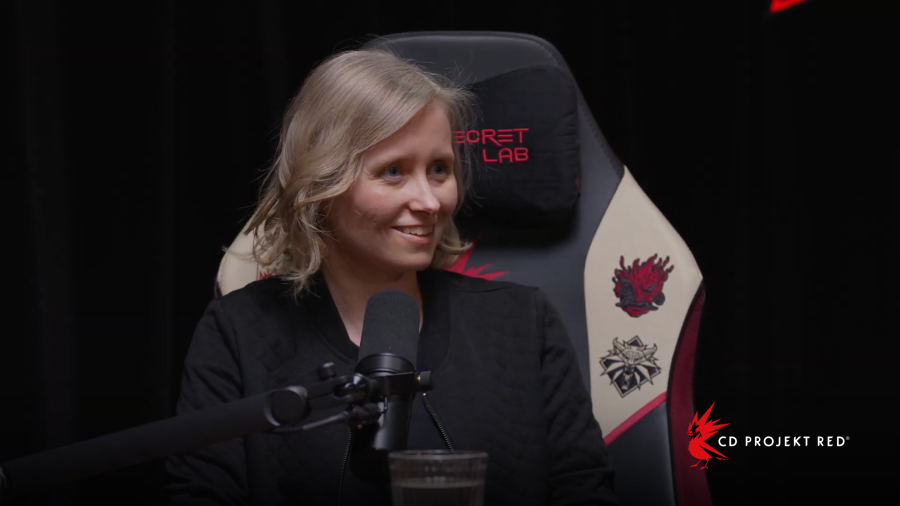
A look at how level designers collaborate with other disciplines and teams — such as gameplay, art, or quest design — across the development process.
The level design process and steps
Paweł M: So let's maybe unpack how the work looks from day to day. Where do we start? We got all this information and all these requirements from all the teams, so what is the first step in level designing? Do you already jump into the engine and start making beautiful things?
Marta: No, I think it won't be a surprise that we actually start with paper design, and it's actually a level pitch. At first glance, it could seem that it's mostly about gathering ideas. And it is about gathering ideas, but it also has a different function that is equally important for us, which is driving alignment between all of us. We bring together all disciplines involved so that we can confirm what kind of fantasy we want to build, what emotions we want to evoke, what gameplay beats will fit that, what the scope of it will be, and what complexity we are going for. It's a way for us to discuss it with our team, then present it to our leads, and agree on the scope and the direction we want to go. This is the first part.
Miles: Yeah, and I can add that for me, the naming of this is weirdly critical. It's called the level design pitch. We're trying to establish this high-ownership environment, and part of that is this philosophy that you're coming up with the idea, you're turning this into something you want to do, and you pitch it to us—sell us on why it is a good idea to do. The creative ownership is essentially on the individual designer.
Paweł B: That's really cool.
Miles: Yeah, I agree.
Marta: Yeah. And I think that the level design pitch is also a way for us to onboard everybody to our ideas. If you have people behind you that believe in the ideas you have, you feel stronger already. This is a very important part of the pitch.
Miles: Yeah. The best pitches are those that are done collaboratively. It is not just the level designer looking at our quest design and going, "Okay, I want to do this," but ideally, by the time the pitch is being shown to me, they've already talked to all these other disciplines and aligned on what's cool and what they as a team would like to do.
Marta: Yes, exactly. It's more like a starting point, and we create an ongoing document out of it. We get the references, and from then on we can work on it. But yeah, this is the moment when we actually leave paper design and prepare a draft of the level. This is interesting because the overall pipeline is not a constant thing. We also learn from what we do and try to make it more efficient to work better in this complex production environment that we have.
Right now, for example, after some changes, we decided that we want to lean into showing our ideas quickly—investing in a smaller chunk of the level to prove something and then scale it up, and so on. We also want to introduce gameplay elements early and make it playable so that you can experience it for yourself. This is the next step: preparing a draft where you can prove that what you proposed in the pitch actually works.
Paweł B: And in this case, do you feedback one another? Do you have an open session where all of you play, let's say, a mock-up of a level and give your feedback to the person that came up with the pitch, or how does that session look?
Miles: At a time when we were creating most of the pitches—nowadays we're doing these less, we're working on the content itself—it was very much that. We'd meet occasionally and just have everyone sort of comment and feedback on a specific pitch. We're working in Miro, so people can easily look at it and comment on stuff, and it's pretty straightforward and cool. For the person who works on the pitch, it's a matter of then clearing comments, which in itself is kind of rewarding. Maybe it's just me, but that's a pretty cool part of the process.
But we certainly do this with the levels that we're building. Every Friday we have what we call our internal feedback session.
Marta: Yes.
Miles: Where basically we ordain one level designer to explain the thing they've recently worked on. And then everyone else plays it, and we play it pretty hands-off for like an hour, just without talking or anything. And then we have a feedback session. We sort of commoditize the process also by having a survey format where you just need to answer three questions, which is: "I liked," "I wonder," and "I wish." This is the format we picked, and it is a cool way for a single level designer to basically get a lot of peer feedback really quickly.
By now, the team is relatively large. We're nearing 15 people, so you can imagine that just one playthrough gives a lot of data. Also, since we were talking about agency earlier, it's this kind of feedback where you realize, "Okay, half of them did this thing, three of them did that thing, and one person did a thing I never expected to happen." You can take a lot of this to see, "Is this encouraging? Is this something you want to nurture in your level, or is it something you feel like you should cure and not have happen?" That's a really cool part of the process.
Paweł M: If we can stop for a moment on this paper design, I wonder... we are making massive games, right? They're just huge. So, at this point, is this planned in a 1-to-1 scale? Can we foresee the velocity of the player, how much time it will take to transit from point A to B? Is the level not too small, not too large, or too boring? How many paths should there be?
Marta: This is an interesting question. I think that the level design pitch is more about estimations. It's almost impossible to actually nail from the very beginning how big something needs to be. We have, for example, a runtime estimation chart where we estimate how much time the player will spend in this beat. This is a way for us to assess: should this beat take that much? Should it be the most important in the quest or not? How should the proportions look, and so on. It's more about that, so we don't go into too much detail. We try to nail down the most important elements that we know we will work on later.
Miles: It's a really cool question because you try to get as much information out of it as you can. But as Marta said, the reality is it's often impossible. We have designers on both ends of the spectrum—those who tend to build too small and those who tend to build too much. So for us, from a production point of view, it's a moment to catch if roughly things are going in the right direction. For this type of content or this type of level, is it what we expected scope-wise, or is it way off? It's a first check to prevent larger mishaps from happening.
But what we've started adding also, as Marta said, is a runtime estimate that is tied to the emotional state of the player in each gameplay beat. Let's assume there is a quest that has three major gameplay beats: an introduction to the quest, a middle part where something happens—maybe an encounter in the middle, a big boss fight, whatever—and then the conclusion. We try to split this into level beats by location. Simply: okay, in the first part you go into a bar; in the next one, you meet in front of a warehouse, then you go into the warehouse, which was a drug den, do things, and later you meet at a different bar, have an outro conversation, and the quest ends.
We try to estimate on the documentation, "Okay, the player will spend five minutes at the bar, probably with conversations and all of that stuff." That's five minutes. Then the next step: the warehouse. This is a big, 30-minute experience, multi-level, super complex, with a boss fight at the end. In that warehouse, we want the emotional arc of the player to be that they first start out wondering about the location, then it suddenly turns into a more worried, fearsome atmosphere, and in the end, it's complete excitement because of the boss fight, lots of explosions, and whatnot.
This allows us to do multiple things. First off, we can check if we feel the time allocated to this beat is okay proportionally to the length of the quest. It's been a remarkably powerful tool for us to tweak whether we think we're addressing the fun. We sometimes had moments where that bar beat would have 15 minutes, and then the warehouse would only be 10 minutes. We'd look at it and go, "The actual fun part of this quest happens in this time; we should probably change the proportions."
Emotionally, it also allows us to check if we can potentially build this arc. Is this quest one where you will want to spend most of your time terrified and scared? Maybe not. Maybe actually the emotional state should be very different because of the themes of the quest. There's a lot we can do and assess from this first paper design.
Marta: Yeah, and you probably noticed that we underline that defining target emotion, flow, and pacing is the main focus of the level design pitch. Surprisingly, those first iterations and changes that come in the first draft phase come from checking if this beat, this part of the quest, fits the vision of the game. We always look at it through that lens. More detailed solutions and our discipline excellence—this is something that we are usually quite confident we can work out at some point. The more important thing at the beginning for us is: does this beat really fit the quest, or is there a risk that it will be cut after a few reviews?
Miles: The result being—and I think this might be important for every listener, especially people who are trying to break into the industry—first level designs suck. They're bad. Just from a level design technicality perspective, they're not great pieces. But these are not the questions we're trying to answer because we're reasonably confident that we can make it good once we figure out what it is that we want. That's more important at the beginning.
It speaks a lot to the draft territory. There are two things here. First off, this sounds like a very rigorous, straightforward process, but one of the most fun things at RED is that we generally allow for some dynamism in our pipelines. I think you're kind of like I am when it comes to 3D and paper design. Personally, I'm not a huge fan of literally starting by scribbling my level layout. I'm a person who, if I can, will jump straight into the engine, shape something out, and get a feel. Then, for a pitch, I would rather take screenshots of my sketch there, draw over that, and use that as a basis, because my brain works more like that—I need to have something to chew away on in 3D. But we allow for that. If you're like that, cool. Go ahead, do it.
Paweł M: It's flexible for us.
Miles: Yes, exactly. And we do this also with the environment art pipeline that we talked about earlier. We have a moment where we say, "Yeah, this is the point where we want to give the LD block-out to the artist." But occasionally we'll have block-outs that are just made by an artist, where the level designer steps back and just says, "Hey, just make sure metrics are right, this is fine, and then go ahead." A lot of this variance and flexibility is super important to us because it harnesses strengths, overcomes weaknesses, and is just fun.
The other thing, when it comes to our drafting pipeline, the thing we are focusing on more and more over technical excellence at the stage of creating our first drafts is intentionality.
Basically, what we're seeing is that it's more and more important just to make sure that when someone looks at this first draft, they get it. They get what the level looks like, they get what the narrative context is, and they get what the gameplay intention is. No one needs you to be able to genuinely fight this awesome encounter right there; we don't need the big shootout. But if I look at this and I see a few enemies and some cover placed, I understand that you're probably planning some sort of major shootout there. If you have a red, barrel-shaped element next to an enemy, I can read that you probably want me to be able to shoot this thing, and it explodes and kills the guy standing next to it. You don't need gameplay implemented to tell this kind of story.
It's the same for narrative context. People often wonder where they should spend the detail on the block-out. How much detail is enough for a block-out, and when is it too far? To that, we always say it depends on what you're trying to say. You don't need to decorate every single loot room of your level, but the level needs to explain back to me what it is. If you're preparing the warehouse that has been turned into a drug den that I talked about earlier, I don't want to need you to explain that to me. I want to go into the level and see, "Oh, this is a warehouse." And then I can see, "Oh, this does look like a drug lab," because you put some burners there and little vials. For that, you can add extra detail. That's really what we need these first iterations to do, because then we can play it, test it, and see if it works with our narrative intentions. Maybe a warehouse with a drug den is not the right thing we need for the quest.
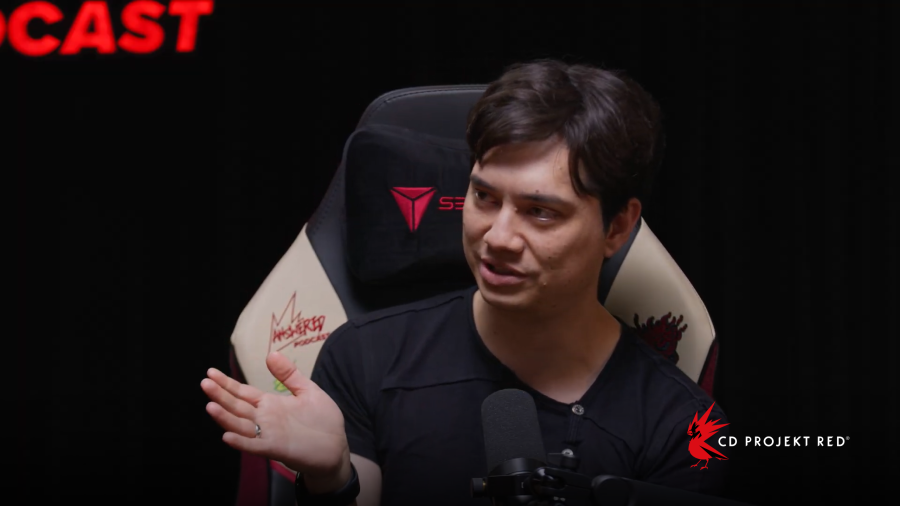
From early paper drafts to finished locations, here's how our level design team brings new levels to life, step by step.
When creativity meets limitations
Paweł B: Do you feel like when you're designing things, you like to have some type of constraints when it comes to what you can do? Or, since it's a sandbox game, do you want to have the creative freedom to do anything? Because like you said, let's take the warehouse for example: sometimes you have a warehouse, and as a player, you go in and see, "Okay, I have this point for cover, I have this point for cover, and then I have this barrel that explodes and takes out the enemies in the back." For some players, they think, "Oh, this is probably the way I should do it, but screw it, let's do it another way." Do you feel like it's better for you when you're designing things to have constraints, or do you want to have the creativity where you think the player might just do something wacky, go around the enemy, and do something crazy? Do you like constraints or do you like to just go, "I'll come up with something totally different"?
Marta: We—I think that all of us, all level designers—love to have creative freedom. If we can provide more options, we would very much like to do so. But there are different things in play that we touched on before. Sometimes it's actually needed for narrative reasons to streamline the experience a bit. But overall, if possible, yes. I think this question also touches on context. Is it easy to work without context? The thing is, if you don't have a context to work in, you usually need to create one, so it's actually much more work and research to do. Usually, when you have something, it serves as a starting point that you can think of ideas around.
Miles: I think they're not exclusive. I find limitations are incredibly conducive to creativity and creative processes. I mean, this is a bit of a boring answer; you'll hear this from every artist you talk to. Those limitations are what birth creativity, but it's really the same in gameplay. You'd be surprised how much you can do with an explosive barrel. In Cyberpunk, we had these ragdoll mechanics and all that stuff. Maybe this is a terrible example actually... but a different example I can give is in Phantom Liberty. The Cerberus is basically, at the end of the day, more or less one big hack. This is using our systems that we had in what I'd like to think is a pretty creative way, exploiting a lot of how the engine works under the hood. We needed to alter some of the behavior of NPCs to make what this was doing possible. Survival horror is not inherently part of the repertoire, yet we were able to craft this by creatively bending some of the rules we had, staying entirely within the rule set.
Likewise, one of the examples that we bring up internally very often is a colleague of ours, Mariusz Kubów, who created a scene in the spaceport where there's a helicopter that's kind of exploding. That is a level design original. There's no prepared animation for this, but it's basically using our own internal toolsets to cheaply but believably enough create an exploding or moving helicopter. If you can create tools that support the designer's creativity within the capabilities of what they are set, I think that's the ideal case, really, because then it makes you think creatively of how you can bend it. As Marta said, people like creative freedom, so I think the gravity is towards that—you will try to go as crazy as you can. Bringing in some rule sets will still allow you to do crazy things, but it will be controlled.
Paweł B: I think it's also important from the player's perspective. Sometimes when playing a game, you don't want it to feel like a game of chess, which pretty much plays the same. You want to have choices, consequences, and player agency. In order for them to not feel bored or feel like they need to do a certain thing a certain way, that gives them the freedom. I think players appreciate that because they can say, "Oh, what did you do here on this level? I did this, well, I totally took a different approach." It was kind of like that with Cyberpunk, where you could go totally stealth and do things. Or, if you were a player like I am—I hate doing stealth stuff—you could just go in guns blazing, and both options would work. But then, if I replayed a level, I would try it the other way around to see what the possibilities are, like, "Wow, there's so much freedom here in terms of things that I can do." There's no one golden rule or path that I need to take, which makes the games more engaging, more believable, and more realistic because you're role-playing.
Miles: I think this is why it's highly interesting to us, because as a studio, we value believability in our games almost more than anything. It's an intriguing flavor of design in general at RED, but also for level design where we do care. I remember when I started with Witcher 3, one of the first things I got to do was a sewer, and I had the pleasure of building the first sewer under Novigrad City.
Paweł M: It wasn't the frog boss?
Miles: No, this was way later. I remember talking to Lucjan, our art director on Witcher 4 these days. He baffled me by looking at my work, which I was incredibly proud of—I was like, "Oh, cool play space"—and saying, "Well, but that doesn't really make sense because back then they didn't really have huge pump systems and all that stuff. So you can't have random basins of water just filling. Technically, you would need to have a gradient falling towards the ocean side so that when you have the water from the sewage system going off, it would naturally flow." And I'm like, "Okay, this is the level we're playing on, right?" Ever since then, with all the sewers I've made, I find this is feedback I've been giving to people I've been mentoring when they get to build their sewers. It's an odd thing, but it just goes to show how far in parts we take it. It can be pretty painful at times. Everyone here who has worked with the studio can attest to that because it's always the harder path.
How creative freedom and technical, narrative, and design constraints work together to shape memorable levels.
Balance between subtle and obvious player guidance
Paweł M: But you touched on this realism. It's very interesting, because we always want to make things as realistic and immersive as possible, but then we have game logic, gameplay, and we need it to be fun and readable. I wonder how you balance that. For example, like you said, the red barrels, or sometimes we see in games edges highlighted in yellow to jump on—it's like signposting, I guess. Sometimes you say you're entering a warehouse, you see the barrels and the covers: "Okay, that's a boss fight for sure, it's an arena." Is it good if the player notices that you set up something for them, or do we try to hide those things and make this navigation much more subtle, not in your face?
Miles: Because of this yellow arrow thing, I will take another sip of vodka just because it's a very controversial topic in the level design space. Then I'll let Marta take the hit.
Marta: I know that we all don't really like yellow arrows in general, but I think that it's actually a balancing act. When you have a relatively simple space, a yellow arrow that shows you where to go, even if you are in a corridor and have only one way out, really stands out and feels unnecessary. But the more complex the space you have, I think players actually welcome some guidance that will help them. However, a yellow arrow is really out of character in almost any space that you could think of, apart from maybe...
Paweł M: Maybe in Cyberpunk.
Marta: Yeah, maybe visual identification and very modern spaces, that's true. So we usually try to come up with a visual language, because this is very important—to come up with a consistent language that players are taught about at the beginning, and then they can recognize and, based on that, make assumptions and decisions when playing. We try to come up with a visual language that actually fits into the world. If possible, it's even diegetic, a part of the world. That is actually an ideal solution for us. It's not always easy.
Paweł M: Diegetic means that you recognize things in the game. You don't need UI to point out the way, but you...
Marta: Exactly. It's like a signpost on the road, for example. It's actually a part of how this world functions. That would be an ideal solution for us. It's not always possible, but we try to always adapt this visual language to a certain artistic vision that is present in the game—not making it too obvious, more subtle, but at the same time recognizable.
Paweł M: Those might be things that probably impact the entire project from an artistic side. I'm wondering, for example, if you restrict some colors for guiding players and try not to use them in other places because the player will be confused.
Miles: Yeah, because you need to work with contrast, right? That is really what matters when it comes to the clarity of these spaces. The challenge with this is—and I think this is why it's so "controversial," right?—in the context of what it is we're doing, which is making games. But truly, we've tried. I have some practical examples from Phantom Liberty, working on that bunker piece where intentionally we said, "Okay, we'll remove the minimap, we'll try to go full diegetic guidance with signage and everything."
The big takeaway is this, and I share this—I know a lot of developers around the world share these takeaways—it doesn't work without. The truth is, if you leave out guidance elements—and we're not even talking about how subtle it is or how diegetic it is—if you leave out this part of design, it doesn't really work. So it's not a matter of whether there should be guidance elements that help players navigate or orient themselves, but rather a matter of how subtle can you make them, or how creative can you be with implementing them, versus how much do you need for players to pick up on them.
There is some sort of sweet spot. The difficult thing is that the sweet spot is not one point, but it moves depending on the context of the game and how modern it is. I had this experience two days ago in an underground parking lot. It was very confusingly built, but I parked in a way that when I got out, I saw there were multiple lanes with arrows—they had zebra-like stripes, but they were slanted, so they would form arrows to where you need to go. I looked at that and went, "Okay, I don't have a problem with that. I think this is great, I want to follow this. It works for me." You could argue if this was in a game, would people be upset or not? But it made me think that the answer here probably is not so much that yellow arrows or stripes in games are wrong; it's just how much the player is willing to buy into it at that moment in time. Because at that moment, I was like, "Yeah, this totally helps me and makes sense." Even if it's literal arrows, I'm okay with it.
We have a lot of counterexamples of that where the solution is diegetic, but clearly diegetic is not enough. Just because someone put paint somewhere on the level, the player doesn't instantly buy it. The context needs to be such that when the player looks at it, they feel like, "Yeah." It's not so much about them not noticing the magic happening here, but rather them going, "Yeah, okay, fine." If you can hit that spot constantly, and that can change from location to location, level to level, you'll be fine.
The challenging thing is—and you with your art affiliation will probably testify to that—how can you make that work globally? Because you can't do custom every single time. You need to find that visual language, so that every single security camera in the game is understood as an interactive object.
Paweł M: Players are learning over the course of the game; you're teaching them patterns. When you break the patterns and use different ones, it becomes confusing. Like using these cameras—from some point in the game, if it doesn't work that way anymore, it's confusing. If you get on some path, make something significant, it needs to stay significant over the course of the whole game. But the context is important. Like you said, some locations are super busy, so you need arrows; some are simple enough, so maybe guidance with lighting composition is enough.
Marta: It's actually interesting because there's more to that. Guidance is not only visual language, and the better other techniques work, the more subtle visual guidance can be.
Miles: Yeah, 100%.
Marta: There's much more to that. It's how space is structured, if it's understandable and readable from the very start. All composition techniques—contrast, clarity, negative space, and so on—but also controlling the player's position, whether something is in their field of view, and so on. We can also use additional elements like dynamic elements, color, or we can even use narration to actually point players to something we want them to see. If all of that works well, then this marking doesn't need to be there.
Paweł M: You can have sound as well, right?
Miles: I totally agree with this. I think this is one of the most challenging but also most fun parts for me in level design and design work in general: sort of conciling this. Guidance is made of many layers that by themselves might not do a lot, but if applied together... you mentioned composition, lighting, and movement can be one thing. The flow structure of the level itself is another. If the level has a down-flow, the player can understand it, picking up on it and going, "To progress I need to go down." If suddenly they have a path that goes up, they're like, "I feel like this goes back," but they can't tell why because you've established this pattern.
How do you combine all of these elements early on so that you can test for them? The practical problem is that it takes time, work, and iterating. Oftentimes in production, you don't have everything. If you're not making an expansion and you're working with completely new stuff, you might not have half the assets you need—there is literally no light, or the red arrow that we use everywhere doesn't even exist yet. You need to have a lot of faith that the stuff you're building will get slightly better with every iteration, even if the guidance isn't great yet. The alternative would be to front-load all of that, but then you make yourself vulnerable to just one narrative or art iteration wiping it all away. How do you create an experience that is playable and can reveal itself as a good or bad experience while not having access to all of this, or not overcommitting?
Paweł B: Yeah, a good experience is the most important thing because sometimes you see things and you're like, "Oh no, I have to do this this way. I don't want to do it this way." What about the agents of chaos that go in and want to do things their own way? Is it something that you need to... of course you need to account for it, but we love chaos at RED, so we're looking into the players who want to do things their way.
Paweł M: Do you remember double jumping in Phantom Liberty? Someone said, "Hey, you can double jump there." "No, you can't." "No, you can, I'll prove it." There was a whole crowd testing everything, finding where exactly you can go with that jump feature because of the double jump, dash, and everything. And then you got to the roof of the building.
Paweł B: Yeah.
Miles: With Cyberpunk in particular, we have so many stories of this, which shows that if we get to that point where agents of chaos can thrive, we have done a good job. Those are the most fun moments. They test your systems, and if they hold up, it's a thing of beauty. Sometimes for developers, it's the stuff of nightmares and pain because we need to figure out: do we want this to be legal? If it isn't legal, how much work is it to secure this on a global scale within the game?
I remember a story I tell often because it left such an impact on me—two of them, actually. One of them was during the later stages of Cyberpunk's development. I found myself in the room with the QA team talking about a completely unrelated topic. By sheer chance, I watched over the shoulder of one of the testers playing one of my levels, and I was like, "What the f[__]? Okay, they're doing something..." and it's the point where I don't want them to continue. I have two guards and one security camera, and this is my strong tell to the player to try to find another way because this is heavily guarded.
What does this guy do? Turns on Sandevistan, which slows down time, and I learned at that moment that it slows down the detection meter as well. He just walks past everyone. I was like, "Oh my God, this changes everything." I went to level design and said, "Oh my God, guys, they can do this." We actually had conversations with the gameplay team: "Can we forbid this? Is this something we can change?" But in the end, we kept it.
Another thing was, one of the people who got to play the game very early was a German content creator and a good friend of mine. He was playing a part in the Watson district, and there was a warehouse—we have many of them in Cyberpunk—where I don't think you were able to get in from the rooftop, but there were these windows. He looked at it, tried to open it, and couldn't, but then realized that for some reason the window was destructible by punching it. He spent five minutes punching a V-sized hole into the rooftop window until eventually he could get in from the top, and the level still worked! He got in and felt like Tom Cruise infiltrating the warehouse, just with a bloody fist, I suppose.
It was super cool because I stood there terrified, thinking, "Oh my God, I'm not sure the level can hold this pressure." But it worked, and he had a cool time. That agency he felt in that moment was a great part of the experience. These days, getting back to believability, I think this kind of gameplay meshes really well with how we perceive making open-world role-playing games, because it is essentially a form of role-playing: giving you the creative freedom to be the character you want to be and play the way you want to play. It's natural to us because it also should be believable to support these kinds of things as much as we can.
Paweł M: Not to use too many glass walls, I guess.
Miles: Yeah, make sure they're punch-proof.
Paweł B: Do we want to limit players sometimes, like putting up a barrier saying "Don't go here"? Or do we think now that we should not do hard barriers, and do soft barriers instead?
Miles: Want to, all the time.
Marta: Yes, we want to support player agency as much as we can, but we then need to embrace all the consequences of that. If we allow players to pass a certain barrier, even if it requires effort or challenge, we need to take into account that the stuff they can leave behind becomes optional. We agree on a certain non-linearity. It all comes back to what we want to achieve at a certain beat, and how much time and effort we need to put into preparing scenarios for the things players can do. We often try to provide as many optional scenarios as possible.
A look at the techniques level designers use to effectively guide players through game worlds without breaking immersion.
Level design in The Witcher and Cyberpunk worlds
Paweł B: If we had to draw a comparison between Witcher 3 and Cyberpunk—since these are totally different games in how you play them, Cyberpunk being first-person and Witcher 3 being third-person, one having horizontal exploration and the other being more vertical—how difficult was that in terms of level design? Did you have to reinvent the wheel, or was it a case of having cool ideas that would work in Cyberpunk better than in Witcher 3?
Miles: First and foremost, it was a very exciting project. One of the reasons that kept me at RED over all these years is that no matter what the project is, the disciplines always try to push themselves to another level. From a purely level design perspective, the difference between Witcher 3 and Cyberpunk is enormous, as I said earlier about the capabilities of Geralt versus V. The excitement comes from saying, "Look, we get all these new opportunities. Yes, it's a lot more work and more things to consider, but the way we can stretch our muscles here is really exciting." From that perspective, the challenges are almost secondary because they're part of the fun.
We've talked about the particulars of this quite often—or certainly I have—where the perception of space between first-person and third-person is drastically different. I remember it took us so long just to figure out the correct FOV, both vertical and horizontal, in Cyberpunk. Iterating on that was pretty tough because you'd build a level on one FOV setting, and then two weeks later we'd figure out that a different FOV setting worked much better in the game. You'd replay the level and go, "This is tiny now, what happened?" or "It's huge."
Paweł M: Then we put it into settings so you can change it.
Miles: Yes, yes. And then one other big challenge was that Cyberpunk is a seamless experience; interiors need to match exteriors or vice versa for the widest part of the game. Reconciling how big an interior space needed to be to provide engaging gameplay opportunities versus how big that would make the building look from the outside was pretty tough, to be honest. We had to deploy a few design tricks to make this work. Part of the reason the Grand Imperial Mall is a bit self-contained is because you don't really have references to other buildings around it to say, "Look, this is much bigger than your average building." It's the same for the Maelstrom meat factory that you go to, or Konpeki Plaza. They're all gigantic interiors with gigantic exteriors to match, but we try to mask it a bit.
In the more central places where we still had to apply this, we usually merged buildings in ways that were either very clear from the outside or not so clear. An example of that is the Scavenger apartment at the very beginning where you go to rescue Sandra Dorsett. That building is basically merged apartments. I remember looking at the 2D of this, drawing it out, and measuring the meters. It was a metric exercise: how much space do we need to do gun combat? I realized it was a 120m² apartment in the shoddiest, cheapest part of the city, and if you take those metrics, it wasn't enough for the shootouts we wanted to do. So we decided that these guys had broken down the walls and merged multiple apartments, and then we had a gameplay space.
Paweł B: But you also made it rooted in reality. You try to bring it to a place where it actually makes sense, rather than doing it just because it needs to be designed that way, regardless of whether it fits or not.
Miles: This is what I meant by this special flavor and challenge in RED level design. How often can you build apartments with broken-down walls to create a larger game space? You constantly need to figure out how to create space that is both believable and playable.
Paweł B: Perfect.
How level design differs between The Witcher and Cyberpunk, and the unique challenges each world presents.
Shaping portfolios
Paweł M: I was wondering about hiring new level designers. I want to be a level designer. What are you looking for in portfolios in the context of our games, our approach to level design, and the people reaching out to us?
Marta: We can start with the core of the level design role: we work in space and shape space, so a certain spatial imagination and the ability to create 3D spaces is required. But certain requirements also come from the specifics of our projects. For example, the Witcher IP is a very unique recipe, and one of the most common feedback points or questions I hear is, "Is it really The Witcher? Does it feel like The Witcher? Does it fit the Witcher vibe?" It is highly narrative-dependent, so we try to test if candidates can come up with their own narrative context for the test level they are building, and see if it makes sense and is believable.
Another important part of our projects is making the world feel grounded, so we check their creative capabilities. We check if they can come up with interesting gameplay solutions that still feel grounded in the world and are intuitive. The third part is that it's dark fantasy, so we check if they know a bit about the lore. Do they include dark twists here and there, or at least tease them in their test levels? All of those need to work together, and we try to compose our test level requirements so we can see their potential.
Miles: Another aspect to add is that the set of responsibilities is pretty large for level designers, and that is only possible with people who have a certain mentality. This is something we try to screen for quite rigorously, to the point where we get a s[__] ton of applications. We're very lucky and privileged with that, but it's also a lot of work.
We started to democratize the recruitment process internally within the team. Marta and all the other seniors are involved in screening candidates, and we have a format to discuss each candidate and decide democratically whether to forward them, because it's really important for us to find people with the right mindset. Skill is something we can train, and we're more than happy to train you if you have this mindset: a high level of initiative, being a very driven person, and having an active problem-solving attitude. I half-jokingly say that I can give these people a problem and they can make it go away.
This is a mindset you can tell relatively easily regardless of experience level. It can be a super hungry junior, or you can expect to see that same hunger from even the most jaded senior developers who have been in the industry for a long time. If we can't identify that, then it almost doesn't matter how good the technical samples in the portfolio are. The work sample opens the door to the conversation, but the biggest criterion for deciding whether we go forward is that attitude: how well can they cooperate?
The nuance is complex because you can have someone who is really driven, but maybe they are not a very nice person, and they...
Paweł M: A lot of communication is involved with all these parties, teams, and groups.
Paweł B: And also inter-team discussions and collaboration; that's super important.
Miles: This is why it's so important, because level designers form connections and bridges to a lot of other disciplines. If this person cannot collaborate or have an open mind, they will just suffocate in that role. At the end of the day, it's not just about getting instructions from other disciplines like, "Hey, I need this, this, and that," but actively asking, actively reconciling, and saying, "Look, the art team wants this, but the game team wants this, and I, as a level designer, have these needs. How do I get these people in a room?" A lot of the role is actively talking to people and facilitating things, regardless of the experience level.
Paweł M: It's hard to show those things in a portfolio.
Miles: Yes, so the portfolio is an important piece for us to broadly filter candidates. As Marta said, we look at whether the person is aware of building things believably, or if we can push them towards that, because other studios or games might not ask for that. Then we look at how they work and understand space. The best designers will not just create gameplay spaces that fit the gameplay, but will be aware of how the shape of the space impacts the emotional state of the player—like how a more claustrophobic ceiling can make a battleground feel scary or depressing. Finally, we look at efficiency: where do they spend their time and effort, and how much intentionality do they showcase? Once that is ticked off, we move to interviews quickly.
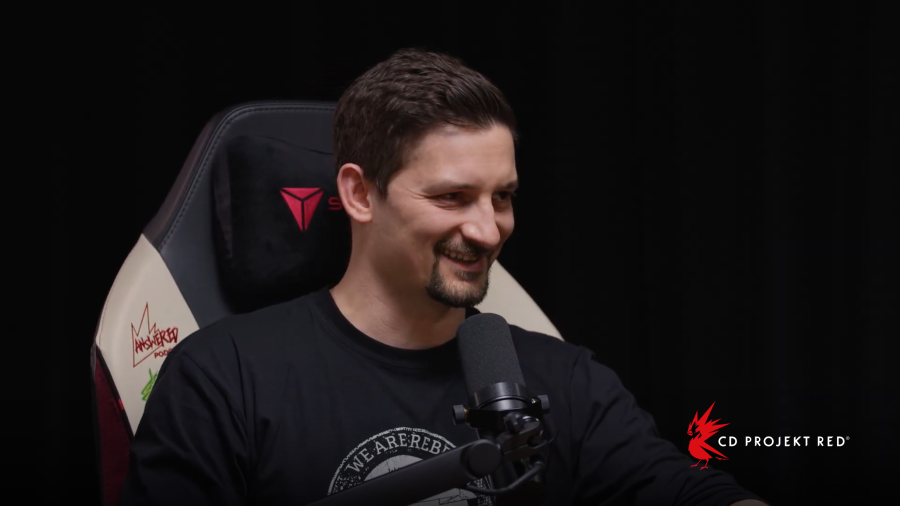
Marta and Miles explain what qualities they look for in new hires in the level design team.
Future of level design
Paweł B: Awesome. If you had to sum up, because we're coming to the end of the episode—without of course spoiling anything Witcher 4-related—how do you see the future of level design? If you had to sum it up in terms of the games that we do. I know it's very broad.
Marta: That's a tough one. One thing I noticed is a huge difference between the role of the level design team when I joined CDPR and how it is now. I can see that our role is becoming more and more important. We are much more visible in the team, and other team members are more aware of what we can do and start to come to us. I think this will actually evolve more into the future; there is good momentum. The most important thing is that we don't stop. We try to be better. We check our pipelines, principles, and processes, and try to improve. The rest of it is moving with how we want to improve our projects. There are a lot of cool, interesting things there that we can't really talk about, but I'm very excited about how level design can fit into that vision.
Miles: I'm happy to hear that. As Lead, I have a more mellow approach where I think the future can be quite bright for my discipline. I'm doing all I can to establish that. With this change Marta described, we've taken on a lot of work and responsibility. We're at the point where it's not so much about talking the talk and proving to people that we can do things, but actually proving we can execute. If we can prove that, then the standing of the discipline as a whole will only improve.
Hopefully, people will see exactly what I have always been aiming to do: that level design is a tool to elevate the experience at large. Whether you're a cinematic designer, a quest designer, or whatnot, collaborating with the level design team is to your benefit because it will make your stuff really shine.
What the future may hold for level design and the discipline's evolving role in game development.
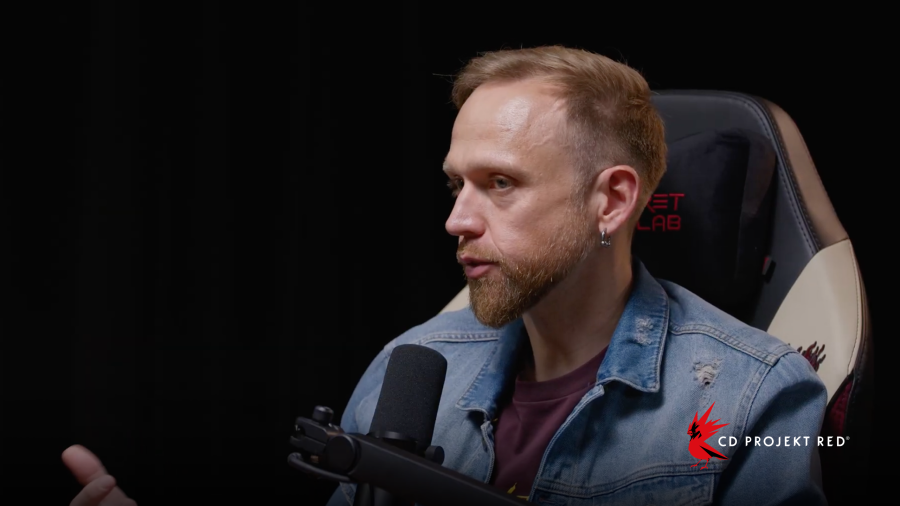
Outro. The hosts and guests wrap up the conversation with a few closing thoughts
Paweł B: Well said. I think that puts a pin in it. Thank you both for joining us. It was amazing to talk to you; the conversation flowed so well and easily.
Paweł M: We could talk for hours.
Paweł B: But it's also super interesting to get a deep dive into level design, so thank you for taking the time.
Miles: Thank you for having us.
Paweł M: Thank you.
Marta: Thank you.
Paweł M: Thank you for watching this episode. It was a fascinating journey into the world of the architects of worlds—people who have on their shoulders the challenge of balancing the interests of narrative, gameplay, and art.
Paweł B: Beautifully said. I could not sum it up better myself. But as always, don't forget to comment, like, subscribe, and all that jazz. Let us know what you're thinking about the episodes, and of course, we'll see you in the next one. Bye.
![<strong>AnsweRED Podcast Episode 33 — Growing the Vision: Boston and the Future of Cyberpunk [Transcript Included]</strong>](https://common.cdn.cdpr.app/cdpr/news/main/e3b89550d6f3b3b1e3db49d70c5c351d_q90_1280x720.jpeg)
![AnsweRED Podcast Episode 32 — Beyond the Feed: Community and Social Media [Transcript Included]](https://common.cdn.cdpr.app/cdpr/news/main/94ac2489f40cd24d3f49f3c55710bb39_q90_423x238.png)
![AnsweRED Podcast Episode 31 — People and Purpose: Shaping Studio Culture [Transcript Included]](https://common.cdn.cdpr.app/cdpr/news/main/03c393163707ede7eb317faf34c397d7_q90_423x238.png)