AnsweRED Podcast Episode 33 — Growing the Vision: Boston and the Future of Cyberpunk [Transcript Included]
![<strong>AnsweRED Podcast Episode 33 — Growing the Vision: Boston and the Future of Cyberpunk [Transcript Included]</strong>](https://common.cdn.cdpr.app/cdpr/news/main/e3b89550d6f3b3b1e3db49d70c5c351d_q90_1280x720.jpeg)
How does an idea grow into a shared creative vision — and how do you keep hundreds of people working toward it?
In Episode 33 of AnsweRED Podcast, hosts Paweł Burza, Tabletop Games Manager, and Paweł Mielniczuk, Art Director for Project Hadar, sit down with two members of the Cyberpunk 2 team: VP, Game Director Gabe Amatangelo and Creative Director Igor Sarzyński. Drawing on their experiences with Cyberpunk 2077 and Phantom Liberty, Gabe and Igor discuss how a vision for a game takes shape, how it evolves through collaboration, and how it’s communicated across teams and disciplines. Along the way, they talk about finding inspiration, learning from past projects, and giving teams the space to experiment, iterate, and contribute their own ideas.
The full episode is available to watch or listen to now. Prefer to read along? You’ll find the complete transcript below, lightly edited for clarity and divided into sections for easier reading.
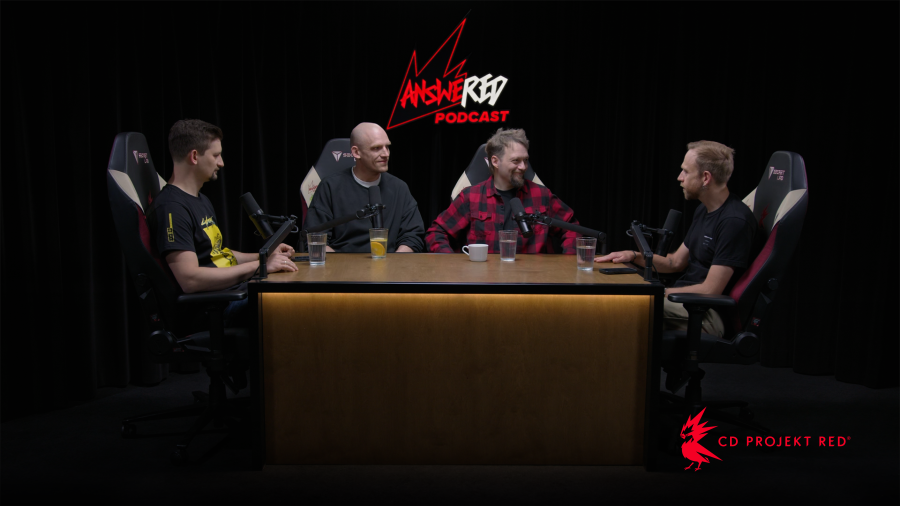
Intro and guest introduction
Paweł B: Hello everybody, and welcome to the AnsweRED podcast. My name is Paweł Burza and as always, I am joined by Paweł Mielniczuk, the Art Director for Project Hadar.
Paweł M: Hey everyone. Today we'll be meeting special guests from our North American studio: Gabe Amatangelo, the Game Director, and Igor Sarzyński, the Creative Director. We'll be talking about the studio, we'll be reminiscing Cyberpunk 2077 and Phantom Liberty, and discussing how the vision of the game is crafted.
Paweł B: It's a super interesting conversation, but please be aware there won't be many spoilers when it comes to Cyberpunk 2, so don't wait for that. But we might hear about what the guys think about Cyberpunk 2077, Phantom Liberty, the baggage that they have that came from that game, and how they are shaping the future in Boston. It's an exciting episode. Can't wait for it. So let's meet our guests. All right. Igor, Gabe, welcome to the podcast officially, all the way from Boston. So before we start, for those listening to the podcast, we would like you guys to introduce yourselves. Tell us a little bit about yourselves. And then we'll start with the first questions.
Gabe: Sure. Gabe Amatangelo, I'm the Game Director on Cyberpunk 2077 after launch and Phantom Liberty, and now Cyberpunk 2.
Paweł B: Nice. So, many things Cyberpunk.
Gabe: I've been here for six years now. Damn. Time flies.
Paweł B: Crazy.
Gabe: And before that, BioWare, EA, a number of other places.
Igor: My name is Igor Sarzyński, I'm a Creative Director, also on Cyberpunk 2. Here for now, I don't know, 13, 14 years. I started in QA, in game dev, I'm actually a company man, so it's always been CDPR and maybe it always will be. Actually, I cannot imagine myself anywhere else. I just... Man, I just love this project. And right now I'm managing all things narrative and world-building, and lore. So yeah, creating the expression of the world of sorts, story, characters, quest design. Also audio, music, anything that like, expresses the story, I guess.
First thing’s first — meet Gabe and Igor and find out more about their roles at CD PROJEKT RED.
Establishing a project’s vision
Paweł B: Beautiful. So let's start from an overall kind of thing that I feel like starts when we're talking about a game or a project is vision. So how do you establish a vision for a project, especially looking from the perspective of people who are high-level directors on Cyberpunk 2?
Gabe: Sure. So, at the beginning, especially with a sequel, we kind of... There's lots of conversations that just happen organically over time with various other stakeholders and you start to just kind of form something in your mind, like kind of a starting point. And then based on that starting point, people have different creative processes. Part of my creative process is based on those touchstones, those starting points, kind of where it's at in the air. I'll then go reach out to other pieces of art in a medium, whether it's watching an anime, playing another game, reading a book, what have you, and start to formulate it a bit in my head, kind of in this like cloud kind of way, and then have conversations with other kind of trusted creatives like Igor, Paweł, Paweł Sasko, lots of Pawełs, right? And then eventually you start to kind of form something. And then the next step is to kind of put it on paper and then start talking about it and just vetting it, right? And getting that feedback. And a big part of it is articulation, figuring out how to articulate the thoughts and the ideas. And so writing it down. And I have various exercises of being like, okay, I wrote it, you know what this game is, in like, five sentences, how do I distill it down to one sentence and then try stuff with people? I mean, there's so much you can talk about, sort of like how to establish a vision. We can talk about pillars, we can get deep into it. But I think that's just like kind of a quick overview. Anything you wanted to add, Igor?
Igor: Big part, as you mentioned with the sequel, is also evaluating the previous game, kind of talking about what we liked, what had potential, but we could push it further, what elements maybe are not necessary going forward because I don't know, they didn't pan out, or we feel it would be better to put our work into something else that would be more valuable for the game. And also in terms of creating vision, for me at least, from like a story, narrative side, it's not only about like other works, but also, I think especially with Cyberpunk, looking at least somewhat towards the real world because we kind of like, I think we all know we already live in Cyberpunk. Like most of those elements are already here, minus maybe cyberware, but even, I guess you could start making an argument for this. And of course, we don't want our game ever to be like, you know, to be didactic in any way, like to have very strong messaging towards something. But it should, I think, again, especially Cyberpunk, kind of get in dialogue with some like real-life themes. So this was also part of our discussion. How to make this game not just entertainment, but also something meaningful for the times we live in.
Paweł B: Yeah. With 2077, I also feel like it's redefining what cyberpunk is and what people kind of believe cyberpunk is. We've always been talking about the fact that, you know, we're showing cyberpunk that has daylight present and that is not only night and it's not acid rain, and it's not something that we kind of expect from cyberpunk as a visual.
Gabe: It's like waking up in Vegas and going outside in the morning. Feeling.
Paweł B: That's an interesting feeling.
Paweł M: So in what kind of details are you going in the vision stage? How high-level the vision should be or how detailed it is? Are you talking about individual features, individual elements like talking about storylines? What's there?
Gabe: We're going to talk about something called the game development framework I think later on...
Paweł M: What is it? Can you remind our viewers, what is it?
Gabe: So the game development framework is kind of the stages of making a game. And each of these stages has a different label that is indicative of what you're doing in the stage. And of course, the first stage is vision. And the vision stage... I guess I'll talk about the others. The next stage is the concept phase. And then after that is pre-production. And then you get into production phase. And the production phase can be broken down into various different ways. Pre-alpha, alpha, beta, it varies by project. In the vision stage, the main deliverable is something called a razor statement, which is distilling down into like 1 or 2 sentences what this game is, what it's about. And when you read it, you can tell kind of like how it is unique or has its place in the market, the razor, like how does it cut off? You know, ideas. Like how do you cut off the ideas? And then you establish the pillars, the high-level pillars. And you could have, you know, four pillars, five pillars, six pillars. But in these pillars, to answer your question, you try to hit the kind of the breadth of the game, but you don't really necessarily get into the specific features unless it's necessary to kind of frame an example in the pillar.
Paweł B: Yeah. I feel like believability has always been something that we as a company try to do, even early on, like the characters should be, like you said, relatable. They should be characters that you can kind of imagine that you would meet or characters that maybe are going through something that you might be going through at a given time in your life. And I think that's what always resonated when it comes to CDPR games. And we've kind of seen it also on the community front, people were writing to the community saying that, "Hey, this game helped me a lot. I was going through similar things." Or if it's things connected to, I don't know, identity and stuff like that, these are like important things and people really resonate with that. But then on the other hand, there should be this element of fun, of stuff that video games give you, which is just pure entertainment. But I feel like good entertainment is the kind that gives you like full engagement where you're actually thinking about, oh, this resonates with me, this works for me. And then I feel like you invest yourself a little bit more into the whole process.
Igor: A little bit of balance between... Always an interesting discussion for us, between entertainment and art. I think entertainment a little bit more gives you what we are looking for, and art challenges you a little bit in like what you are expecting, how easy it is for you also emotionally going through those stories. And we're trying to find this like sweet spot in the middle that like, yeah.
Paweł B: I have a good story about this. Two weeks ago, I was pumping gas in my car and I went and I had a Cyberpunk T-shirt and the clerk said to me, he's like, "Oh, Cyberpunk." It was a Shell station, which is just here next to the office. He was like, "I played that game." I'm like, "And what do you think?" He's like, "Well, all the endings they were kind of sad." I'm like, "Well, they're supposed to, you're supposed to have like this internal reflection and stuff like that." But he's like, "Yeah, but it was just sad. I thought I was going to get a better ending." I'm like, "Well, welcome to Night City. There's no happy endings." And he's like, "Oh yeah!" It's like all these things that, you know... And I feel like people, they thought that, okay, Cyberpunk is going to be kind of black and white, but there was a lot of shades of gray and it was about like super deep feelings and stuff like that. So it's just one of those games that makes you reflect. And I feel like we did the same with Edgerunners. And it was also like, I remember I finished watching Edgerunners, I got off the couch and I was like, "Damn, I need to process that." Like, all these things, they're... If you come back to them after watching something or playing something or reading something, that means they are meaningful enough and they have resonated with you in such a magnitude that you're willing to kind of like ponder, and think about it like, what if this happened? What if he or she did that? Then maybe the story would go a different way. Like there's a lot of engagement. You feel like you really need to be in it.
Gabe: Yeah, we like to you know, pose questions.
Igor: Exactly what I meant to say.
Gabe: We think alike. Yeah, we like to pose questions. We like to put you in scenarios where we're not telling you the outcome, but we're being honest about the duality, the shades of gray. We're not trying to paint stuff as black and white as you said. And that I think can get really into the lane of entertainment versus art, which is, we like for you to consider. And yeah, I mean, we have a lot of fun with that. We did that. And I'm trying to... Because I'm heavily into Cyberpunk 2. But yeah, just going back to Phantom Liberty, as you were saying there, like each of those endings, even the new ending that we introduced, it was like, okay, let's flip it. Let's make it not all that, it's like, you're... Spoiler alert. I guess I could say.
Paweł B: I hope everybody has played Phantom Liberty. If not, I'm like, what are you doing?
Gabe: Yeah. Because it was like in each of the things, you die or probably are going to die. And we're like, okay, let's make it that you don't die. But it's not that simple. Like life is still tough. Things are still complicated. There's cost to these choices, that kind of stuff. Because that's the real world, right? But at the same time, it's cinematic true story because there's still that fun element. There's the larger than life elements, and there's the framing to kind of really get you engaged to consider and ponder those true story aspects.
Igor: Yeah. We try to pose questions and provide players with like a buffet of interesting answers. And the new ending was this. It was an answer to Dex's question from the prologue in base game: "Quiet life or blaze of glory?" And we felt like we were missing this one answer, but it's not the only answer we are giving. There's a bunch and like you should choose. And also when thinking about like vision, you asked 150 minutes ago about like the level of detail. So we try to stay, I think with fairly, like, simple but evocative statement... Not even statements. Sometimes these are questions. And for example, when we think also about providing vision, like on a lower level for like specific questlines or different themes in the game, we almost always try to phrase them as problems or questions that given quests or a character as a vehicle for this, like allows you to explore. But it's not like any given like statement about the world.
Gabe: And there's a... Just as far as managing goes, because there's a natural tendency for individual developers, individual artists to have an answer in their mind, and then they start putting that answer on paper. And it's sort of our discipline to say, "Hey, no. We're not preaching. Take that answer away." Like give the scenario and have the stuff play out, but ask the question.
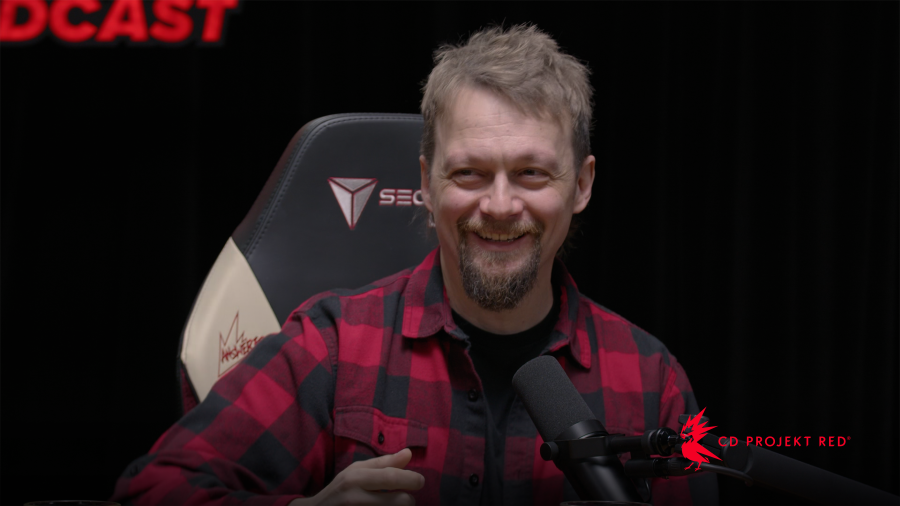
How does a vision for a game take shape? Gabe and Igor talk about where they draw inspiration from, how ideas develop through discussion, and what goes into establishing a vision that can guide the project.
How to implement one vision within the whole team
Paweł M: Yeah. I think because, you know, there's an opinion that making games is hard, right? And it is hard, obviously. But some people think coding is hard, other things. There's a massive amount of art to be done, other things. Oh, there's all these big teams to manage, you know, all the people to take care of it, that's hard. But, you know, we're all experts in those fields and we actually know how to do those things. But what's hard, actually, I feel, is this keeping everyone aligned about what kind of game are we trying to do? Because the result is years ahead. And at the very beginning, you just have paper, you have ideas. Everybody has their own opinion of what it might be. So what kind of methods you have to implant the same thoughts, the same ideas, same picture, if it's even possible, into heads of all the developers in the team?
Gabe: Thank you, that's a great question. When we were talking about the GDF and the different phases, like in the vision phase, you've got stuff on paper, right? And so it's like you don't have anything to play. You don't have really anything to experience, right? The next phase, concept phase, you start to get some prototypes. So you have something to play. So in the vision stage, one thing I like to do, and I did this on Phantom Liberty, when we first kicked off Phantom Liberty, is create a video. Because, like, getting... Because it's like, if you have 50 people, 100 people, 200 people, how do you convey all this stuff? And, you know, some people like to read documents, some don't. So putting together a video and figuring out how to like, you know, layer in some reference art, some reference material, just to paint the picture. We like to point to movies, to books, stuff like that, to kind of... Also game references for certain gameplay features and things like that, like this but with this, like that, but with this. So that's an important aspect in the vision stage. But honestly, I could talk so long about it because there's like, how do you set up the architecture of just the team. Building the team, product owners, meeting structure, all of these things. But I'll stop there. Maybe we can get into more detail later. I'll let Igor chime in a bit on it.
Igor: I think like it's always a little bit of a dance between like a top-down vision and keeping like the coherence of the idea you have in mind versus being actually open to what the team wants to bring to the table. So usually, like I have this little like diamond diagram, which illustrates for me, like, how do you work with creative side of game development? You start like at the one point of the diamond and it's a small team that creates the vision of the game. You don't want too many people at this stage like you want something, as we said before, like concise but really impactful. Then as more people join your project, and also games are, especially games of our type, are enormous. Like a small group of people cannot design and manage it. You need to spread the ownership and direction also in a way, to your team. More people join your team and you want to also create the world, right? With open-world games. And real worlds are just so like complex and weird and unexpected. And again, one person sitting down and deciding every factor it would ring false because the world is not like this. You want to, you know, imbue your world with all those different sensibilities and ideas and weird little perspectives of everyone on your team. So as it starts to grow, you allow people to start adding their own ideas to the mix and you know, not all of them are a hit, but often you get things you completely weren't expecting, but like, "Oh my God, this is great." It enhances our vision actually, and makes the world more complex, more interesting. So then you start like adding, adding, adding, like midway, I think through the project. And then once you have enough ideas, probably too many, this is time also to square it against production a little bit, and you start like cutting down again. So like, we don't have time to do this. Between those two things let's do this. This will be more valuable. Sometimes you don't even need that much variety because you want to express a more specific idea. So as you're getting closer and closer, it's again, becoming a little bit more held by a vision group, let's say. Making sure that the final product has sharp edges. But the thing at the end, it's not the thing that you designed in the middle. And I think it's beautiful to be honest. I love this part of creative process where through working with people, you end up with like two plus two equals five, but in a good way, not like mathematical way, but like, you know.
Paweł M: I mean, yeah, it's absolutely true. And I think that's important, not to get too attached to this initial vision, make it also very broad, you know, and focus on the important topics rather than pinpointing individual features. "I want, I'm sure I want this." But in the process, the team will prove to you, you don't actually need that. Something else.
Igor: You want to create a vision that people integrate of sorts and it starts working within them rather than giving them instruction like, "Just do this, this, this, make this door blue and this thing like this," without them really understanding and feeling it. Because again, from my perspective, at least, from narrative, feelings and emotions people bring to the table are the actual thing that later people resonate with. Like our stories and our characters wouldn't be so impactful if our writers and designers wouldn't bring a little bit of themselves to this. And sometimes, you know, these are like difficult topics that... But these are the ones that are later really impactful and maybe cross the thing between entertainment and art.
Gabe: And the challenge is that like... Because you were talking about that diamond and that diamond in a macro sense over the whole project, but it's even within like sprints and milestones, right? Where we got to close things in. And also when you have like three, four hundred people, whatever it is, making sure that everyone's ideas are even in the same genre and aligned and stuff like that is a trick. And as Igor was saying, having everyone's contributions, but making sure it's the contributions within the parameters is challenging. And the main way, at least the tactic I like to do, is I tell each of my reports, like you guys like Igor, Paweł, you know, Aaron, like you guys are game directors as well. Like the idea's we meet every week, multiple times, but we have this like two hour session that we do every week where we talk about all the different things. And so I say like, "Ryan, if you're..." He's our design director. "If you're in a meeting and the team needs some feedback to move forward on a topic, obviously when it comes to gameplay, you're going to know, but we're in this meeting. So you can also understand story a little bit." So we can talk about it, so you can unlock the people and let them move forward. Because if they're waiting on me or Igor to show up, like, you're never going to make a game. It just ain't going to happen at this scale. And so it's about... And I like to call it the hive mind. I try to get like me, Igor, Ryan, Aaron, Paweł, everyone just thinking the same creatively, as much as possible. Never happens 100%. But if you hit that 80% mark, then you just schedule like 20% for that misalignment, so to speak. And then of course, after my reports, then it's like, it's Igor's report. So he does the same thing and so on, and you cascade it down to when then everyone has this like cascading parameters within the game as a whole that they know how to put their heart into it and contribute on a thing and it fits in the game, right? So if someone on the team is presenting characters or scenario like that, they don't have all the parameters, right? And that would be too out of field. And it's like how to bring them in and make them think about the stuff that's in the scope.
Paweł B: Yeah. I feel like calibration is super important. Everybody, especially with, like you mentioned, the games, they're not getting smaller, they're getting bigger. They're more ambitious and everybody needs to be kind of on the same wavelength. And I feel like with big projects, and especially in the early phases, when you're talking about vision, a lot of things tend to change. And everybody should be kind of knowing what's changing, why we're making certain decisions, why the game is proceeding in a given direction so they can later, like you said, cascade it to other team members. So they also become calibrated. And then the whole diamond thing kind of makes sense. But what about a moment where you actually need to be kind of going down, or when you need to be cutting stuff? Because we always talk about adding, adding. Yeah. Great. Like a lot of cool ideas, but there is this harsh reality, like you said, that it needs to be kind of, you know, checked with production. Are we maybe doing a little bit too much or are we going too wide? Maybe we should be kind of cutting some things, changing some things on the go. What about these things? Like because they're also important for big projects.
Gabe: I have some Phantom Liberty examples. So, the scene where you meet Songbird at the rooftop and the shooting down. I remember so many times, like we tried different things and I was trying to say like, "No, like this." And we got to a point where it was like we couldn't do many more iterations. And so I was like, here, I'm just going to write the script. Here's the script. This is what I mean. Because for whatever reason, I wasn't able to like communicate it to each of the team members well enough to execute. And so I'm like, I'm just going to write the script. That's an example of like, when you got to get down to the details. But don't like doing that a lot. And I remember the casino scene or whatever, like it was like, okay, this casino scene, it's not coming together because there's so many moving parts. It was like, I was like, Igor, you and I are on the same page. Manage this one more closely. And so as you get in there, you have to like pick certain key moments that you're like, okay, I have to manage this one more directly as almost an IC, an individual contributor. But if you have to do that across too much, then you're in trouble. You're never going to deliver the game. But it's okay to find some spots and be like, for whatever reason, not able to communicate it. Or there was a sudden change in the end. And then you got to step in, type thing. The Chimera is another one to talk about as well because like, the Chimera... And this guy was on Phantom Liberty as well. We should be interviewing you too. Paweł Mielniczuk is the Art Director. And there's also, sometimes when we're creating certain content that is such a nexus point of different disciplines that it becomes... And the Chimera is a great example of that. It was gameplay, it was narrative, it was art, it was world-building. And I remember Paweł and I sending each other YouTube videos of various different military equipment, of those guns. What were those guns? I forget what those guns were called. Because we're like, when this Chimera comes, you know, rises up, we just want it to just, like, terrify you with this overwhelming sound. You can't even like, hear the bullets.
Paweł M: Bullet hell. We were iterating, I think it was two years to make this boss fight work actually.
Gabe: Yeah.
Paweł M: And we were reiterating over and over.
Gabe: So many moving parts.
Paweł B: But it was worth it.
Gabe: Sometimes it was too gameplay, sometimes it was too narrative, you know, sometimes it was too art demonstration and it was about striking that balance. And so like, I think like the three of us like heavily got into it and we're like, okay, beat by beat, let's do this.
Igor: But in terms of like scoping and deciding which ideas, with the time you have left and resources you have left, you should do and which you shouldn't do. Our production method kind of lends itself to it, which is agile, where you like, always plan and you always set a backlog, which is a list of priorities and you just go from the top. Like, sure, you would like to do everything, but then you find out like, we just have time for this and that's okay. In terms of like changes, also a case study from Phantom Liberty, this new epilogue that we added, until, I don't know, halfway through production, it was a different story, like darker, more cerebral. And we just thought like, we're trying to make it work and it didn't work. And we decided to do, it was actually like a big decision, to change a whole quest, like with production. And it's always a little bit scary because like, will we manage to do this whole new thing with half the time that you would normally have. But we thought like, we have to do it because otherwise like the, you know... You just have to do it for like the right impact. And also I think the new story is just better. And how do you convey it to the team? I think for sure, you need to explain it to the team because you know, you're not making an irrational decision. It's coming from somewhere. So you need to provide them with like a reasoning, get them on board. Like, why is this happening? So they feel also like they are informed. And also provide them with a better, new vision, I guess. So they're like "Okay, this didn't work. But this, this is actually cooler. We still want to do this." And of course, invite them to the process. As always, as we mentioned, recreate the diamond again. So it's not like, hey, now we have like very little. Sometimes you have to do it, like Gabe mentioned. But here we were in this space where like we provided maybe a little tighter boundaries, but still, the team came up with lots and lots of stuff.
Gabe: Like, for example, I remember the team, one of the things that they came up with that didn't come necessarily from me or Igor, I don't think either was that you get beat up in that scene. I remember I was just like, when they brought that to us, it was like, "That's so perfect." It just lands it because it's like... Because throughout the whole game, you're beating the s[__] out... Or... we can't edit.
Paweł B: It's fine, s[__]'s fine.
Gabe: At any rate, you know, you're wrecking shop and then when you don't have cyberware, we need to show you what that means, right? Like, you know, two, three people, they can beat you up now. And that was like a perfect kind of touch to that thing that came from the team. I don't remember who exactly, but someone on the team.
Paweł B: It's actually cool, selling people on the idea, but not only selling them on the idea and kind of like, "Let's do this." It's kind of like, "Okay, this is the idea. Let's collaborate on it and let's add to it." Instead of just like... But like you said, sometimes you just need to be, "Okay, I have a clear vision of what this should be. Let's try to do it this way." And then I feel like there are these moments within a project that people are like, "Yeah this actually comes together nicely and it works." I'm happy that you mentioned Chimera because I think for a reason, it's one of those things that people always go back to, journalists go back to, community goes back to, it's like one of those boss fights that became memorable because I feel like the vision and the idea for it was there and it all just clicked together and it just worked.
Gabe: Yeah. No, it was fun. And Paweł Mielniczuk enjoyed it every step of the way. He was never worried or frustrated.
Paweł M: Ever, never.
Paweł B: Never worried or frustrated, yeah.
Paweł M: When we were doing the tank, I think like four times. Changing equipment, different weapons.
Igor: One of the most expensive art assets, I think, ever.
Paweł M: Ever, absolutely. Ever. That's the thing. You can have this vision at the beginning, but there needs to be room always to change the path. Like sometimes you need to play something to decide if it's good or not. And you roll with it or you have to redesign.
Paweł B: Yeah. I was going to ask one thing because we've seen kind of through the development of Cyberpunk that there was a lot of things that were introduced into the game that felt like it was coming in from like the community or like some would call it fan service, but I don't like fan service. But kind of going back to things that we envisioned for the game in the beginning. So could you talk about also this. Having the ability to kind of not let go and keep going on the project and keep on adding and adding and adding and, you know, like making the product even better in the end.
Gabe: So you're talking about like the 2.0?
Paweł B: 2.0, yeah. For me, even before that. Even, I feel like the Edgerunners update was, yeah, that was where we kind of started pivoting and saying like, we can add more cool stuff, we can do more stuff that the community wants and we can really like go ham on it.
Gabe: Sure. I mean, definitely at the beginning, we had all kinds of like surveying and reports and data gathering, but also there was just intuition about like what's missing and part of the stuff we're talking about with cinematic true story, we were even applying it there. And then in spirit, so to speak, with like, how do we make this world feel more alive? And you can have these big ideas, because the police system as it is now, some of this emergent content as it is right now in 77, if you rewind back to, you know, 1.0, 1.1, it was like a pipe dream back then. And it was like trying to kind of get everyone on board to understand what it could be. And it was challenging. But to answer your question: as far as community goes, definitely that was a big mobilizer for the team. Just hearing, like, "Hey, we want the world to feel more alive." And so it's like, okay, how do we do this? How do we get this stuff together? And there was a lot of, you know, engineers, designers, even narrative that were like, "We can't do that because it kind of goes against the traditional RPG stuff." And it's like, no, there is a solution. And the fact that the fans, the audience was asking for it, meant like, we got to figure out the solve, we got to figure it out. And so that is a huge driver. And I'm naturally optimistic, ironically, working on the cyberpunk genre. So I'm like, there is a solve here. We can figure this out. I don't know if that answers your question, but that was a huge part.
Paweł B: It does. How was it for you, Igor?
Igor: I think it's... Let's say I work more on like main game development, patches was mostly Paweł Sasko. And I think under Gabe's direction. I think with like patches and post-release stuff, it's a little bit more skewed towards people's expectations also, features they've been missing. You kind of try to build also on top of what you have. I think it's a little bit more interesting with like when you're creating a whole new game. Like, do you listen to everything that people would want out of your game or you try to challenge them, which again, is like this kind of balance between art and entertainment. I really love working with Paweł Sasko on this because I think he's much more player-oriented, of sorts. Like, players would love this or appreciate this and so on, but I'm always like, "Hmm, but should we give it to them? Or should we maybe, you know, like..."
Paweł B: Poke the bear.
Igor: "Poke the bear a little bit." And what I really love about our company is that I think we never land on this, like, first, you know, let's just make the players happy. Let's give them what they want. We always try to challenge them a little bit or, you know, go against the expectation and surprise them. Like they are maybe thinking of like DLC would be this or that or like this. And we are just creating a whole new story with like a different expression, which, yeah, is just so much more interesting.
Gabe: I always have to balance those guys out. The referee, as it were, like, "Listen, there's a way we can have both. It can happen." And we put our minds together and I think we figured it out pretty well for 2.0. And the patches is following it, but certainly for 2.0 and 1.5 as you were saying. And I think all of it is kind of rhythm and momentum for Cyberpunk 2 to go even farther and stronger and even more into what we want to deliver, which is an immersive experience. Am I going too far? Okay, I'll stop.
Paweł B: No, Igor was kind of looking into you, and I was like…
Gabe: What are you gonna say next?
Paweł B: I see this dynamic that whenever both of you are talking, the one is trying to kind of look into the other like, "Hey, bro, maybe a little bit too much."
How do you keep a large team working toward the same vision while leaving room for new ideas? Gabe and Igor share how collaboration helps a game’s vision evolve throughout development.
Lessons learned from Cyberpunk 2077 and Phantom Liberty productions
Paweł B: So when we're talking about this, let's kind of talk about the lessons learned from Cyberpunk. So what are the things that you are taking with you and saying like, "These are the things that for sure we want to explore more or use in the future." What are the lessons learned from the project, from the base game and Phantom Liberty?
Paweł M: And the process as well, right? How we restructure the company around...
Igor: Probably much easier to talk about the process rather than specific features or aspects of the game.
Gabe: Yeah, that's really tough to skirt that. But process and team structure... You can go first. I mean, I'm happy to, but I feel like I keep... Go ahead.
Igor: No. No worries. Sure. I think one of our main takeaways from the base game in terms of how we produced it and organized it, was one, we were creating like too far away plans for too specific things. We were like, "And in two-and-a-half years, this specific lighting effect will land exactly in this place," which is like... Looking backwards, it sounds ridiculous because games, especially games of this size and complexity, are so incredibly complex. And you really cannot predict how... There's like an emergent complexity from all the systems and people interacting, bringing their ideas, all of this working in this live environment, versus technology. You just cannot predict where stuff will be. That's why we switched to agile methodology, which is much more shorter-term planning. I don't want to say it's only this, but overall in detail, you focus only like sprints or like 2 to 3 weeks or a milestone in a slightly lesser detail. So like 2 or 3 sprints. And then you have a roadmap for like a year ahead and kind of a goal.
Paweł M: And the stage, which we introduced also on Phantom Liberty a bit, right? Before in Cyberpunk, it was like we're playing the whole game at the very beginning. So at the beginning we thought that we exactly know what we'll land on with like seven years ahead, for example.
Igor: And this is kind of to our previous point of leaving space for discovery and with agile it's much better because you're agile and you're kind of like figuring it out as you go, sort of, but still, of course, keeping in mind the overall vision and goal for the product. So one thing is overall, the way we approach, playing, testing, and iterating on the game. And the second big aspect I think is just cross-team communication, which is something that hurt us a little bit, I think, on base Cyberpunk, where mostly, most of the teams or areas where doing their own thing. And we had less points of contact, which created some discrepancy between features and narrative, or just like times of delivery of different stuff. Now we just completely switched our method. You don't work really in disciplines. You work only in player-oriented pods, which create... Player-experience-oriented pods, which create player experiences. But to create player experiences, you need a little bit of everyone. You need someone from art, from audio, from gameplay, from narrative. And like, they always go totally hand in hand talking to each other all the time. And that's like, it's an enormous change. And I think it served us really well on Phantom Liberty. And we would like to stick to it. Overall, constant communication is just like the absolute life system of game development. Without it, everything falls apart immediately, especially with a project of our complexity. Because sure, it can work on a small project, really tight, everyone knows exactly what to do. You can plan it in a waterfall method. It's easy, but not with a game like ours.
Gabe: And to be clear, we do a hybrid. It's not full agile. There's a hybrid element to it. I remember when I was first in game development, having to work on... I was writing quests and I was writing quests with assumptions of environment art. And I was just like, why are we doing, why am I doing this? And I'm like, I know where the environment artist sits. And so I just went over and, you know, I've been doing this for 22 years now. So I'm talking a long time ago, right? I'm like, let me go just chat with the environment artist. And then chatted with them. We collaborated on something and then it was like, "Oh my God, this is like..." I'm sort of like patting myself on the back here. "This is like the best quest. Wow. How'd you guys do that?" And again, this is way back when, you know, just getting off of like the 90s game-making garage, starting to expand into bigger stuff in the early 2000. And it was this whole thing where the industry was trying to figure out, how do we scale? And then a lot of people came in with like, "Oh, agile, agile, agile!" And it was like, okay, agile, cool. There's elements to it, but how do you do both? Because you can't just be fully agile because you can't have these individual groups making different games at this scale. It's fine when it's like a smaller one, but how do you do that? And I think a big part of it is what we were talking about earlier. It's that vision alignment cascading and letting people be product owners. But you know that a product owner on an individual cross-discipline quest team understands the place of this product in the overall product because they've aligned heavily with Igor, who's aligned heavily with me and the other guys. And this is an important aspect to... I guess I just wanted to caveat that because it's not all rose-colored glasses, it's not like "Everyone just do what you want," because early when we first... When I took over on 77 and we were doing the transformation, which was talked about in the media and stuff, it was that early on, everyone was like, when we put these teams together, we had, you know, level designers being like, "Okay, I get to write now!" And writers being like, "Okay, I get to do gameplay now!" And it's like, "No no no, guys! No, no no no no."
Paweł B: That's not how it works.
Gabe: It's about collaborating. It's not about doing. You still respect each other's disciplines, but it's about just having that conversation. Similar to the example... Because it resonated quite with me how I started in the industry. It was just like I just went and just talked to people, because that's basically it. And that's what's missing in waterfall, you know, classically, people just don't talk to each other. And if you're not in game development, it's probably difficult to picture that because it's like, why wouldn't you? And there's just something in the air, sometimes, in companies where people just don't talk, they're just doing their task. And that's the thing we try to change culturally. And this is a great segue into our Boston studio.
Paweł B: It's like you're reading my mind because this is the next thing that I was going to move into.
Paweł M: But I wonder here because, you know, I remember the switch in Phantom Liberty. So in Cyberpunk, we've been totally siloed, right? The teams were working in waterfall, in their bubbles, like, art here and narrative here, you know, etc. And making all those people work together, communicate more, spending more time on communication than actually doing their task and work, and also being aware of what the full picture is because, you know, let's be honest, many people in the company were just focusing on their disciplines, their model, their thing, their quest, but they're not really aware of how the whole game shapes together. So it was a difficult process for our people internally here. Now we are building a new studio. We know that your team has grown twice over a year, right? But on the other hand, you're building it in the States. So there are people which have like, for example, longer experience in the... Game development is older in there, right? So how does our culture of working, our methodology that we figured out in Phantom Liberty, land there with those people?
Gabe: So it's interesting because what you're saying there is like, we doubled in size over this last year and we did. And the marketplace in the States, you have all kinds of development companies and you've got some like, you know, let's say old-school, BioWare, Naughty Dog, Obsidian, you know, where it's like heavy iterative cultures, right? Heavy collaboration cultures. And then you have some where, and I'm not going to point a finger at any, but you have some where it's more like, it's more like just, here's the blueprint and you do it right. And some of the individuals that come from these backgrounds, "here's the blueprint and you do it" are super experts. They're so damn good at this thing, but they're used to getting the specific instructions. And what we create is art that we discover and everyone contributes to. So to answer your question, how is it, it's like 50-50. You know, I'd say it's more like 70-30, 70% of people coming from iterative culture backgrounds, but 30% not. And we have to be like, "Hey, listen, I'm asking you to change this, not because you didn't do a great job. That's a phenomenal job. It just doesn't quite fit." Or "Because you did that, we now see the next step, and now we have a better picture of what we want. And so this is a very valuable part of the process that you just contributed to. But yes, we have to get rid of it and put something else in its place." And getting everyone to feel comfortable and safe emotionally with that. And we talk among leadership to be very conscious of this. We have various different HR-driven kind of training programs. We have various different meetings where I try to remind everyone iteration doesn't mean you did a bad job.
Igor: I think you're bringing up, at least to me, one of the most important points is this safety of sorts, like emotional safety, where you are. It kind of ties to what we've been discussing before. If you wanted not to be just like, you know, entertainment people going for the very first idea they have, the safe idea, the idea they know, which is not brave. It's not going out there, but like, you know it will work. But in the end, it's not interesting. It's not an interesting thing. You want them to go out there, right? Like to reach deeper into themselves and like surface this idea, like maybe they had some difficult experience, but in order to just like share it with people around you, you need to know them, you need to feel safe with them. You need to know that if you propose an idea that doesn't work, no one will like, criticize you for it. But like, as Gabe said, "Thank you. I don't think this works, but let's keep exploring." And in the end, I think you can build this just with time and practice and showing up and being there and engaging in those discussions and showing yourself that you're this type of leader or director that encourages people to promote those ideas. So sure, we can say the nice team vision statements that we want, but in the end, it's just months and months and hundreds of hours of talking and practice and getting to know people and getting closer to them. And then, I think, the really good stuff starts to appear in this space.
Gabe: I remember at the beginning of Phantom Liberty in 2.0, when I moved into the role and I was sitting down with Igor, Marchewka, Sasko, maybe Paweł as well. And we're brainstorming things and I'm saying my idea on how we handle something and they're like, "Okay, well, I guess that's what we're doing." And then I'm like, "But maybe my idea sucks."
Paweł B: Challenge me.
Gabe: And then I start arguing against my idea. And I remember Igor was like, "Wait, so do you want to do it or not?" And I'm like, "No, no, no, I just want to challenge it because my ideas, all of our ideas, I want to minimize the power dynamic, as it were, because it's like, it's ideas, ideas need to be defensible, right?" And ideas, you need to make... They're not personal. They're just contributing, contributions to the process. And it's like, beat up the ideas. You're not beating up the person, you're beating up the idea. And that is the process of what you need to do. And everyone needs to feel comfortable with it or try to.
From shorter-term planning and cross-discipline teams to a greater focus on iteration and open communication, Gabe and Igor look at the practices that have carried forward into current development from previous projects.
Iteration — the secret sauce
Paweł B: Yeah, I feel like challenging things is super important. And what I always liked about us as a company is that we're not afraid to kind of iterate and iterate and iterate to a point where we feel that we're confident in that idea and we're happy with it. And it is maybe it's not something that we envisioned at the beginning, but at the end, it's like, "Oh, this is really cool." But it must be also difficult, especially when we're talking about, you know, a market where game development has been present for a longer period of time than in Europe. And we do things here a little bit differently. So taking that culture and translating it into that market, there must be also a lot of people with like a lot of experience and big egos. And like you said, I really like the approach, it's not that the idea is bad, but let's say, let's try to make it better. Let's reiterate it, let's change it. Let's maybe push yourself in this direction a little bit more. That's where the secret sauce is made, right? And this is, I feel like very CDPR.
Igor: Yeah. Best idea, first best idea wins. And on Phantom Liberty we had a bunch of great ideas coming from all around, also to Gabe's previous point, you need to know where... Feedback is a gift so you can receive it, but you don't have to later, you know, take and do something with it. So like, "Thank you..." In the end, it's your discipline's expertise to decide if something works or not. But yeah, in the end, if anyone has a better idea, sure, we will use this idea. And also, to your point, I think, part about CDPR, which is both very demanding, but also something I love. If it's not good enough, we just won't do it. And we'll keep doing things, iterating until they're good or just great, and there's no way around it. There's literally no way around it.
Gabe: Yeah, there's times where it's like, "Oh, we gotta stick with this to finish it." And then we just say, "I don't care." If it's not the right thing. It's like the ending you talked about. It was like, "The ending isn't right. We have to change it. It doesn't matter because we're not going to put out... We don't want to put out anything we're not proud of."
Paweł M: But there's another thing like presenting a better idea. Sometimes people might be... They might think their idea is not better, but... It's also not easy for me, and I want it, to make people share the stupid ideas also. Because sometimes, you know, they need to be feeling very comfortable and safe at their workplace to start sharing even the stupid ideas that, you know, just say it. And very often those ideas and brainstorms, the quantity of those ideas, some are bad, some are horrible, etc., but they're not afraid to say them and debate about them. Even the worst idea can spark another person to invent something which will be actually completely groundbreaking. And I've witnessed that multiple times. And this is the challenge with the team, making this comfortable environment for them to be there.
Igor: Absolutely.
Gabe: You know, "Probably dumb idea, but what if we did this?" And it's an exercise. It's an exercise to find out what aspects of this dumb idea are good. The overall idea doesn't work, but what aspects have some quality to it? That then translates into something in the air that leads somewhere else. Yeah for sure.
Paweł B: But you need a culture and an environment for it. So people feel comfortable enough because sometimes, we are professionals, so we are always thinking like, "I need to come up with the best idea. It needs to be bulletproof."
Paweł M: I need to say something smart.
Paweł B: Exactly. I need to say something smart. But then if you're comfortable enough and sometimes you can throw something which is like, "Yeah, loose idea probably, I'll just throw it on a wall, probably bounce off and nothing." But then it's like, "What if we do this? And what if we iterate it and change it to this?" And then someone gets inspired by that. But you have this culture within the company that lets people throw these ideas. It makes them feel comfortable to throw crazy ideas. Maybe they won't stick. Maybe they will. But you know, they are empowered to have that, which I think is super important.
Paweł M: It's not a company where we do, "Oh, HR note: This guy had a stupid idea." It's not what we do.
Gabe: One thing I want to add here, because I always like to ground this in practicality because a lot of people talk about, you know, lofty things and perfect places and stuff like that. It's like there are certain phases in the project or even in sprints and in milestones where it's like, "Okay, there's a lot of good ideas, a lot of things here, but we just have to make a decision. We got to close on it." And whether it's a product owner, a director, it's like closing, right? That is absolutely a phase of it. And sometimes there's subjectivity, right? Sometimes there's intuition, and that's how you move forward. So yeah, it's like the ideas, the process contributing, getting as far as you can, but it doesn't mean that all ideas get done. I think that's an important thing.
Paweł M: I think it's also coming back to the GDF and the phases and the diamond you described. So it's like, we have this vision, right? Then we have the concept, the pre-production you're in right now, right? Those are the moments when we can have too many ideas. And then when you go into production, we're narrowing it down. We're framing it. They're great, but we can't either afford it or they don't fit or, you know...
Gabe: Maybe for the expansion, maybe for another... Yeah. There's this, and I'm not going to say what it is, but there is this rolling thing that has been around for a while that Igor always brings up. And I'm like, it doesn't fit. And you know what I'm talking about, right? And I'm like, "That's for later." For the expansion.
Igor: On the next project, I know. That the next one will be this one.
Gabe: The next one's gonna have this thing.
Paweł B: Keep the man's hope alive so actually, it makes it one day.
Igor: It's motivating for me, I know. One day.
Gabe: It's the carrot.
Paweł B: Yeah.
Gabe: Just keep going. Next project.
Paweł B: Yeah. Awesome.
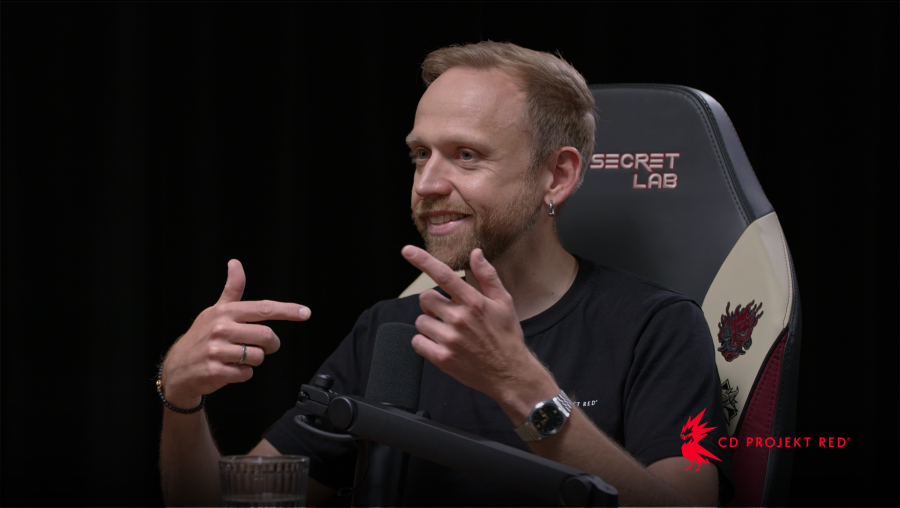
The team talks about why iteration matters and how even a bad idea can lead to something great. They also highlight the importance of building teams where people feel comfortable sharing their ideas — even ones that might not work.
Looking at the future for Cyberpunk’s and the Boston Hub
Paweł B: Guys, this was a super interesting conversation. I think we managed to avoid spoilers. But we really got into the process. We'll see what the audience thinks. If there is one thing that you wanted to kind of wrap everything up in terms of like thinking about Boston, thinking about the future and kind of the teams that you're building and the project that you're working on. What is the one thing that you're most looking for when it comes to the future? Kind of also that something can give the viewers or people who are thinking about joining us in our Boston studio to kind of think about. So if you could throw one thing, it's totally open.
Gabe: The thing I'm most looking forward to in the future is Cyberpunk 2 and seeing the piece of art that comes from the chemistry of the whole team. Creating a piece of art, bringing it out there to the players, and... Making... Contributing to people's lives in a way of showing different perspectives, but also having some fun. And some immersion. I think this is, I mean, again, I'm trying to not give spoilers, but like this, like putting that out there is definitely the thing. And, and it's, it's part and parcel because like building a team is also building the game. And so it's the whole thing. It's the whole piece and being like, "Look, we built this team and here is the reflection of that team and everyone's contributions."
Paweł B: Beautiful.
Igor: I would almost say the same thing. I'm really looking forward to this like collaborative creative process where everyone, as we talk, like feels safe and proposes brave ideas. And it's a thing, like the game is a thing that has an edge, has an expression, is going new places, is taking risks in the product, but is safe on the inside, on the people, on the team that's creating it.
Paweł B: Yeah, I was thinking you're going to take it more in the art direction because I know you're very, very like when it comes to expression and kind of the creative process, you're the person that we can have lengthy conversations about that. So I was kind of thinking like, yeah, artistic expression and stuff like that. I was fishing for a little bit of that.
Igor: Trying to manage it with, you know, my product responsibility. My internal Paweł Sasko telling me, "Make it accessible as well."
To close out the conversation, Gabe and Igor look to the future of Cyberpunk 2 and the growing team in Boston.
Outro
Paweł B: Guys, awesome. Thank you for this conversation. It was super insightful. And yeah, hopefully we can have you here once again once we start talking more about the future.
Paweł M: Thank you so much.
Igor: Thanks.
Gabe: It was fun. Yeah, thanks.
Paweł M: All right. Thank you very much for joining in. I hope you enjoyed the episode. It's a very insightful journey through how we think the game should be made, how we feel about Cyberpunk 2077 and how we altered the way we do games, we approach doing games, in Phantom Liberty and how finally, how we transplanted that knowledge into our newly established North American studio in Boston.
Paweł B: I couldn't sum it up better. I really enjoyed this episode. I'm still buzzing after it, but I also want to know what you guys are thinking. So comment, like, subscribe, let us know what you're thinking about the episode. And of course we'll see you in the next one. Bye!
Wrapping up the conversation with a few closing thoughts.
![AnsweRED Podcast Episode 32 — Beyond the Feed: Community and Social Media [Transcript Included]](https://common.cdn.cdpr.app/cdpr/news/main/94ac2489f40cd24d3f49f3c55710bb39_q90_1280x720.png)
![AnsweRED Podcast Episode 31 — People and Purpose: Shaping Studio Culture [Transcript Included]](https://common.cdn.cdpr.app/cdpr/news/main/03c393163707ede7eb317faf34c397d7_q90_423x238.png)
![AnsweRED Podcast Episode 30 — Paths and Possibilities: The Art of Level Design [transcript included]](https://common.cdn.cdpr.app/cdpr/news/main/41e6bae69f58881b2f5c3eba49e909a1_q90_423x238.png)