Back to Night City – Cyberpunk: Edgerunners 2 [Transcript Included]
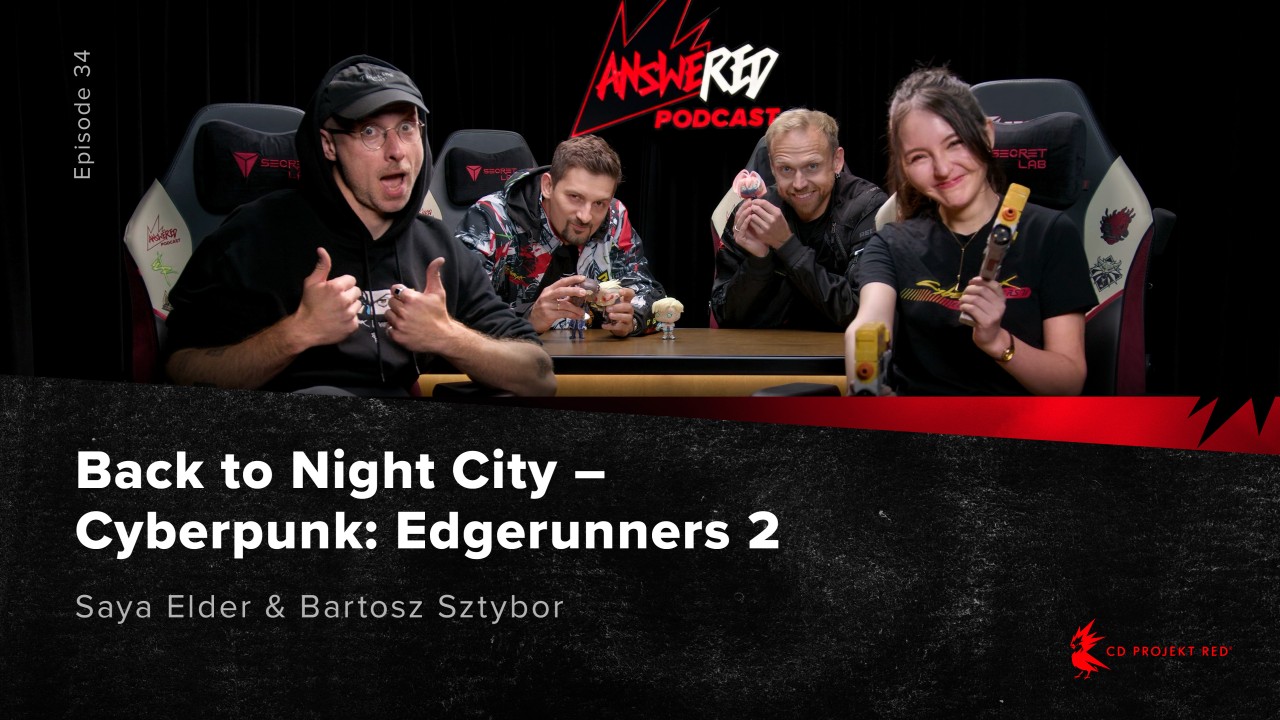
Another wild, emotional ride through Night City, a brand-new cast, and a raw story of revenge and redemption. Join us for Episode 34 of AnsweRED Podcast as we go behind the scenes of Cyberpunk: Edgerunners 2!
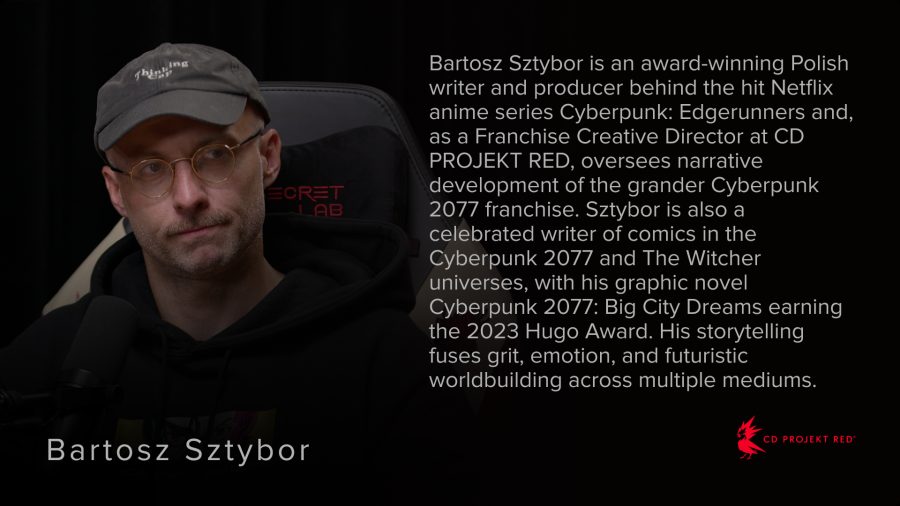
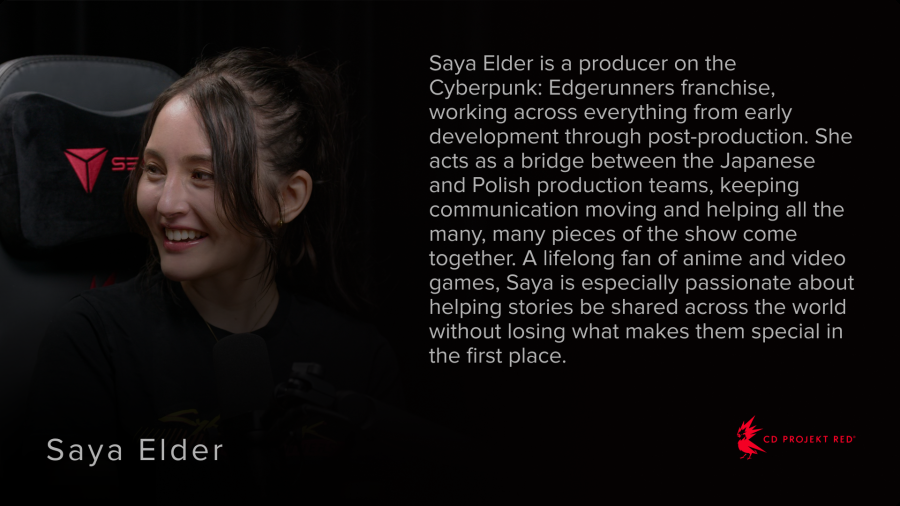
Cyberpunk: Edgerunners 2 — a standalone series created by CD PROJEKT RED in collaboration with Japanese animation studio TRIGGER — premiered on Netflix on October 20, 2026. And in Episode 34 of the AnsweRED podcast, released just days after the launch of Edgerunners 2, we invited Bartosz Sztybor, VP, Franchise and Showrunner of Cyberpunk: Edgerunners and Cyberpunk: Edgerunners 2, and Saya Elder, our Executive Producer – Anime, to share their insights into the making of the series. Together with hosts Paweł Burza (Tabletop Games Manager) and Paweł Mielniczuk (Art Director for Project Hadar), they explored the creative vision and themes behind Edgerunners 2, offering a behind-the-scenes look at the series’ production process.
The full episode is available to watch or listen to now. If you’d rather read the conversation, take a look at the full transcript below — it has been lightly edited for clarity and divided into sections for easier reading.
And don’t worry, there are no significant Edgerunners 2 spoilers ahead! (Though we do discuss the ending of Edgerunners 1, just so you know.)
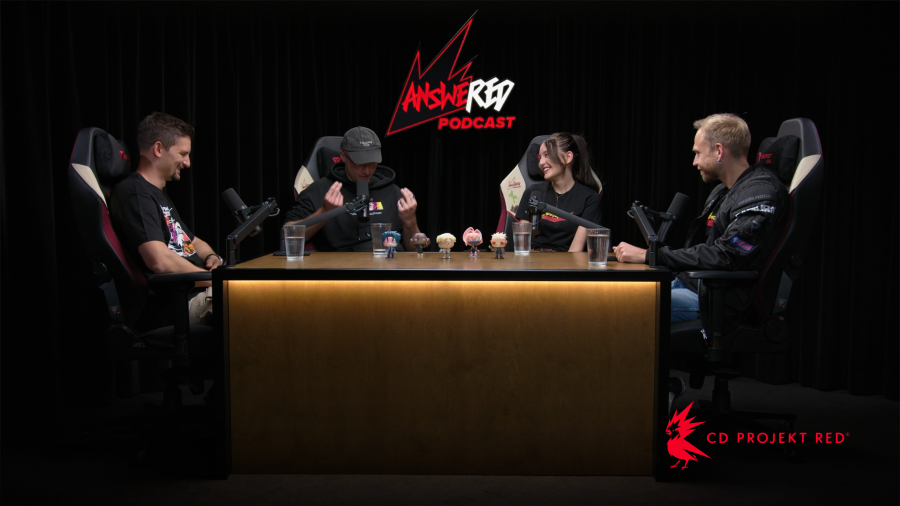
Intro and guest introduction
Paweł B: Hello and welcome to the AnsweRED Podcast. My name is Paweł Burza and as always, I am joined by my friend and co-host Paweł Mielniczuk, Art Director for project Hadar.
Paweł M: Hello, hello, hey! Today is an exciting day because the Edgerunners 2 TV series was just released on Netflix, and we have an opportunity to talk about how it was created, what it's about, but without any spoilers, with Showrunner Bartosz Sztybor and Executive Producer Saya Elder.
Paweł B: It's going to be an exciting episode. I cannot wait to meet our guests, and we're gonna learn a little bit about Edgerunners 2 and how it plays with Edgerunners 1. But you're not here to listen to me. You are here to listen to our amazing guests. So let's meet them.
Paweł B: All right, Saya, Bartek, welcome to the podcast, officially. I said Bartek — that sounds weird because normally it's Sztybor, right? Everybody calls you Sztybor.
Sztybor: No one calls me Bartek. Thank you.
Paweł B: Could we start by you guys introducing yourselves, especially to those who are listening to the podcast and not watching it so they can familiarize themselves with your voices?
Saya: You want to go first?
Sztybor: Nope.
Saya: Okay. Hi guys. I'm Saya Elder. I am the Executive Producer of Cyberpunk: Edgerunners 2.
Sztybor: Brah brah Saya!
Saya: Stop!
Paweł B: Beautiful.
Sztybor: And I'm Bartosz Sztybor, AKA Sztybor, also known as Bartek since today. I am the showrunner of Edgerunners 2 and a former bard. So that's me.
Paweł B: Beautiful.
Saya: The former bar?
Sztybor: Bard. Back in the day. I will tell you stories.
Saya: You should have asked to like get all your songs on the soundtrack. Now I'm disappointed.
Sztybor: I have a small ego, that's why I didn't want to do that.
Paweł B: He’s our very own Dandelion.
Before we delve into a discussion on Cyberpunk: Edgerunners, let’s meet our guests — Bartosz Sztybor and Saya Elder.
Reflecting on Edgerunners 1
Paweł B: So guys, first question. Looking back at Edgerunners 1, did you ever anticipate the show really resonating with so many people and actually getting a lot of fans on board who sometimes maybe were not anime fans, but they kind of got into the whole genre through this? Like, did you ever anticipate this to be a thing after 2077?
Saya: Gosh, not at all.
Sztybor: Not at all, yeah.
Saya: Edgerunners 2 wasn't even a thing at the time of release because we had no idea or no expectation of the show doing well or reaching any of our fans. It really was just like a passion project at the time. I was feeling the exact way I'm feeling right now, which is like super anxious for how it's going to be received by our audience. I feel like I was spreading my anxiety to the whole team being like, "No one's gonna like this show, and I want to rerecord all the lines and I want to rewrite everything."
Sztybor: Yeah, I had the same feelings. I thought it would be a flop. Development and production was really hard, and it was the first time for all of us. So honestly, I didn't even care about the release day. I overslept the release day. So then I received lots of DMs that "dude, this is awesome." And then I knew that something is happening. But the funny thing is that we had the fourth anniversary a few days ago and I wrote about those feelings on social media, and one guy wrote, "You're f[__] stupid. It was studio TRIGGER. It will be a hit for sure." So it was like, okay, thank you.
Paweł M: But I also remember back then in studio, there was a lot of uncertainty about it. A lot of people were not believing. You know, "they're doing something," but a lot of people were just very hesitant. Not even talking about success, but will it be actually anything. But after release, it became so huge. And it's one thing how it was received; the second thing is how it helped the game also. I remember on Steam, Cyberpunk went like 600% up after the release. And so, looking back now, what made it so successful that we couldn't foresee before? And do we know now?
Sztybor: Honestly, I still don't know. I mean, I think the story is very universal and you have a plot from zero to hero, a love story as well. So I think it resonated with many people around the world, and also the art style — I think it was also something that helped with that. When we were developing Edgerunners 2, I was trying to find that main thing that made Edgerunners 1 a huge success. And I was searching for it, and honestly, I didn't find it. I mean, I don't know, I'm searching for the answers right now, but I don't think there is one thing. Some magic happened, I guess.
Saya: Yeah. I think it's actually what you just mentioned, Paweł. Like you mentioned, in the studio, even inside CD PROJEKT RED, Edgerunners is kind of a black box. It is a very small team that knows what's going on and who has access to the scripts or the storyboards at any given time. And what that creates is a lot of freedom for Sztybor to do whatever the heck he wants with the script.
Sztybor: Don't say it out loud.
Paweł B: Someone might listen.
Sztybor: This is the end of me.
Saya: But also, I think it's true, though, because I feel if there is a lot of limitation put on studio TRIGGER and Sztybor on what they're allowed to do, the more voices there are in the kitchen saying, "Hey, Edgerunners 2 should be more like this," or "No, we shouldn't say that David is dead," or "We should have this character as the main character instead" — I think that really puts a limit on what we're able to do. And at the end of the day, I think what's important is that our creative minds are able to pitch their stories and what they want to write, and what they feel is going to be the best story. And for them to have staff who support that vision and just kind of make the show that they want to see as an animation. The more people that are able to put an opinion to that vision, the more muddled the vision gets. So that's why I feel that the success of Edgerunners 1, and also hopefully 2, is going to be that it is a small team of very focused, crazy creative minds.
Paweł B: But it really worked. In the end, it really worked because like you said, it has a little bit of romance. It has a story from zero to hero where we're following David's story here. But I think what also really resonated with people is that the overall thing — how we think about Cyberpunk and how we think about Night City — is there's really no happy endings. So we can also really dive more into that and say, "Okay, you love these characters. We built these characters throughout the show. Well, some of them are not gonna end up whole by the end of the story." We also have, you know, Smasher there, which is like a super cool tie-in to 2077. And there's so many things that really pull pieces from Night City and from the game and actually incorporate it into an anime, which was super cool to see.
I'm maybe not a big anime fan. I don't watch a lot of anime, but this one was like, oh, I can easily get invested in this story and maybe now check out more things in the anime space. So this is kind of like a gateway for me to get me on board because it's Cyberpunk, and Cyberpunk is of course something that is super dear to our hearts. So that was cool.
Bartosz Sztybor and Saya Elder have both worked on the first installment of the series, Cyberpunk: Edgerunners — also available on Netflix. In this section, they discuss the success of the anime and how it exceeded their expectations.
Developing a new vision for Edgerunners 2
Paweł B: So going into a question after my long tangent here: what were some of the things, looking at Edgerunners 2, that you wanted to take from 1 and incorporate? Or did you want to maybe say, okay, we need something which is totally different when we look at Edgerunners 2?
Saya: I don't think that there was any pressure to do something —
Sztybor: Ha! No pressure!
Saya: There was pressure. No, no, no, there was pressure. There was like, "Sztybor, we need to make something better." But I don't think there was any like, "We have to do these elements from Edgerunners 1, and we have to have these characters, and we have to have this certain number of legacy characters from the game, and we have to have these locations." I don't think there was any pressure to do that.
Sztybor: There's Sztybor, and there is also evil Sztybor who tells me things.
Paweł B: His alter ego.
Saya: The corpo Sztybor.
Sztybor: The thing that I said before is, that's the way I write and work. When I was writing the first Witcher comic book for a year, I was analyzing Sapkowski, the games, all that. So here I was analyzing season one: why it was a hit, what was great about it. So as Saya said, the first idea was that we are doing something new. It's an anthology. It will be a new cast of characters. The legacy of David — we should keep that. But still, the temptations that, oh, maybe there should be a romance, maybe it should be from zero to hero. I mean, it's really hard to risk, honestly. But we did that, and I'm super happy and proud.
I was very, very anxious and afraid before the first screening during Anime Expo and us showing all the character designs because it is so different. Season 1 was very beautiful. The colors were different. The lines like ligne claire, all that. And the second one is punk in the animation. And I was super afraid that people will say, "Oh no, we like the beautiful lines from the first season and the love story of beautiful David and beautiful Lucy." And here you have super strange characters and violence. But people were like, "Oh, wow. Yes, we want that. We don't want you to copy what you did with season 1."
Paweł M: Was there a moment of hesitation or just thought that having this low hanging fruit... Should we continue the story of Lucy? I mean, for those who haven't seen season 1, almost everybody dies. But Lucy survived, so maybe it's about her and continuation, or maybe it's a prequel, you know, just to build around the first season. Or was it from day one for you not an option?
Sztybor: There were temptations during the writing process that maybe we should come back, maybe it's a safe, easy choice. But no, the first idea was this is a different story, but somehow connected to both Cyberpunk and Edgerunners, to this world. So temptations, yes, but I think when I pitched a few ideas to studio TRIGGER, I had the huge help of Saya and Satoru to keep me strong that, no, we are doing something new. And I think it's also how we as CD PROJEKT approach franchises and storytelling: we never retell the same story. Even if we have a great comic book, we will never do a movie adaptation of it or an anime. So always different stories.
Saya: Yeah.
Sztybor: Brah brah Saya!
Paweł B: Beautiful transition.
Saya: I'm really glad that you stuck to your guns, because I think we would have gotten into a fight if you were like, "We have to revive David, and he's going to be the protagonist of Edgerunners 2." Because I hate... that's my personal opinion. I don't like when characters come back to life after you very obviously kill them.
Sztybor: Yeah, I mean, they could if you have a proper idea for it. But you know why I had doubts? Because at first, about one year before that Anime Expo, everyone on social media was writing "Bring David back," "You can do that this way, in that way." And so the feeling and the pressure was that everyone wants that. But then when we firmly said that, no, David is dead, I was afraid that people would be like, "Oh, why?" But everyone was super happy that we did that. So I also think that sometimes fans don't know what they want.
Paweł M: Pop culture, I guess, taught us a bit.
Paweł B: Yeah, I think on the one hand, we're really attached to some of the characters. Like in the first Edgerunners, you really get to love the characters and they really become a part of you because you're following their story, you're really investing yourself in the story. And even if it has a bad ending, well, you need to somehow live with that and kind of tell yourself, okay, this story has ended; we can move on. And I feel like Night City really lends itself to be like this open sandbox playground in which we can tell multiple stories. Of course they won't be happy stories, but they open up the possibility to talk about a whole different cast of characters like we have here as we can see them. So that was cool.
And I also like what you mentioned about the distinct visuals. There's a lot of things which are just taken straight from Roman's camera with that old-school filter on it. It paints a beautiful picture of how we're looking at a dystopian future. People are full to the brim with cybernetics and enhancements, geared up, and here you have a kid with an old-school camera. Those two things put together just work so well. And I feel like the more digital you get, the more analog is cooler. So I totally love that approach. This was a small thing that was totally distinct from what we did in the first one.
Sztybor: Yeah, I love it too. And I remember the meeting where Ikarashi-san pitched that. He said that he has this idea to show different visuals through camera lenses, but also he's playing with the light a lot. I think Ikarashi-san really likes the differences in POVs. And when he pitched that, I was like, oh, wow, that's what we need for that storytelling.
Paweł B: Yeah, it's very fresh.
Sztybor: It is, yeah.
Saya: Yeah. I was just remembering the reason why we decided to go with this full new cast of characters is also largely because of studio TRIGGER agreeing to take on Edgerunners 2 again with a new director and a lot of new fresh blood coming in to animate the show. I think it would have been very difficult for director Ikarashi to agree to take on Edgerunners 2 if we were to do a direct sequel with the same characters of Edgerunners 1, because those aren't really his babies. Those are director Imaishi's children. So I feel like it would have been very difficult for it not to come off as kind of fanfiction-y. I think that's why early in production, we decided that we are going to do a brand new show, brand new artistic style, brand new characters, narratives, and try not to recreate what we did for Edgerunners 1.
Paweł M: Was there any difficulty with onboarding this new team, new director on a Cyberpunk project?
Saya: No, because Ikarashi-san was already part of the Edgerunners 1 team. He directed episode six from Edgerunners 1 —
Paweł B: Which was a fan favorite.
Saya: It was a really wonderful episode. But what I can say is that episode six from Edgerunners 1, the episode that Ikarashi-san directed, was also one of the most heavily adapted episodes from the script to the storyboards. So when we first accepted Ikarashi-san to be the director for Edgerunners 2, we were expecting a lot of adaptations from the writing process to the storyboard process. So how was that? Because you are on the forefront of the review process for the storyboards?
Sztybor: I thought it would be more of that because in episode six of season 1, Maine's backstory was not in the script. So Ikarashi-san created the bookends of this episode. It was one of the episodes of the season, and he made a short story that has its beginning and end. So he added a lot, but I don't think he added a lot in season 2 in storyboards. I mean, nothing changing the story. I think he's a very visual person; he likes visual metaphors and all that, so those things he added. But I don't think there was a huge change in the story.
Saya: Yeah.
Sztybor: Maybe the one with dinosaurs suddenly destroying Night City.
Saya: I remember Edgerunners 1 episode 6 still where he submitted the storyboard and immediately started off with Maine in the middle of the desert. And I'm like, what is this? Because we do have an agreement with studio TRIGGER when we enter the storyboarding process: we don't ask for a lot of changes because that would kind of stilt the production speed by a lot. So our agreement with them is that we are able to review and discuss and collaborate to create a script that we both agree on. But when that gets adapted into the storyboard, we try to be as hands-off as possible, so long as it doesn't damage the CDPR brand. I don't think there's ever been a case of that.
Well, maybe one case specifically that I remember was that in the backgrounds, there were advertisements that we specifically couldn't use because of the timeline that we wanted Edgerunners 1 to vaguely be set in. So stuff like that, we do ask, "Hey, could you change this?" But otherwise, I don't think we really have been like, "No, we don't like this. Change it."
Sztybor: No, I think we tinkered with some scenes to make something clearer. But nothing critical, I guess.
Cyberpunk: Edgerunners 2 tells a story entirely independent of the original anime, featuring a brand-new cast and a grittier, rawer take on life in Night City. How did the creative vision for the second installment take shape?
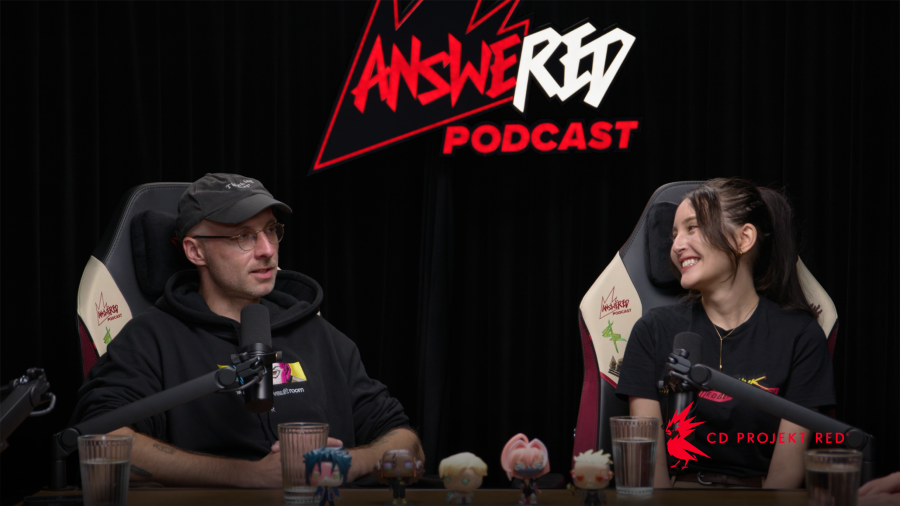
Story pillars and character perspectives
Paweł B: So moving into Edgerunners 2. In terms of the story you're trying to tell, we have a new cast of characters. We talked about the distinct visuals that are different than Edgerunners 1. What else was there as a key pillar for the story that you wanted to achieve without spoiling everything? When it comes to the story and the characters, what was the direction you wanted to take it in?
Sztybor: The first thing is that I honestly wanted to try to answer the same questions that we had while working on season 1, but to answer them with a different cast of characters. The second thing — and I remember it was while I was searching for ideas for season 1 — the other idea was to somehow mirror David's journey. In season 1, we had David, who was an edgerunner-wannabe kid who grows strong. And in season 2, we have Weak, who's an old edgerunner who's going weak. We wanted to see the differences in the edgerunner lifestyle and how the city reacts to different kinds of edgerunners, because it's Cyberpunk: Edgerunners. That's why.
Saya: I think in comparison to Edgerunners 1, Edgerunners 1 had basically one POV character, and that was David. But Edgerunners 2 has multiple POVs. It has multiple protagonists. So I think it was a narrative challenge to balance out every character and their stories and how it becomes a cohesive narrative throughout. And I think that opened us up to being able to tell a lot of different and new stories within Night City.
The one thing that's special about the Edgerunners franchise, and also Cyberpunk 2077 as a whole, is that we created this entire world that's traversable, which is insane. There's so many locations, there's so many NPCs, there's so many stories to tell. At the time of this recording, we just finished English recording, so now I finally get to have free time. My friend was like, "Hey, Saya, let's play this TRPG with me." And I was creating characters for this game and I realized, wow, there are so many stories that I want to tell in this universe. Coincidentally, it was not Cyberpunk, it was a different game, but immediately I could just come up with five characters that I really want to play. And I feel that is the heart of what Edgerunners is: the idea that there are so many stories that you can tell inside this universe, and it's just kind of Sztybor being like, "I want to tell this story this time."
Paweł B: I also like that with 2, in the first episode we're already seeing Weak go cyberpsycho. That's closer to the ending of Edgerunners 1. So it took me some time to realize, "Hey, this connects in some way, but we're telling a different story." And I feel like the cast of characters that we have now are just more developed. We know more about their backstory very quickly. We learn to understand what their motivations are, what drives them, and also that some of them have a very dark past right behind them. I'm looking at a specific Funko that we have on the table when I'm talking about that, but all these things really made the characters feel relatable.
In season 1 you have David, Lucy, a little bit of Rebecca as the fan favorites, and then people pick other specific characters from Maine's crew. But here I feel like it's much easier to find your character and say, "Oh, this character really resonates with me." For me, that instantly got me in from the get-go.
Sztybor: Who resonates with you?
Paweł B: I love Roman the most.
Paweł M: So far.
Paweł B: But also D. And I love the dynamic between the two characters. There are a couple of scenes... We were actually talking before we sat down to record: there is a scene in which Roman brings D back to his place and brings him beers so he can pass out on the couch. But we also know that D has this terrible background, and there's a lot of s[__] behind there that is happening.
I really like that because Roman feels like this ever-curious, open-minded guy who just wants to understand what's happening. He just wants to get the best shots. He also wants to make money out of it, but he's really in it for the art. Everybody else is there about big goals, exploitation, stuff like that, and he's just like, "Hey, I want to create art in this crazy city." And also that one scene where he's watching something that he has on a tape, like an older show, and he's really invested in it — you can really tell he's this artist that is there.
I also just like stories which tell you the whole history behind a character who is the best, and then you see the downfall of your hero, your main protagonist. Him getting his ass kicked and lying in a puddle of rain, losing all the cyberware that he has, having this f[__]-up hand and stuff like that. That's so cool to see.
Paweł M: Paperclip hand, they call it like that in the show.
Paweł B: Because you actually see the other side of the metal, not just the shiny good stuff: "Oh, we're here, we're a bunch of badasses." There is a downside to all of this. Instantly got me hooked on the story.
Saya: One of studio TRIGGER's specialties is their character designs are so attractive. It's really easy to like the characters. When you're looking at them just in text, it's kind of hard to grasp what their character is or what kind of narrative arc they're supposed to follow. But I fell in love with a lot of the characters once I saw the character designs. Talia specifically I had a lot of trouble wrapping my brain around until the character designs started coming out, and then I was like, okay, I can see how this is going to be a very cool character in the end.
Paweł B: Also seeing more Maelstrom representation was super cool. Having more Maelstromers in Edgerunners 2, seeing the heavy modification and the things that they're into was super awesome.
Saya: I'm so happy that we did that. At first when we pitched it, there was a little bit of concern because Maelstrom just seems like a very difficult gang to animate because they're so heavily modified and there are a lot of lines —
Paweł B: Sometimes they're missing faces and stuff.
Saya: We are so thankful all the time for both studio TRIGGER and on the CDPR review side that you guys let us, like the young kids say, let us cook. Because I know it is difficult as the IP holders to have a pitch like Talia. A character that looks like this doesn't really appear inside the video game.
Paweł M: Exactly.
Saya: When we were creating the video game, there was a lot of passion, thought process, and lore put behind the designs. We have an entire art book that outlines this, so when other people come into the kitchen and say, "Hey, we want to do this," and it doesn't exactly align with our original vision of what the game is supposed to be, I know that it is very difficult to swallow right off the bat.
But the one thing that studio TRIGGER said at a certain point — I think this was actually from Edgerunners 1 — that I like to keep in mind is that they're an animation studio. If we just wanted to do video game stuff, then we shouldn't be asking an anime studio to do character designs or to do an anime-heavy, stylized story. So every time we want to say, "Hey, this really isn't Cyberpunk 2077," or "This isn't really what we want to do for this franchise," I think it's important to take a step back and say, "Okay, but this is Edgerunners. What can we accept as Cyberpunk: Edgerunners?" instead of just limiting ourselves to what we are able to do in the video game.
Paweł M: It is an interpretation, an extension of the medium. But on the other hand, later we adapt those characters and put them into the game like we did with Lucy, for example. And I think Lucy, David, and Rebecca now create a canon of Cyberpunk characters. For some people, it might be even hard to distinguish which one comes from anime and which originated from the game. That's awesome.
Saya: I think that's so freaking cool. Speaking of character designs, David from Edgerunners 1 was originally designed internally from the CDPR side. Can you guess which character we designed internally first for Edgerunners 2?
Paweł M: I can. I know.
Paweł B: Ah.
Sztybor: I mean, honestly, I would say two of those.
Saya: Yeah.
Paweł B: I would say D and Maine, if I had to guess.
Sztybor: Maine?
Saya: Maine?
Paweł B: Weak. I was thinking about Maine, yes.
Sztybor: Nope.
Paweł B: No?
Paweł M: Second shot.
Paweł B: So...
Sztybor: I mean, Weak, yes.
Paweł B: Avida.
Sztybor: Avida and Weak.
Saya: Avida and Weak. I was actually really surprised when studio TRIGGER accepted Avida's design right off the bat. They were like, "Yes, we are going to go with this character design." I really did love the character design when it first came out, but I thought that she would come out looking a lot more typical anime style, but it wasn't. They accepted our proposal off the bat and I was like, yes! I love Avida's blue lipstick. She looks sick and I'm so happy.
Paweł B: Yeah, she's awesome. I guessed correctly! That's good.
Saya and Bartosz talk about bringing the vision for Edgerunners 2 to life, including how the story pillars and characters were developed.
The meaning of violence
Paweł B: I was also going to touch upon something that instantly connects both Edgerunners 1 and 2: the amount of violence, but violence done in a way that is also very meaningful. How do you achieve that balance to have violence which on the surface can feel like guts flying around and heads being exploded, but you also talk about the toll that has on the characters and how it resonates throughout the whole story? It's not violence for the sake of being violent and cool, but actually has meaning. Did you want this to carry over from 1 to 2, or is it just to have a tie-in where both of them have to be violent?
Sztybor: I would say it's rather natural and organic. For this world, violence is always meaningful. And the way we create — not only as Edgerunners' creators, but as a company — we always create meaningful characters. So we knew that meaningful characters, meaningful violence, tragedy... those are the things that make Edgerunners Edgerunners.
Saya: Studio TRIGGER is always enthusiastic about animating violent scenes. When they create shows, usually it's for public broadcast on Japanese TV, so there are limitations to the amount of sexuality or gore that you're allowed to put on screen. Edgerunners is a very rare opportunity where they're allowed to —
Paweł B: Creative outlet?
Saya: Yeah. Blood! Guts! Gore!
Sztybor: You don't know what violence is. Season one was just...
Paweł B: Just a little bit. Do you personally have a character which is your favorite? If you had to choose one?
Sztybor: Weak.
Paweł B: Okay. Why?
Sztybor: Because he's like Maine! No, he was my character. He was the first character that came to mind when I thought about Edgerunners 2. So I like him.
Paweł B: I remember when I first talked to you after Edgerunners 1 and asked what's gonna be in Edgerunners 2. The first thing you told me about was Weak and the idea you had for the character. And I was like, wow, that's a totally different thing than Edgerunners 1. But I already knew that you were very passionate and invested in that.
Sztybor: Yeah, because I think after Edgerunners 1, the romanticized vision of who an edgerunner or merc is in Night City — that kid who can have superpowers... of course he dies in the end, but it's super glorified. So I thought, okay, let's now show an edgerunner who's older, something goes wrong, and what is going to happen with this guy when everything is driven by chrome in the city and he suddenly loses all the chrome? Can he do anything or not? I think it's a very tragic character, and yeah, I like him.
Saya: I'm gonna be difficult and say that my favorite character is not on the table right now, and also at this current time of recording has not been announced. So I'm not going to say their character name, but —
Sztybor: You mean that T-Rex, yeah?
Saya: Yeah, the T-Rex.
Sztybor: The purple T-Rex.
Saya & Paweł B: The purple people eater.
Paweł B: Back to the dinosaurs.
Saya: No. My favorite character has an extreme potty mouth, and she was so fun to record. She is a character who screams stuff like, "Choke on your m[__] tongues!" And I'm just like, this is so fun. I love the character arc and her character design. There are more characters than what you see on the table right now, who are all very attractively designed, attractively written, and have cool character arcs as well.
Paweł B: Yeah, after watching a couple episodes, the first thing I noticed is there are so many characters and so many cool things to pick from. There's so much variation. I think I know which character you're talking about, although I haven't watched the whole show from beginning to end yet.
When it comes to something that you wanted to preserve for Edgerunners 2, was there anything that you wanted to keep for sure so that fans of Cyberpunk 2077 and Edgerunners 1 get the same thing in Edgerunners 2? Or were there multiple things?
Saya: I don't think there was a checklist.
Sztybor: Multiple things for sure, but it was not a checklist, I would say.
Saya: The second that you create criteria that you need to achieve, it starts becoming like a school project: in order to get an A-plus on this assignment, we must do A, B, C, and D. I don't think that any creative person wants to do that.
Sztybor: For sure we knew that it should be about edgerunners and mercs, and that it should be a tragedy in a way. That doesn't mean that everyone needs to die, but it should have the structure of a tragedy: meaningful choices, meaningful deaths, meaningful violence, all that. Those were the rules, and exploring the city — introducing new characters like TV, for example.
Saya: One other rule we might have throughout the entire franchise is not so much tragedy, but more so that these characters can't win against Night City. It's important to draw out the punk aspect of cyberpunk, where these characters are downtrodden and fighting against the system. But once it gets to a point of asking whether these characters can win against Night City and create a change for the better, then it becomes a question of: is that really the kind of story that we want to tell in the world of Cyberpunk?
Paweł M: It's like a casino. Always wins. And looking at the things that we have in the game or in the IP, do you have a checklist where you calculate what we haven't shown yet in the franchise — like gangs, Nomads, Maelstrom — and what we should put here, or is it just what fits the story?
Sztybor: It was natural here. D and making him a Nomad was TRIGGER's proposition. Talia and Maelstrom came from the story because we knew that we wanted to say something about body dysmorphia in this world, and it was just a great fit. Again, it's not a checklist. A lot of those things are natural. But also, when I'm searching for the story, I remember all the comic books, all the quests, everything. So I'm searching for the little things that we didn't mention yet. I still think that braindances are unused in our franchise, and it's one of my favorite things. And that was not a spoiler: no braindances in Edgerunners 2.
Saya: I'm thinking right now, are you sure?
Sztybor: Or maybe.
Paweł B: Apart from the beginning, when Roman comes with his tapes and they're like, "BDs man, BDs only sell. You're coming with this analog s[__]! Give me the BDs, this is what makes you big money, kid." And he's like, "No, this is the real art. This is what you're supposed to be consuming." That's one thing that really worked for me.
Saya: One thing — we didn't force it, but Phantom Liberty was in production when we started storyboarding and designing the backdrops for Edgerunners 2. Studio TRIGGER said, "New location, we should have this new location in the show." So Dogtown was not necessarily on the checklist, but they were enthusiastically like, "Yes, new cool locations to draw."
Paweł M: Going back to this art style that you said is more raw, more retro... I remember the first conversation and the first sketches we got from studio TRIGGER were very retro.
Sztybor: Very retro.
Paweł M: Where did that come from?
Sztybor: Through organic discussion. When I was pitching Edgerunners 2 for the first time, my idea was to make it a tribute to the pop culture of the '90s: Pulp Fiction, Léon: The Professional, all that. TRIGGER liked that idea, and then Ikarashi felt it in his own way and transferred that story idea to this retro visual vibe.
Saya: Can I quiz you on something? Because I learned something recently.
Sztybor: No. In '97, that was not me. That was not me.
Saya: Can I touch this for a second?
Paweł B: Of course.
Saya: Okay, so this is Talia. Do you know what this hairstyle is called? This part.
Sztybor: Air vents.
Paweł M: McDonald's.
Saya: You did get it right! Ah, I thought you wouldn't know what it is.
Sztybor: I know everything.
Saya: It's called air vents. In Japanese, that part is called ahoge, and the direct translation is "stupid hair." I don't know why it's called that, but I didn't know there was a specific English name for it. I used to call it Belldandy hair.
Sztybor: Belldandy hair?
Saya: Yes, there was an anime with a character with that specific hair. Anyway, I'm learning new things every day — that '90s haircuts specifically had names.
Sztybor: Air vents, yeah.
Saya: I called D's haircut "duck butt hair."
Sztybor: Duck butt. Oh, yeah, yeah.
Saya: It looks like it, though.
Paweł B: It does. Now that you mention it, it works.
Saya: I thought that was the specific name of that hairstyle!
Paweł B: It's very "party in the back" kind of style.
As Bartosz Sztybor puts it, “Meaningful characters, meaningful violence, tragedy — those are the things that make Edgerunners Edgerunners.” In this section, he and Saya share more about the storytelling power of meaningful violence in the anime, then transition into a discussion on their favorite characters.
The themes behind Edgerunners 2
Paweł B: So based off of what we did at Anime Expo and the lead-up to the show coming out — and once people are watching this, the show is already out.
Sztybor: Yeah, it is? Oh, so we can talk spoilers, right?
Paweł B: No, no.
Paweł M: Let's get back to dinosaurs.
Paweł B: No, because we want people to discover it for themselves. But a lot of things have been appearing online, apart from fan art and people picking their favorite characters based off the key visual or the first episode. A lot of them have been speculating: "I'm going to feel miserable again," "Who's gonna die this time?" Apart from all these things, is there a feeling or understanding you want to invoke in people when they watch this show, through Edgerunners 1 and Edgerunners 2?
Sztybor: Well —
Saya: I do.
Sztybor: Okay. Brah brah Saya!
Saya: It's not so much of an "I would like the audience to take this home." I have a question that I want to pose to the audience, because I noticed one specific trend within the production team and the English recording studio in how the voice actors were reacting to the character stories.
One of the themes of Edgerunners 2 is parenthood and the generational gap. When we were writing the show, there was a disconnect between some of the staff members on how to react to the actions of some of the parent characters. What I would really like to know from the audience who watched is how they reacted to some of the parent characters and whether they empathized with them or didn't.
Sztybor is a father, and another executive producer, Satoru, is also a father. So they really strongly empathized with some of the actions of the characters. Whereas I don't have a child, and another producer, Tetsuya, also doesn't have a child. So when we were looking at these characters and how they were acting throughout the series, we were like, "What are they doing? They're so dumb. Why would they do this? We don't get it at all." But in the English recording studio, the voice actors who have children were very affected. They were —
Sztybor: Going down, Saya.
Saya: I kind of felt it, though. I was sitting in that recording studio and the voice actors would be crying, and my voice director would also be crying with what was going on on screen. And I'm just sitting there like, "I don't get it. Have I gotten too close to it? What am I not seeing?" Satoru said, "Maybe this is one of those things where if you have gone through the parenting process, you understand more what the characters are going through." And obviously you wrote it, Sztybor, so you probably had that idea in mind when writing. That's one thing I'm very curious to see how the audience receives.
Paweł B: Super cool.
Sztybor: Yeah. One thing I would like people to see is Edgerunners 2 through the POV of Edgerunners 1. For me, those two things are connected on the same level, and they talk to each other somehow. I would really like fans to analyze that.
Paweł B: Perfect. Beautiful.
Edgerunners 2 touches on several themes with multiple meanings and interpretations. Bartosz and Saya draw attention to some of them in this section of the conversation.
Outro
Paweł B: Last thing: if someone hasn't watched Edgerunners 1 or 2 and you had to describe the show in three words only, which three words would you use to sell this? Saya was like, "I'm gonna say something!" But then, no.
Saya: Don't get attached.
Paweł M: Whoa!
Paweł B: Beautiful.
Sztybor: Nice.
Saya: I've been affected by your —
Sztybor: You took my line. Don't trust dinosaurs.
Saya: Good one. Very deep.
Sztybor: And scene.
Saya: Once you watch the show, you'll understand.
Sztybor: Yes.
Paweł B: Perfect. And that puts a pin in it. Thank you both for joining us and having this discussion. Of course, we don't want to get too much into Edgerunners 2 because we want people to actually watch and experience it. Let us know what you're thinking about it. I hope everybody loves the show; I love it personally. Thank you for joining us and taking the time to talk about it.
Sztybor: Thank you.
Saya: Thanks for having us. This was fun.
Sztybor: Peace out, bro.
Saya: Pew pew pew...
Paweł B: Sounds.
Paweł M: All right. Thank you very much for joining the episode, and hope you enjoyed it. I think we managed to avoid any kind of spoilers, so now it's time for you to watch Edgerunners 2 on Netflix.
Paweł B: And as always, don't forget to comment, like, subscribe, all that jazz, and also check out Beyond the Game Blog where we have transcribed versions of the podcast so you can actually read everything that we have been talking about. It's another way of checking out the podcast, and I highly encourage you to do so. And of course, we'll see you in the next one. Bye.
A few parting thoughts before our guests and hosts sign off.