AnsweRED Podcast Episode 19 — Crafting Worlds and Spectacles: Art, VFX, and the Future of Film

Visuals shouldn’t just look good, they should feel real too. In Episode 19 of the AnsweRED Podcast, our hosts Paweł Burza and Sebastian Kalemba sit down with two remarkable artists whose work has been admired by viewers around the world.
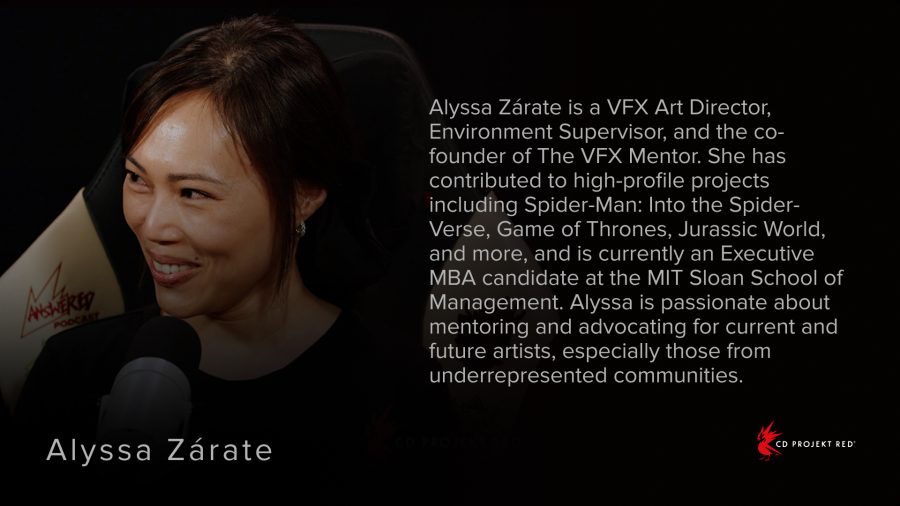
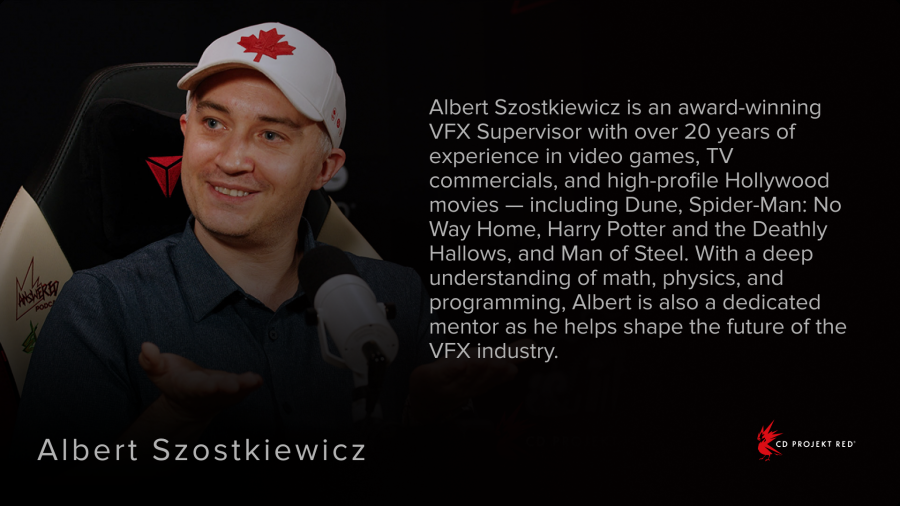
Alyssa Zárate, a visual effects art director and environment supervisor, and Albert Szostkiewicz, a visual effects supervisor and effects specialist, sit down to discuss their careers in blockbuster movies, video games, and co-founding The VFX Mentor together.
Alyssa has journeyed from her own work in art and animation to mentoring the next generation in VFX, while Albert reflects on his own path through research, development, and cutting-edge tech. Both speak candidly about their experiences, creative philosophies, and what keeps them excited about the future of the industry.
This isn’t a technical deep dive — although those in the craft will find plenty of insights — but a wide-ranging conversation that touches on:
- Chasing your passion around the world
- Not rushing the creative process
- Getting into the industry
- Preserving classic filmmaking techniques
If you’re curious about visual storytelling, wondering what makes a good VFX artist, or simply enjoy hearing passionate people talk shop, this episode of the AnsweRED Podcast is for you.
Find the full episode here:
New episodes of the AnsweRED Podcast are released every fourth Thursday of the month. Tune in on Apple Podcasts, Spotify, and YouTube. Enjoy watching and listening!
Click on this text to reveal the full episode transcript. To close the transcript, click here a second time.
This transcript has been lightly edited for clarity.
Paweł: Hello and welcome to the AnsweRED podcast. My name is Paweł Burza and I am joined by Sebastian Kalemba.
Sebastian: Hello, everyone. Thanks, Burza. And today we're going to talk about VFX with veterans Alyssa Zarate, who is an Art Director and Environmental Supervisor, and Albert Szostkiewicz, who is an R&D Supervisor and VFX Supervisor altogether.
Paweł: Like you said, they have so much experience, so much to share and this conversation was just incredible. They have an outlook on everything and on the whole industry from big movies like Dune to smaller projects, games, and others. Can't wait for you to check it out. So let's jump straight into it. All right, Alyssa, Albert, welcome to the podcast. Simple as that. How are you guys doing?
Albert: First of all, thank you. Thank you for inviting us.
Paweł: Our pleasure.
Albert: We are doing great. And I'm a little bit hot. It's very hot in Poland right now. I'm melting.
Paweł: Can you guys introduce yourselves especially for people listening to this so they can hear your voice and understand who you are and tell us a little bit about your background.
Alyssa: Okay, I'll go first. I'm Alyssa Zarate. I'm currently an Environment Supervisor and Art Director working in the film, visual effects, and animation industry. And I'm also a co-founder of the VFX Mentor, offering training and one-on-one mentorships to industry professionals, basically to upskills and students looking to get into the industry. Yeah, I have worked in the industry for 20 years now, so.
Paweł: Wow. Loads of experience.
Sebastian: It's scary.
Alyssa: It's a journey. Yes.
Sebastian: That's awesome. Albert?
Albert: So, um... Yeah, my journey is also quite long, I have to say. Also around 20, 25 years. I have no idea. I stopped counting. But anyway, my name is Albert Szostkiewicz. I'm trying not to Americanize my surname just yet. It's not easy to pronounce. I've been working on multiple different positions. Quite recently I was working as a visual effects supervisor. Recently I'm working as — how is it called? R&D Supervisor.
Sebastian: R&D Supervisor?
Albert: Yeah, it's a cryptic and very nice title.
Sebastian: Very nice.
Paweł: Sounds really cool.
Sebastian: Probably you won't be able to tell us anything about this. Who's behind it?
Albert: I can tell you a little bit. All right.
Sebastian: Awesome, awesome, awesome. That sounds pretty cool. Especially nowadays when everyone actually is trying to find its own kind of secret sauce.
Alyssa: It's a niche, right?
Paweł: Exactly.
Sebastian: Look what happened, right. Over the last years when it comes to the project's identity. You could spend millions for R&D, but suddenly you have Spiderverse, let's say for example, that made a couple of tricks to find the secret sauce when it comes to the look, dev and animation on twos, on threes, even on fours with the recent hops Spiderverse. And you have it. It sounds, of course, easy, it's super tough. But this R&D sounds a bit suspicious—
Paweł: And interesting. Very interesting, very intriguing. So yeah, I have to talk to you about that. Maybe you can say something more.
Albert: It's a very broad term, I have to say, because yes, R&D can mean almost everything. Right now it's R&D mostly related to workflows and pipeline. Yeah, there's a lot of companies that benefit from the broader knowledge that we have because we literally came from so many different countries. Like I can tell a small anecdote just like I'm from Poland, she grew up in New Zealand, we met in Australia and therefore we live in Canada.
Paweł: Interesting.
Alyssa: Very international.
Sebastian: Yeah, that's true. Good story. That's the journey. But you live in Canada right now and it seems that when it comes to VFX, that's the place. Right? That's what they were like, the big movies are happening there.
Alyssa: Yeah, it's the hub there. And also because it's the same time zone, especially for Vancouver, because the time zone is exactly the same as Los Angeles where most of the production houses are. So it makes sense to be there for now.
Sebastian: Okay. I have a question about like now and—
Paweł: Before.
Sebastian: Because it was of course on the way to now. There was a pandemic. It changed everything. First of all, it globalized the market a lot. Secondly, hybrid or full remote, like in your case, it's not like a strange situation, it's just absolutely normal. And can you elaborate a little bit? Because as you said, maybe tell us a bit about your journey. As you said between 20 years ago and now, like, how did you start? When? Where?
Albert: How did I start? Well, I did start in Poland. I did start by working in games. I believe that my first at least attempt to work in the industry were even on Game Boy Advance. I was really fascinated by OLI computers since I was just a little boy. And it's... It all started just thanks to one computer magazine called Amiga. I was just so captivated by what it offers and I knew that this is really what I wanted to do. So yeah, my journey started in Poland.
I used to work mostly in the post-production houses, in a few post-production houses in Poland and I did love it. But Poland back then, which was years ago, was definitely not famous for making movies. And that was something that at some point of making mostly like commercials, I felt like I would love to try that. And it was actually pretty hard to get to that point because even when I approached any of our recruiters and I said, hey, I would love to make a movie, they were looking at my portfolios like, wow, yeah, but you've been working on commercials, maybe talk to those guys. No, no, no, I want to work on a movie. Like, show us something movie related. I'm like, well, I do not have anything movie related. That's why I would love to work with you. So it was tough, but thankfully one of the companies decided to give me a chance and I just went and it was so spontaneous, really. I was so excited and I didn't even think where exactly I'm going.
I literally first left Poland to go on the other side of the world on the exact antipode, you can say. I just moved to Australia and that was a culture shock and... And the beginning of an amazing journey that just never stopped. It was like a drug, I have to say. Like, you go once and it's like, I want more. How about here? How about now? And I was jumping from different country to country.
Sebastian: What was the company in Australia?
Albert: That was Rising Sun Pictures. And you know, straight at the beginning when I was trying to get my job outside, first of all, I sent my portfolio like everywhere. And that was like fishing. Just trying to check where exactly would take, where exactly I managed to catch something. And by pure luck, two companies approached me. I mean, "approached" me. They just reacted to my CV, my demo reel that I had sent them and I had a choice. I could work on a project called Happy Feet or Harry Potter. And to be honest, both were very amazing. But you know, everybody was like, oh, Harry Potter, amazing. Well, I just decided to go with a Harry Potter direction and that was my first project outside the typical work I had been doing before.
Paweł: That's quite big also, right?
Albert: Yeah, yeah, that was amazing. It was like being thrown right in the middle of the ocean.
Sebastian: Yeah.
Albert: Scary as well.
Paweł: Yeah. But also a big learning experience. That's where you kind of started to really get into it. But also I kind of feel like it must have been a little bit intimidating in the beginning or not? Or were you very confident getting into it?
Albert: I was not confident at all. You know, it always felt like whenever you watch those demo reels of the people that work on the movies. You don't realize that most of those demos are actually made by hundreds of people. It's not like I as one person did everything and it's not obvious, especially for me it wasn't. I was not aware and going there I felt these kind of weird emotions. I knew that those people are very talented and very experienced. And I just came from a city in Poland here and just like I felt like what the hell I'm doing here. Like, why even you guys decided to pick me. So it felt very — it felt very intimidating, I have to say. And another thing, it was also a language barrier because, you know, I learned the English language like we had been learning at school. Because in Poland, English is not the first or second language. It's more like an optional thing.
Paweł: Exactly.
Albert: So I'd been learning here and there. So I knew a little bit of English, but then speaking in English for eight hours, it was very difficult. Like I really had migraines after work. It's just like my brain had to translate it.
Paweł: Processing all the time.
Albert: It was so exhausting. So yeah, it wasn't that easy and it was very intimidating.
Sebastian: But that time, even getting a visa for, you know, I believe it was possible. But currently, if you are, let's say a person out of the industry and even have a demo reel applying to Rising Sun, Animal Logic, you name it. In Australia, it's like impossible to get a job right now. It's so many people right now that are, you know, it's like currently, I believe, like I know a few persons that have been rejected just because of, you know, like, forget about that, we have so many people waiting for this job here. It's easier, right back then. It's easier to learn right now. Like back then you had Gnomon School or things like that and—
Alyssa: The DVD.
Sebastian: Yeah, yeah.
Albert: Yeah. It was just more like if somebody released a single tutorial, like everybody jumped on. It was like everybody knew every single tutorial that was out there on the Internet. Like literally, if you heard about Allan McKay releasing his tutorials, like everybody knew it, everybody knew it by heart and everybody watched it probably. Today is so much. Infinite.
Alyssa: It’s infinite. Infinite amount of information.
Sebastian: Yeah. You cannot digest it.
Paweł: It's hard to process all that stuff.
Albert: Which is good and bad at the same time because the quality of some of them is, you know, they are not moderated. It's just like you want to make a tutorial? Sure, just go ahead, just turn on, you know, YouTube, press recording, done. So it's good in a way because we have such amazing access to learning materials. But the quality is not always the best. So you know, it's a double edged sword I would say.
Sebastian: But same with blending right from the game. As I said, you started in the game industry and then you actually, your dream was actually following the movies. And even this blend between these two industries was really exotic over that time. Right now people jump back and forth so easily. Both industries are really blended.
Paweł: Both are now borrowing from one another. I know there's also in the gaming industry, the overall outlook is to kind of borrow a lot from the film industry.
Sebastian: We use the same software. Like I remember, like even 10 years ago, forget about using Houdini, let's say, in games. Forget about that right now. You can bake it, you can do alembic, you can do whatever, you can import it in scene and make it happen. And so yeah, like that's actually cool because that gives you more opportunities. But still it raises even much more the bar of the pool of talents. Because it requires right now more skill I believe than it used to. But you know there's always two sides of the coin, right?
Albert: True. I think I can add to that. I would say that back then, let's say 20 years ago when we were making games, they were cool but it was more like interesting entertainment where like we could have just created hey, let's, let's make a game tomorrow and you know, one person could make a game and it could be a hit, which is great. While movies was a huge collaboration of screenwriters, of directors and really, really hard and long thought process to make it right. Now this industry changes, right? Because they are getting better in a way that we wanted this film look, we want this really hard thinking process to put into that. So like you said, our tools are right now interchanging. Like you guys in games could use the tools that we've been using in movies. But at the same time VFX is using tools that are used in games. Like Unreal is right now more often used in VFX. So I think that at some point like those, those two roads will actually cross because you'll be able to watch the movie and play the character at the same time. It's not that far off. I think there were already these kind of ideas and tries to do so, it's just getting better and better.
Paweł: Making everything more interactive also in this case. That'll be amazing.
Sebastian: It's coming.
Alyssa: I think that was already a series on Netflix, right? That you pick the character and then it basically ultimately tells the story.
Paweł: You make the choices and then see the outcomes happening.
Sebastian: It was more interactive, the episode from Black Mirror.
Alyssa: Was it Black Mirror? I thought that was pretty interesting.
Sebastian: Interesting. And as far as I know, they tripled the budget of the single episode with that particular one to make all the choices and consequences.
Paweł: But it gives more engagement to whatever you're watching instead of, you know, focusing on your phone or doing, like, people now do multitasking, right?
Alyssa: Exactly.
Paweł: Instead of focusing on the things they watch. But Unreal has been a big kind of step forward for me. Like, the biggest eye opener was I didn't know that, you know, after watching Mandalorian that everything in the background was, like, generated in Unreal. I was like, what? And then you see kind of the technology behind it. You're like, well, we don't really — you can put anything in the background that you want. Like, you want Tatooine, you got Tatooine. You want something else, you got it. Like, yeah, sky's the limit.
Alyssa: More interactive that way. And the actors could actually feel like they are in the physical location rather than seeing a, you know, green or blue screen.
Paweł: Yeah. It's incredible.
Albert: The idea is not new. Like, matte painting was for many years–
Alyssa: To paint all the backgrounds. The distance, usually 360. And a lot of people didn't realize that we paint a lot of paintings. Yeah, so.
Sebastian: I remember actually attending GDC, like, 2016. There was this lecture of, like, from two guys from Xlab from IL&M. And I remember that their challenge was then — it was like, eight years ago already. Their challenge over there was to reproduce two shots for Rogue One completely in real time. And they did it. And as far as I know, they've been using Unreal then, or Unity, I think Unreal. And they were showing it and comparing it next to each other. It was almost the same. The only thing that really stand out was liquids, of course, because there's one shot when the X-wing is going crazy, like, you know, just above the surface of the water. And, you know, there's always splashes and stuff. Of course, liquids in real time. It's a pain in the ass in general. But you know, right now it's way better. Of course, like eight years in this world is like a day, like a decade, more than a century, man. It's like, look what happened with real time right now. But yeah, that's also interesting that they are pushing for it. In the end, ultimately it will cut costs, right?
Albert: That's true.
Sebastian: Yeah, big time.
Albert: But you know, I also noticed this weird phenomenon that sure, we are getting more amazing tools allowing us to do something faster, more interactive, but at the same time we are losing craft, right? Because things, the tools are becoming simpler and simpler and we are just getting lazier and lazier.
Alyssa: We're just becoming operators, basically.
Albert: That's true. Because I have to say, like for example, when you gave this example of the X-wing going over the water. Not long ago, one of the biggest "sand" movies that we did, we also had some spaceships flying over the water. And that is not a fluid simulation. That is just per you know, a thoughtful process of how to use simpler tools to make it believable.
Sebastian: Exactly.
Albert: Right. And that's what, you know, people have been doing for the last, you know, 20 years. Like you watch Terminator 2. Till today, it looks amazing. And if you would ask anyone today. Yeah. But if you ask anyone today to replicate exactly the same effect, they would need a computer with 256 gigabytes because they probably wouldn't be able to render it because there is this laziness and kind of a simplification for artists. I get that and I appreciate that. But also losing that craft, I think.
Alyssa: It's also a lot of times, as people are getting impatient, production time is getting less and less. Back in the days 20 years ago, when I was on the project, it takes a few years, like three, four years to make a film, now six months to produce something. So I think that's a change that I feel like we need to slow down a little bit to bring back the quality. But I'm not the person to say it, but as a person, as an art director, this is something that you can educate the clients about. Like, look, we could slow down a little bit and spend more time on the quality. It makes it more memorable. Can you think about a movie that you recently watched that sticks with you forever? And versus all the movies that you've been watching that are kind of rushed?
Sebastian: Absolutely. Because this is like right now, like this quantity over quality. There's so many people that are actually binging things like every single day.
Alyssa: Consumerism.
Sebastian: Consumers. Exactly. But I think there is this tendency to do a little bit. It's stopping a little bit because I don't want to use names and stuff but some quality stuff is happening right now and you can tell that, okay, it took more years, like more time, but at least the impact that it has on the community, like, it's way higher. It's like quality always stays.
Paweł: I will say Dune for sure. That's a great example. It's a project that you got to work on and you can really tell not only is it faithful to what was in the books and it portrays everything, but also the style of it.
Alyssa: Cinematography. The production design, its...
Paweł: It's just incredible.
Albert: There was a vision.
Sebastian: It's a feast for eyes. It's a feast, an intellectual feast.
Alyssa: You can definitely see the quality. And also the passion that puts into it.
Sebastian: You can rewatch it like multiple times. Every single time I just rewatch Dune. Like, I don't know, five times already and I.
Alyssa: You keep noticing something new.
Sebastian: Exactly.
Sebastian: This is so much detail, so much. I mean, like, that's it. That's exactly... And I believe that's going to win. You know, quality always wins. I really believe in that.
Alyssa: I think people just need to take a step back a little bit and, you know, rather than rushing it through. And that's why I really love seeing independent filmmakers coming out now rather than having big studio production. Because this independent filmmaker really thinks about the thought process, like Jibaro or The Witness from Alberto Mielgo. I watch it over and over again. Even though it's a short film, it felt like there's so much quality and care.
Sebastian: Two best episodes from anthologies.
Alyssa: Exactly. To put into it. But slowly I'm starting to see more filmmakers coming out, like giving that sort of quality. And it's really heartwarming to see that because these people are the future of the industry. So we need to support them.
Sebastian: Absolutely.
Paweł: True craftsmanship and actually going back and doing stuff, you know.
Sebastian: But with the thought process behind, back in the days, you know that because of the tools. I'm even talking about, you know, animators doing stuff on paper, like because the process was slower and because it cost you so much, you had to make a mindful choice. It was simply the whole process were like forcing it on you to really rethought multiple times before you put the first line. And currently, as we let even computers to let's say, I said it today once, like to animate by themselves, for example, because the interpolation is so cheap, right? It can, you know, set to poses, but all the in betweens are also poses, right? Like those are also frames that are also paintings. Needs to be mindful and needs to be coherent. Because you have to favor this or favor that. You have to skip this or skip that. This is what I love, for example, in the Spiderverse. Because this decision of actually animating on twos, fours, and multiple layers when it comes to animation is very handcrafted. Okay, you have 3D, but the approach was completely 2D. Every single frame is a painting. And... like regarding Dune, you watch, you listen to interviews with Denis Villeneuve whatever, like anyone from that production. And this one thing that repeats constantly is that whenever they had doubt, whenever they had a question mark, they've been getting back to the source material. There is an answer. You can read it 10 times and you will not find it. But trust the process, trust the book, you will find it. At some point you will find it. And this is amazing because you have Denis Villeneuve, the guy who was, you know, one of the top directors nowadays. And the guy's humble, you know, he trusts the process. Like that's amazing, right?
Alyssa: It's just care that he puts into it too, right? Like back in the days, like 20 years ago, I was an onset set designer, right? You don't just come up with something on C80 on a whim and just get the carpenters or set builders to build. It takes a lot of time and effort to research and develop the style of buildings, the environment. I remember going to the National Library looking for a particular book, because that book is the Bible, right? And the whole pre-production process was a year and a half and you're making sure the material is right. You put it in camera to see if it's capturing the texture, right? And then you reference it back to the old photography that you get. These days everything is built with a computer model. In Maya, we don't care, we just build it and then we fix it in post. And I feel like that is taking a lot of the filmmaking, you know, like the care, the love, you know, away from the artistry of the whole magic of filmmaking. That's why I love watching old films, because for me there's so much care. You see it, right? Even Encounters of the Third Kind, you know, the volcano that they were using, it is a miniature model. They spent time sculpting it. And then they put in plate. So I'm really hopeful that this younger generation, they're getting more, you know, into using their own hands and building models and sets rather than using a computer. I mean, computers are great. It comes with a lot of—
Sebastian: It's a tool.
Alyssa: It's a tool, it's groundbreaking. You see a lot of magic happening. But my dream is to see the magic happening with the computers together with the old styles of filmmaking. That would be my dream project. So if anyone is working on that, please let me know.
Sebastian: That's awesome. So guys, you said about this impatience, like that you deal with many people. You are supervisors, right? You are directors and you deal with people. Right. A lot. Do you spot or do you actually, how do you deal with a person that actually is so much rushing the process that you see that it has to, you know, they will make a mistake or they will hit the wall because of rushing, because of a non-mindful approach. And how do you deal with this impatience?
Alyssa: Unfortunately, sometimes the best way to prevent it is to let it happen.
Sebastian: That's true.
Alyssa: Like I was talking about burnout earlier today and you know, I suffered from it and then I recovered — well, I'm still recovering from it, but it actually put me in a different perspective. Like because we are both teaching right now, a lot of the younger generations in their 20s, like so young, so full of energy, they're rushing every single day. They're so obsessed with social media, for example, wanting to post every single day. Because that's that algorithm, right? You have to post to get more followers. I was like, does it really matter? These are all strangers. It could be bots liking it, you don't know. But you shouldn't be rushing. You know, you should actually take time, digest the process and stop being so aggressive about it. The impatience, I think kills a lot of professions in a way. You get burnout faster, you get more anxiety attacks. These days you're seeing people burn out so, so much faster than before because they just didn't know how to stop. They didn't know how to process it.
Paweł: It's always chasing some result.
Alyssa: It's pressure, the constant, you know, comparison. If somebody's doing work next to me, it's oh, I want to copy and do better. I have to be better than this person. I think that's a very negative and toxic way of thinking, rather than doing it this way, how about finding this person and say, wow, I really admire your work. I want to learn from you. That's creating a healthier lifestyle and healthier creative habits. For example, I'm not an effects artist. Sometimes I ask Albert, it's like bouncing ideas, not because I'm an art director, I know everything. Sometimes I ask my junior artists, like, how do you do certain things? Because I haven't touched this program for a while because I'm so out of touch. You know, you learn from each other. And with Albert, it's like, I want to do this effect, but I have no idea how to do it. So instead of being impatient and rushing through it, just imagining what I put on the paper, I research. Ask the expert. Right? Ask the expert. You know, that's the key.
Paweł: Also learning from others and kind of pulling from their experience is incredible because sometimes you don't even know how much you can actually cut corners and learn from someone quicker without doing all the legwork. Like someone can really guide you through a process. But I think what's also important is like taking that and applying it to your stuff and then kind of trying to come up with a combination of all these things and defining what you are and what your style is.
Sebastian: Yeah, exactly.
Albert: I will also add a little bit different part of the rushing. Like, I noticed that right now we have a junior artist mostly that would love to open a program, let's say Houdini, and just press the button and have amazing explosion. And I think this is where these tools. Those tools are being simplified. This is that circle that we are running around. And because those companies are trying to accommodate for what they are trying to achieve. So we currently have literally situation where you can today open program like Houdini, press the shelf button and have an amazing explosion. So this is us rushing and simplifying and trying to get straight to the point. While back then, which I'm going to compare, sounds like an old person right now.
Paweł: Back in my days.
Albert: Back in my days!
Albert: You know, it's a craft where it's actually a combination of art and science where people were studying in Academy of Fine Arts, let's say how to draw, how to sculpture. And you could combine all this knowledge, the technical knowledge, maybe the programming, the artistic knowledge, and try to make something amazing out of it to understand the process rather than just hit the button and have it done.
Sebastian: Real alchemy.
Albert: And this is where we actually going with all the other tools, like AI because this is what people want to have. Just press the button and it's done. This is the, um. Patience.
Alyssa: Like, for example, I can give a perfect example. One of the older matte paintings I did, it took me two months to do, you know, because there's so much detail into it. And these days people just want to be fast, how can I cut out the background faster? How can I paint the mountains faster? And then they just use whatever tools, Unreal, whatever. Render out a pass and cut it out and put it. I was like, but there's no creativity in it, there's no care, you know, I don't feel proud if I do something like this. Obviously, being with the industry trend, we have to adapt, but you still have to care. Even though you use 3D models, you still need to mindfully place where everything should be. Composition, lighting, you know, does it tell a story? Is it too busy? One thing I really love about Denis is working with his production designer, Patrice Vermette, is that his production design is so simple, you know, it's non-cluttered. Seriously, I'm such a big fan. If I see him, I'll be like fangirling. But it's just how he actually managed to compose an image and tell a story at the same time. You don't even need to read the script. You kind of know what's exactly happened. And I feel like this is exactly where filmmakers should pay attention. Instead of cutting, cluttering your shot with so many items, so many things. Simplifying it, simplifying. I'm actually all about minimalist simplicity. And does it tell a story? Three things, right?
Sebastian: Less is more.
Paweł: Because sometimes we have less, you actually make the whole pictures just stand out more. Like it tells a story in a more simple way instead of just like, too many things happening.
Sebastian: Exactly, like the Michael Bay way. Generally, you want people to care. Right. You cannot overdose with emotions. There's one core emotion in a shot, one core conflict in the shot. And you have to simplify things to be able to actually get and extract this particular emotion in that very moment. And exactly. Like being smart, tunneling, like being precise is exactly the way. Absolutely agree.
Alyssa: Less is more. And I really like empty space. People get so scared of empty space. But empty space is the best friend in making film because it hones your focus and, you know, you just go straight for it. Like for our students. Right. Whenever we teach environment art or whatever, they put everything in there. And I'm like, they're so busy. I don't know where to focus. I was like, your trees, mountains, clouds, everything. Characters like tiny little things. And I didn't even know this character sometimes. So it's like, I don't know where to focus. And I was like, why is it so busy? Oh, because there's an empty space. I don't want to leave any empty space. I think that's the fear of having empty space.
Sebastian: That's interesting, right? Yeah, yeah, yeah. I think nowadays, because of these tools and because of this rush and this culture, that people are kind of addicted to dopamine. You know what I mean? Because the more likes you get, the happier you are. Yes, but exactly what are the likes? They're meaningless. You don't even know these people. Like at least most of them. And it's like... Yeah. It requires the courage and some kind of like you know, to switch off everything.
Albert: Takes time, takes knowledge, I have to say. Like, you have to understand what you're doing. That's why quite often, I really appreciated motion graphics where people could just create something amazing just by a few spheres and a few blocks. And you can just make a beautiful picture.
Sebastian: Rhythm, right? Like exactly that.
Paweł: Digestible in an easy way. And also something that invokes some type of emotion.
Sebastian: It's just incredible when it comes to dealing. Right. It's visually, right?
Albert: I can give you an example where one of the shots was creating a laser and just. And he said, just make the most boring, simple beam you've ever seen. Because it's about simplicity. So people won't just overdo it. Like, you know, like magic or whatever. No, just simple. It has to tell the story. It's not here to steal the magic of the shot.
Sebastian: Exactly. Exactly. It's a tool at that very moment. Right? That's, that's... There should be classes about simplicity, you know what I mean?
Alyssa: If there's one out I would love to attend.
Paweł: How to make it less cluttered, less stuff. Bringing it more to the simple.
Sebastian: How to calm down, actually. Take it easy, right? Make things simple.
Alyssa: Like kids, right? When you have Lego blocks. Those big Duplo thing, I think, actually we can learn a lot from that. Less pieces, but you can still make a lot of interesting shapes out of it, so.
Sebastian: Yeah, that's true.
Paweł: During Art for All, you had your presentation and you showed your newest showreel. There is this one scene, and I think we'll stick to Dune here. There is this example of where you have the spice collector and it's going through the sound and the sound is vibrating and you have, like, the Sardaukar, who are kind of protecting this thing. And then... You feel like something is shaking. And this big worm, it just fills the whole frame. It's beautiful because it's like, there's so much simplicity in that shot. And the play with the colors, the sound and the dust are pretty much the same color. And then rewatch it again, they're wearing dark armor. All these things combined is just such a nice shot. And there's not too many colors, there's not too many things happening. It's simple, but it's also so raw and so good.
Albert: I love all his movies, to be honest with Denis. Movies like Arrival. It's so simple that even the shape of those, you know, alien spaceships. It's just a simple shape. And every other movie is just like a thousand blinking stuff.
Alyssa: You're like, does it even matter? You know, all those other things. Like even the...
Sebastian: Well, I forget the name of the planet in the second part of Dune. That was, like, very overburnt with the—
Albert: That's the Sardaukar.
Sebastian: Yeah, yeah. And then I was thinking, like, why is it so bright? Like, I forget the source material. I read Dune like, 10 years ago. Right. Last time. And then I was googling after it, like, why? Why? Because for sure, every single choice, there is a meaningful choice. There's nothing like a... meaningless experiment. There's a meaning behind it. And actually, it was a pretty simple explanation because it is super close to the sun. And that's why there's, like—
Paweł: Super bright.
Sebastian: And you had these guys with this white skin and, like, oversaturated. And it works so well.
Paweł: And... like, it's a visual beauty, like just looking at it, having everything in black and white, but also, like, very, very light. It simplifies, the colors are very simple, but they paint an incredible picture in your head. And also it feels very, very alien because we're talking about the Harkonnens, right? And Feyd-Rautha, when you see him for the first time in this colosseum, when he comes out, like, there's a lot of things happening around, but he and actually the people he's supposed to fight with are very... It's just simple, but it's good.
Albert: Every frame is a painting.
Alyssa: And that all comes down to research and development as well. Like, before you shoot something like this, before you come up with this kind of concept, you have to understand how the world works too. Like, physically correct. If your planet is so close to the sun, you can imagine what sort of environment it is going to be. It's not going to be lush or anything like that. Like, compared to a planet that has no sun, what is it going to be like?
Paweł: Kind of a barren wasteland almost. Exactly.
Sebastian: Guys, we're at Promised Land Festival. Yeah. We are uniting in art. It's not your first one. You know that people come here for inspiration, for networking. They look for tips and tricks. And you deal so much with new artists, young people aspiring. Is there any trend or anything that you share as your, like, wisdom, you know, that you share with your students, that you could share with people that will watch this podcast?
Alyssa: I would say be patient. Like, being patient is one of the habits that even myself, you know, took a long time to acquire. Because when you're young, you have a lot of energy and all you want to do is just run. You keep running, you don't know how to stop. Sooner or later you're gonna run out of fuel. So rather than keep running so fast, 1,000 miles an hour, you should slow down and keep your creative flames burning for a longer time.
Paweł: Steady cadence.
Alyssa: Exactly. Yeah, exactly. Being steady. And for the longevity. Rather than going so fast at lightning speed, and then suddenly at 30, you're like, I can't do it anymore.
Paweł: It's like running a marathon. You know, the first half needs to be not too fast, and then later you can try to go faster for a negative split, but if you go straight into it in a sprint, then you're not going to last till the end.
Alyssa: Yeah. And, yeah, patience and I think finding a good mentor, preferably somebody who's been in the industry for a long time, that could actually tell you to slow down. Because I know that they're—
Paweł: Very eager from the start.
Alyssa: Yes, eager from the start.
Alyssa: I mean, I look up to a lot of, like, older, you know, like others, like Ian McCabe, for example, you know who — I believe he's retired now, but he takes life so differently right now. Compared to some of the others. That we've been watching, and they constantly just create new stuff, and sometimes the styles are changing. Like, whoa, what's happening? But they are very talented. I don't mind that. But being patient and finding a mentor that's in your same vibe and style is my kind of advice.
Sebastian: That's a very good one. These two things really add to each other. Because I talk sometimes to aspiring artists, and when I say that, tell them that, hey, be patient. Trust the process. They say yeah, easy to say because you work already in the industry. I'm like, all right, yeah, I've heard. But whatever you create, at least make it tailor down to the place you want to work for. Or, like, honestly focus on three up to five pieces. No more than that. And then that's why you should be patient. Like, find a mentor. Find a place. Like, make a meaningful choice. Because people are over rushing stuff. They create an animation shot, acting shot, but the acting is meaningless. Like, why do you actually move the whole hands around the shot? It's meaningless. Like, these people do not talk like that. It's not, you know, Ratatouille in that very moment. Like, it doesn't look at least like Ratatouille style. Right. So, exactly. Mentor for sure. The meaning also, and the patience, like, these things. Just to make sure that people will not say, yeah, patience. That says Alyssa, who spent 20 years in the industry.
Paweł: While they are trying to really get in, put their foot in the door. And they're constantly, like, charging to get in.
Sebastian: Patience. And they're like, but there's competition. I have to be first.
Alyssa: You know, being patient sometimes if you create, you know, spend more time creating the artwork that looks amazing. You know, I personally hired somebody who had three pieces of amazing artwork because of what I saw. Versus somebody who has 50 or 60 different art pieces. And there's no style to it. And, you know, there's just no composition. It's just, I don't know, they create visual candy, but it didn't mean anything to me. Or somebody who has tons of followers on Instagram versus somebody who has only 12. Because they spend so much time focusing on things that truly matter to them rather than following the trend. Yeah. Self promotion.
Albert: Like Fang said, every single picture right now with environment is just environment and a guy in a prance.
Alyssa: Yes, that's very true. Yes, that's very true. People spend too much, much time rendering, you know, rather than telling a story.
Paweł: Classic concept. Human for size.
Alyssa: Yeah. Or a castle on the mountains. I'm still seeing it until today.
Sebastian: Yeah, yeah, that's true. That's true.
Albert: Yeah. My whole talk was actually about that, what I would like to say to the young generation, because I did that whole reflection about what I have learned and what I wish I knew 20 years ago. And I have to say that I came to a conclusion, and it took me a while before I came to that conclusion, what you guys are saying, but I dissected it even more. I think that it's important to understand that we have to broaden our understanding of art. Because right now, like you're saying, we are rushing. We just like, hey, I want to become an effects artist. Just I'll download this program, I click a button and I want to have an explosion. Sure, you technically can do it and everybody can do it, and everyone will do exactly the same, but nobody would understand it. I think it's important to know that art is not just so narrow. We have to broaden up, open up. I would say, even if somebody wants to be an effects artist, and I'm talking about effects, because I've dealt with effects for quite many years, just go and draw, paint, make photos. Because that would also teach you that every of this medium will force you for a little bit different way of looking at things. Like when you make photos, hopefully that would force you to think about the composition when you draw. Hopefully that would make you think about light and shadow and proportions as well. Exactly. And then hopefully you can see the picture that even if you want to do effects, that's also at the end, a flat image that we are going to see at the cinema, at the TV. It doesn't matter if it's painted. It doesn't matter if it was done in Houdini. Nobody cares. If you watch a movie, it's like, everybody, yeah, this is done in this program, and this is done in this program, and nobody cares. It's about how it looks, what's the story, what's the emotion that it evokes. So it doesn't matter what kind of artist you want to be. You have to understand and feel what you're doing. And I think this is what is important. Which ties up what you guys are saying. Like, yes, slow down. Understand what you're doing. And it's, sure. It's easy to say, just understand. That's why I'm saying that to broaden up your knowledge, go and explore, try different mediums.
Sebastian: Be humble. It requires patience. And humble because you need to study simply. Like look at like, I don't know, the old paintings from masters, like hell, 16th century and how they deal with light. Like, it's crazy. Nowadays you look at this having in mind the context, of course, it's still mind blowing. Right. So, yeah, I absolutely agree.
Paweł: I like going back to craft and also going back to the basics and looking into things how, you know, taking photos and stuff like that.
Sebastian: Be curious actually. Right.
Paweł: Actually being curious, but also like testing different things like drawing and things like that. It's like, yeah, craft, which people are now not really thinking much about because everything is digitalized. On the other hand, if you think about it, You can really pull a lot from it.
Alyssa: I really like what you said about being humble too, because that's another big thing. Like patience, humbleness, and getting a mentor. It's like I learned it the hard way from myself, from my personal experience. And I'm starting to basically, about five, six years ago, I think I changed my way of looking at things. I may have a lot of experience, years of experience in the industry, but I don't know anything, you know. But I don't know everything I should say. And especially when you are in a leadership position, it's your responsibility to set an example. So whenever I'm supervising or leading a team, I told my team, I'm part of you guys, I'm part of the rower. We are on the same boat. I don't know everything. But if you ask me a question I don't know, I'm going to make sure that I find it out for you. Just be vulnerable about it. I think your whole team will basically help you. They'll also appreciate you and they see that you're patient, they see that you are eager to learn. And then this is what's guiding the younger generation to say, okay, if Alyssa is doing that, I'm not doing anything wrong by asking a question. So I think, yeah, being humble is also very, very important.
Albert: We are scared, right? Because like, people think that if you ask the question, that means that you have, you know, maybe inexperience or
Paweł: Lack of knowledge.
Albert: This person didn't know that. And that's actually a different way of thinking that we have learned over working in those different companies that it's the other way around. Like, even as a supervisor, I very much more appreciate a person that asked the question than a person that does not. Because... two people, two of those persons may encounter the same issues, but the person that never asked the question will struggle. The person that did ask the question, I'm happy to help. I'm happy to show. I'm happy to educate. Because that's the thing. You're not born knowing everything.
Alyssa: Absolutely.
Sebastian: But that's even funny right now. I read a simple article a few weeks ago about, like, taking and giving, and people actually, they want to provide any value, and they are, like, kind of addicted to it. And I believe strongly that asking a question is actually providing value, to be honest. But people very often, they don't get that—
Paweł: Questions are seen as inexperience, lack of knowledge.
Sebastian: Exactly. But they are so addicted to providing the value that they are actually, you know, you are in the meeting and they have no question or they have no idea how to, let's say, solve something or whatever. They use ChatGPT to provide a quick answer that is meaningless in that situation. Just to provide the value, you know, and providing the value for the sake of providing a value is actually a waste of time, actually. And the simple question generates the discussion very often, and then you explore, and then you. Be mindful how you use tools too, right?
Paweł: Sometimes just asking why is very important. Why are we doing this? Stopping actually to ask yourself, what's the end goal? Why should we be doing this? Maybe we should do it a different way. And actually trying to understand things by asking questions is also important because you know all the details. Because when you sit down to do something and you're like, now I have a million questions, but I could have asked them before.
Sebastian: But that's the funny thing, right? Because every single design starts from asking a question, every single one. You have a golden circle, right? Why? How? What? And you have to actually go through the circle to understand what's the outcome as soon as you understand why. So it's a principle, right. And you start from questions. So being afraid of asking a question when the question is the core of everything, it's actually funny, right? To be afraid of it.
Alyssa: Exactly. I have worked for supervisors and art directors before that are so afraid of asking questions. And I knew that they didn't know the answer for it, but they just want to, I guess, protect their title and their position. They're so afraid of asking questions, they just basically direct people to do things without actually understanding the whole thought process. And I think that is leaking into the interactions as well with the team. And then the team seeing that, okay, this guy doesn't know anything and he won't ask me questions and therefore I shouldn't be doing that. So you're setting an example for failure, in a way. And I feel like that's why I talk about being in leadership. It's important to show that you don't know anything and asking questions because you want to grow the team. And in order to grow the team, you have to ask questions. I tell everyone that I'm not your supervisor. It's just by title. I'm here, part of the team, and we have to work together. I get my hands dirty. I do shot work, you know, because if I do shot work, I understand the problems and I can solve the problems with them. Like, for example, like, there was a question about nuke once, and I was like, I knew how to do it, but I've forgotten how to do it because I haven't touched it for so many months. And once I got into it, my artists were sitting around me and we start troubleshooting it together. And that is such a beautiful thing, beautiful experience. And that makes me want to go to work every single day. I'm not going to sit there and just tell people doing things because I'm an art director, I don't need to touch Photoshop. I don't need to touch anything, right? But that is defying the whole process, right? That is basically creating a very toxic work environment and telling people that you shouldn't be asking questions. You should do what I tell you, right? Rather than helping everyone, including myself, ourselves to grow.
Albert: That's a very common misconception, thinking that when you're becoming a leader, supervisor, that everybody thinks that you have to be the smartest person here.
Paweł: You have all the answers, right?
Albert: You have to have all the answers. But that's not the case. That's not the meaning of a supervisor or a lead. It's a completely different idea. And I do appreciate supervisors and I'm trying to do the same where in the meeting, I'm going to say, hey, guys, you are the specialists. You are here to make this magic happen. Like, you are the specialist of animation. You are the specialist of, let's say, creating an asset. And I want your opinion. I'm not here just to tell you left and right.
Sebastian: That's true, actually. That's true empowerment, to be very honest, when people very often misunderstand what true empowerment means, because actually, as a manager and director, you actually create the environment for people to be able to actually deliver things that you all agree upon. Instead of providing an idea and micromanaging the execution.
Alyssa: Micromanage, yeah. That's another thing. That's a big thing.
Paweł: Most important thing to bring people up, to let them feel like they are, you know, they feel good being part of the team, that they're being heard and that, you know, their opinions matter and also that they actually have an effect and kind of full-on engagement of what the end process is and also talking about it and all this stuff to kind of wrap up what inspires you on a day to day. You kind of touched on it a little bit about. But I wanted to kind of see like what inspires you after so many years with so much like—
Sebastian: Is there anything that inspires you?
Alyssa: I think people. People inspire me, you know, like I feel like my kids inspire me to be a better leader. You know, in a way that you see them grow, you help them grow. And sometimes people forget what leadership is all about. It's not about being authoritative. It's not about telling people what to do. Being a leader is basically opening up opportunities for people. You know, I'm only as good as I am, my team. I look at hiring people that know more than I do so that our team can grow. So people are my inspiration.
Albert: I think it's a good one. Yeah. And to be honest, over the years our goals have changed. Right. Previously you've been working maybe in a specific field of animation and today our goal is a little bit different. So we have different inspirations, so to speak. And yes, people are one thing. And for example, I'm also, I feel like I want to be a perfectionist. I am a perfectionist. I'm trying to, I don't know, but I'm trying to get better at whatever I'm doing. So even as a supervisor, it's not like definitely I'm not trying to be the smartest person. No. But I'm trying to be a person that can provide, a person that can teach, a person that can also learn how to do my craft. I think my inspiration is also my goal when I'm trying to just become better at my craft. So maybe books, maybe some talks and meetings like this one. Just attending–
Alyssa: Art festivals.
Albert: Exactly. Places like this. It's a huge inspiration because it's amazing to hear all of the stories and all of those struggles. And I think I prefer to actually hear more of the struggles rather than success stories, because we always learn from our mistakes. And that's what I want to hear. I want to hear how they struggled and how they managed.
Sebastian: That's a really good one. Like recently on LinkedIn, there are only success stories, but the war stories, right? Like, how did you manage something that people are also looking for. That's a true inspiration.
Paweł: You need to really talk about the hardships and actually the things which are sometimes maybe a little bit on the uglier side, on the difficult side. I think people can really learn from them themselves and without going through the same things themselves. Or maybe if they went through something see that everybody's kind of going through the same stuff. So maybe there are some ways that we can fix the overall environment or the culture or whatever. Incredible. Awesome, guys.
Sebastian: Thank you so much.
Paweł: It was a pleasure.
Alyssa: Thank you for having us here.
Albert: Thank you, guys.
Sebastian: Thank you so much. Thanks a lot for watching and we hope that you enjoyed this episode as much as we did.
Paweł: It was an amazing one. And as always, don't forget to comment, like, subscribe. All that jazz. Let us know what you're thinking about the episodes. And as always, let's stay in touch and we'll see you in the next one.
End of transcript.This transcript has been lightly edited for clarity.
Paweł: Hello and welcome to the AnsweRED podcast. My name is Paweł Burza and I am joined by Sebastian Kalemba.
Sebastian: Hello, everyone. Thanks, Burza. And today we're going to talk about VFX with veterans Alyssa Zarate, who is an Art Director and Environmental Supervisor, and Albert Szostkiewicz, who is an R&D Supervisor and VFX Supervisor altogether.
Paweł: Like you said, they have so much experience, so much to share and this conversation was just incredible. They have an outlook on everything and on the whole industry from big movies like Dune to smaller projects, games, and others. Can't wait for you to check it out. So let's jump straight into it. All right, Alyssa, Albert, welcome to the podcast. Simple as that. How are you guys doing?
Albert: First of all, thank you. Thank you for inviting us.
Paweł: Our pleasure.
Albert: We are doing great. And I'm a little bit hot. It's very hot in Poland right now. I'm melting.
Paweł: Can you guys introduce yourselves especially for people listening to this so they can hear your voice and understand who you are and tell us a little bit about your background.
Alyssa: Okay, I'll go first. I'm Alyssa Zarate. I'm currently an Environment Supervisor and Art Director working in the film, visual effects, and animation industry. And I'm also a co-founder of the VFX Mentor, offering training and one-on-one mentorships to industry professionals, basically to upskills and students looking to get into the industry. Yeah, I have worked in the industry for 20 years now, so.
Paweł: Wow. Loads of experience.
Sebastian: It's scary.
Alyssa: It's a journey. Yes.
Sebastian: That's awesome. Albert?
Albert: So, um... Yeah, my journey is also quite long, I have to say. Also around 20, 25 years. I have no idea. I stopped counting. But anyway, my name is Albert Szostkiewicz. I'm trying not to Americanize my surname just yet. It's not easy to pronounce. I've been working on multiple different positions. Quite recently I was working as a visual effects supervisor. Recently I'm working as — how is it called? R&D Supervisor.
Sebastian: R&D Supervisor?
Albert: Yeah, it's a cryptic and very nice title.
Sebastian: Very nice.
Paweł: Sounds really cool.
Sebastian: Probably you won't be able to tell us anything about this. Who's behind it?
Albert: I can tell you a little bit. All right.
Sebastian: Awesome, awesome, awesome. That sounds pretty cool. Especially nowadays when everyone actually is trying to find its own kind of secret sauce.
Alyssa: It's a niche, right?
Paweł: Exactly.
Sebastian: Look what happened, right. Over the last years when it comes to the project's identity. You could spend millions for R&D, but suddenly you have Spiderverse, let's say for example, that made a couple of tricks to find the secret sauce when it comes to the look, dev and animation on twos, on threes, even on fours with the recent hops Spiderverse. And you have it. It sounds, of course, easy, it's super tough. But this R&D sounds a bit suspicious—
Paweł: And interesting. Very interesting, very intriguing. So yeah, I have to talk to you about that. Maybe you can say something more.
Albert: It's a very broad term, I have to say, because yes, R&D can mean almost everything. Right now it's R&D mostly related to workflows and pipeline. Yeah, there's a lot of companies that benefit from the broader knowledge that we have because we literally came from so many different countries. Like I can tell a small anecdote just like I'm from Poland, she grew up in New Zealand, we met in Australia and therefore we live in Canada.
Paweł: Interesting.
Alyssa: Very international.
Sebastian: Yeah, that's true. Good story. That's the journey. But you live in Canada right now and it seems that when it comes to VFX, that's the place. Right? That's what they were like, the big movies are happening there.
Alyssa: Yeah, it's the hub there. And also because it's the same time zone, especially for Vancouver, because the time zone is exactly the same as Los Angeles where most of the production houses are. So it makes sense to be there for now.
Sebastian: Okay. I have a question about like now and—
Paweł: Before.
Sebastian: Because it was of course on the way to now. There was a pandemic. It changed everything. First of all, it globalized the market a lot. Secondly, hybrid or full remote, like in your case, it's not like a strange situation, it's just absolutely normal. And can you elaborate a little bit? Because as you said, maybe tell us a bit about your journey. As you said between 20 years ago and now, like, how did you start? When? Where?
Albert: How did I start? Well, I did start in Poland. I did start by working in games. I believe that my first at least attempt to work in the industry were even on Game Boy Advance. I was really fascinated by OLI computers since I was just a little boy. And it's... It all started just thanks to one computer magazine called Amiga. I was just so captivated by what it offers and I knew that this is really what I wanted to do. So yeah, my journey started in Poland.
I used to work mostly in the post-production houses, in a few post-production houses in Poland and I did love it. But Poland back then, which was years ago, was definitely not famous for making movies. And that was something that at some point of making mostly like commercials, I felt like I would love to try that. And it was actually pretty hard to get to that point because even when I approached any of our recruiters and I said, hey, I would love to make a movie, they were looking at my portfolios like, wow, yeah, but you've been working on commercials, maybe talk to those guys. No, no, no, I want to work on a movie. Like, show us something movie related. I'm like, well, I do not have anything movie related. That's why I would love to work with you. So it was tough, but thankfully one of the companies decided to give me a chance and I just went and it was so spontaneous, really. I was so excited and I didn't even think where exactly I'm going.
I literally first left Poland to go on the other side of the world on the exact antipode, you can say. I just moved to Australia and that was a culture shock and... And the beginning of an amazing journey that just never stopped. It was like a drug, I have to say. Like, you go once and it's like, I want more. How about here? How about now? And I was jumping from different country to country.
Sebastian: What was the company in Australia?
Albert: That was Rising Sun Pictures. And you know, straight at the beginning when I was trying to get my job outside, first of all, I sent my portfolio like everywhere. And that was like fishing. Just trying to check where exactly would take, where exactly I managed to catch something. And by pure luck, two companies approached me. I mean, "approached" me. They just reacted to my CV, my demo reel that I had sent them and I had a choice. I could work on a project called Happy Feet or Harry Potter. And to be honest, both were very amazing. But you know, everybody was like, oh, Harry Potter, amazing. Well, I just decided to go with a Harry Potter direction and that was my first project outside the typical work I had been doing before.
Paweł: That's quite big also, right?
Albert: Yeah, yeah, that was amazing. It was like being thrown right in the middle of the ocean.
Sebastian: Yeah.
Albert: Scary as well.
Paweł: Yeah. But also a big learning experience. That's where you kind of started to really get into it. But also I kind of feel like it must have been a little bit intimidating in the beginning or not? Or were you very confident getting into it?
Albert: I was not confident at all. You know, it always felt like whenever you watch those demo reels of the people that work on the movies. You don't realize that most of those demos are actually made by hundreds of people. It's not like I as one person did everything and it's not obvious, especially for me it wasn't. I was not aware and going there I felt these kind of weird emotions. I knew that those people are very talented and very experienced. And I just came from a city in Poland here and just like I felt like what the hell I'm doing here. Like, why even you guys decided to pick me. So it felt very — it felt very intimidating, I have to say. And another thing, it was also a language barrier because, you know, I learned the English language like we had been learning at school. Because in Poland, English is not the first or second language. It's more like an optional thing.
Paweł: Exactly.
Albert: So I'd been learning here and there. So I knew a little bit of English, but then speaking in English for eight hours, it was very difficult. Like I really had migraines after work. It's just like my brain had to translate it.
Paweł: Processing all the time.
Albert: It was so exhausting. So yeah, it wasn't that easy and it was very intimidating.
Sebastian: But that time, even getting a visa for, you know, I believe it was possible. But currently, if you are, let's say a person out of the industry and even have a demo reel applying to Rising Sun, Animal Logic, you name it. In Australia, it's like impossible to get a job right now. It's so many people right now that are, you know, it's like currently, I believe, like I know a few persons that have been rejected just because of, you know, like, forget about that, we have so many people waiting for this job here. It's easier, right back then. It's easier to learn right now. Like back then you had Gnomon School or things like that and—
Alyssa: The DVD.
Sebastian: Yeah, yeah.
Albert: Yeah. It was just more like if somebody released a single tutorial, like everybody jumped on. It was like everybody knew every single tutorial that was out there on the Internet. Like literally, if you heard about Allan McKay releasing his tutorials, like everybody knew it, everybody knew it by heart and everybody watched it probably. Today is so much. Infinite.
Alyssa: It’s infinite. Infinite amount of information.
Sebastian: Yeah. You cannot digest it.
Paweł: It's hard to process all that stuff.
Albert: Which is good and bad at the same time because the quality of some of them is, you know, they are not moderated. It's just like you want to make a tutorial? Sure, just go ahead, just turn on, you know, YouTube, press recording, done. So it's good in a way because we have such amazing access to learning materials. But the quality is not always the best. So you know, it's a double edged sword I would say.
Sebastian: But same with blending right from the game. As I said, you started in the game industry and then you actually, your dream was actually following the movies. And even this blend between these two industries was really exotic over that time. Right now people jump back and forth so easily. Both industries are really blended.
Paweł: Both are now borrowing from one another. I know there's also in the gaming industry, the overall outlook is to kind of borrow a lot from the film industry.
Sebastian: We use the same software. Like I remember, like even 10 years ago, forget about using Houdini, let's say, in games. Forget about that right now. You can bake it, you can do alembic, you can do whatever, you can import it in scene and make it happen. And so yeah, like that's actually cool because that gives you more opportunities. But still it raises even much more the bar of the pool of talents. Because it requires right now more skill I believe than it used to. But you know there's always two sides of the coin, right?
Albert: True. I think I can add to that. I would say that back then, let's say 20 years ago when we were making games, they were cool but it was more like interesting entertainment where like we could have just created hey, let's, let's make a game tomorrow and you know, one person could make a game and it could be a hit, which is great. While movies was a huge collaboration of screenwriters, of directors and really, really hard and long thought process to make it right. Now this industry changes, right? Because they are getting better in a way that we wanted this film look, we want this really hard thinking process to put into that. So like you said, our tools are right now interchanging. Like you guys in games could use the tools that we've been using in movies. But at the same time VFX is using tools that are used in games. Like Unreal is right now more often used in VFX. So I think that at some point like those, those two roads will actually cross because you'll be able to watch the movie and play the character at the same time. It's not that far off. I think there were already these kind of ideas and tries to do so, it's just getting better and better.
Paweł: Making everything more interactive also in this case. That'll be amazing.
Sebastian: It's coming.
Alyssa: I think that was already a series on Netflix, right? That you pick the character and then it basically ultimately tells the story.
Paweł: You make the choices and then see the outcomes happening.
Sebastian: It was more interactive, the episode from Black Mirror.
Alyssa: Was it Black Mirror? I thought that was pretty interesting.
Sebastian: Interesting. And as far as I know, they tripled the budget of the single episode with that particular one to make all the choices and consequences.
Paweł: But it gives more engagement to whatever you're watching instead of, you know, focusing on your phone or doing, like, people now do multitasking, right?
Alyssa: Exactly.
Paweł: Instead of focusing on the things they watch. But Unreal has been a big kind of step forward for me. Like, the biggest eye opener was I didn't know that, you know, after watching Mandalorian that everything in the background was, like, generated in Unreal. I was like, what? And then you see kind of the technology behind it. You're like, well, we don't really — you can put anything in the background that you want. Like, you want Tatooine, you got Tatooine. You want something else, you got it. Like, yeah, sky's the limit.
Alyssa: More interactive that way. And the actors could actually feel like they are in the physical location rather than seeing a, you know, green or blue screen.
Paweł: Yeah. It's incredible.
Albert: The idea is not new. Like, matte painting was for many years–
Alyssa: To paint all the backgrounds. The distance, usually 360. And a lot of people didn't realize that we paint a lot of paintings. Yeah, so.
Sebastian: I remember actually attending GDC, like, 2016. There was this lecture of, like, from two guys from Xlab from IL&M. And I remember that their challenge was then — it was like, eight years ago already. Their challenge over there was to reproduce two shots for Rogue One completely in real time. And they did it. And as far as I know, they've been using Unreal then, or Unity, I think Unreal. And they were showing it and comparing it next to each other. It was almost the same. The only thing that really stand out was liquids, of course, because there's one shot when the X-wing is going crazy, like, you know, just above the surface of the water. And, you know, there's always splashes and stuff. Of course, liquids in real time. It's a pain in the ass in general. But you know, right now it's way better. Of course, like eight years in this world is like a day, like a decade, more than a century, man. It's like, look what happened with real time right now. But yeah, that's also interesting that they are pushing for it. In the end, ultimately it will cut costs, right?
Albert: That's true.
Sebastian: Yeah, big time.
Albert: But you know, I also noticed this weird phenomenon that sure, we are getting more amazing tools allowing us to do something faster, more interactive, but at the same time we are losing craft, right? Because things, the tools are becoming simpler and simpler and we are just getting lazier and lazier.
Alyssa: We're just becoming operators, basically.
Albert: That's true. Because I have to say, like for example, when you gave this example of the X-wing going over the water. Not long ago, one of the biggest "sand" movies that we did, we also had some spaceships flying over the water. And that is not a fluid simulation. That is just per you know, a thoughtful process of how to use simpler tools to make it believable.
Sebastian: Exactly.
Albert: Right. And that's what, you know, people have been doing for the last, you know, 20 years. Like you watch Terminator 2. Till today, it looks amazing. And if you would ask anyone today. Yeah. But if you ask anyone today to replicate exactly the same effect, they would need a computer with 256 gigabytes because they probably wouldn't be able to render it because there is this laziness and kind of a simplification for artists. I get that and I appreciate that. But also losing that craft, I think.
Alyssa: It's also a lot of times, as people are getting impatient, production time is getting less and less. Back in the days 20 years ago, when I was on the project, it takes a few years, like three, four years to make a film, now six months to produce something. So I think that's a change that I feel like we need to slow down a little bit to bring back the quality. But I'm not the person to say it, but as a person, as an art director, this is something that you can educate the clients about. Like, look, we could slow down a little bit and spend more time on the quality. It makes it more memorable. Can you think about a movie that you recently watched that sticks with you forever? And versus all the movies that you've been watching that are kind of rushed?
Sebastian: Absolutely. Because this is like right now, like this quantity over quality. There's so many people that are actually binging things like every single day.
Alyssa: Consumerism.
Sebastian: Consumers. Exactly. But I think there is this tendency to do a little bit. It's stopping a little bit because I don't want to use names and stuff but some quality stuff is happening right now and you can tell that, okay, it took more years, like more time, but at least the impact that it has on the community, like, it's way higher. It's like quality always stays.
Paweł: I will say Dune for sure. That's a great example. It's a project that you got to work on and you can really tell not only is it faithful to what was in the books and it portrays everything, but also the style of it.
Alyssa: Cinematography. The production design, its...
Paweł: It's just incredible.
Albert: There was a vision.
Sebastian: It's a feast for eyes. It's a feast, an intellectual feast.
Alyssa: You can definitely see the quality. And also the passion that puts into it.
Sebastian: You can rewatch it like multiple times. Every single time I just rewatch Dune. Like, I don't know, five times already and I.
Alyssa: You keep noticing something new.
Sebastian: Exactly.
Sebastian: This is so much detail, so much. I mean, like, that's it. That's exactly... And I believe that's going to win. You know, quality always wins. I really believe in that.
Alyssa: I think people just need to take a step back a little bit and, you know, rather than rushing it through. And that's why I really love seeing independent filmmakers coming out now rather than having big studio production. Because this independent filmmaker really thinks about the thought process, like Jibaro or The Witness from Alberto Mielgo. I watch it over and over again. Even though it's a short film, it felt like there's so much quality and care.
Sebastian: Two best episodes from anthologies.
Alyssa: Exactly. To put into it. But slowly I'm starting to see more filmmakers coming out, like giving that sort of quality. And it's really heartwarming to see that because these people are the future of the industry. So we need to support them.
Sebastian: Absolutely.
Paweł: True craftsmanship and actually going back and doing stuff, you know.
Sebastian: But with the thought process behind, back in the days, you know that because of the tools. I'm even talking about, you know, animators doing stuff on paper, like because the process was slower and because it cost you so much, you had to make a mindful choice. It was simply the whole process were like forcing it on you to really rethought multiple times before you put the first line. And currently, as we let even computers to let's say, I said it today once, like to animate by themselves, for example, because the interpolation is so cheap, right? It can, you know, set to poses, but all the in betweens are also poses, right? Like those are also frames that are also paintings. Needs to be mindful and needs to be coherent. Because you have to favor this or favor that. You have to skip this or skip that. This is what I love, for example, in the Spiderverse. Because this decision of actually animating on twos, fours, and multiple layers when it comes to animation is very handcrafted. Okay, you have 3D, but the approach was completely 2D. Every single frame is a painting. And... like regarding Dune, you watch, you listen to interviews with Denis Villeneuve whatever, like anyone from that production. And this one thing that repeats constantly is that whenever they had doubt, whenever they had a question mark, they've been getting back to the source material. There is an answer. You can read it 10 times and you will not find it. But trust the process, trust the book, you will find it. At some point you will find it. And this is amazing because you have Denis Villeneuve, the guy who was, you know, one of the top directors nowadays. And the guy's humble, you know, he trusts the process. Like that's amazing, right?
Alyssa: It's just care that he puts into it too, right? Like back in the days, like 20 years ago, I was an onset set designer, right? You don't just come up with something on C80 on a whim and just get the carpenters or set builders to build. It takes a lot of time and effort to research and develop the style of buildings, the environment. I remember going to the National Library looking for a particular book, because that book is the Bible, right? And the whole pre-production process was a year and a half and you're making sure the material is right. You put it in camera to see if it's capturing the texture, right? And then you reference it back to the old photography that you get. These days everything is built with a computer model. In Maya, we don't care, we just build it and then we fix it in post. And I feel like that is taking a lot of the filmmaking, you know, like the care, the love, you know, away from the artistry of the whole magic of filmmaking. That's why I love watching old films, because for me there's so much care. You see it, right? Even Encounters of the Third Kind, you know, the volcano that they were using, it is a miniature model. They spent time sculpting it. And then they put in plate. So I'm really hopeful that this younger generation, they're getting more, you know, into using their own hands and building models and sets rather than using a computer. I mean, computers are great. It comes with a lot of—
Sebastian: It's a tool.
Alyssa: It's a tool, it's groundbreaking. You see a lot of magic happening. But my dream is to see the magic happening with the computers together with the old styles of filmmaking. That would be my dream project. So if anyone is working on that, please let me know.
Sebastian: That's awesome. So guys, you said about this impatience, like that you deal with many people. You are supervisors, right? You are directors and you deal with people. Right. A lot. Do you spot or do you actually, how do you deal with a person that actually is so much rushing the process that you see that it has to, you know, they will make a mistake or they will hit the wall because of rushing, because of a non-mindful approach. And how do you deal with this impatience?
Alyssa: Unfortunately, sometimes the best way to prevent it is to let it happen.
Sebastian: That's true.
Alyssa: Like I was talking about burnout earlier today and you know, I suffered from it and then I recovered — well, I'm still recovering from it, but it actually put me in a different perspective. Like because we are both teaching right now, a lot of the younger generations in their 20s, like so young, so full of energy, they're rushing every single day. They're so obsessed with social media, for example, wanting to post every single day. Because that's that algorithm, right? You have to post to get more followers. I was like, does it really matter? These are all strangers. It could be bots liking it, you don't know. But you shouldn't be rushing. You know, you should actually take time, digest the process and stop being so aggressive about it. The impatience, I think kills a lot of professions in a way. You get burnout faster, you get more anxiety attacks. These days you're seeing people burn out so, so much faster than before because they just didn't know how to stop. They didn't know how to process it.
Paweł: It's always chasing some result.
Alyssa: It's pressure, the constant, you know, comparison. If somebody's doing work next to me, it's oh, I want to copy and do better. I have to be better than this person. I think that's a very negative and toxic way of thinking, rather than doing it this way, how about finding this person and say, wow, I really admire your work. I want to learn from you. That's creating a healthier lifestyle and healthier creative habits. For example, I'm not an effects artist. Sometimes I ask Albert, it's like bouncing ideas, not because I'm an art director, I know everything. Sometimes I ask my junior artists, like, how do you do certain things? Because I haven't touched this program for a while because I'm so out of touch. You know, you learn from each other. And with Albert, it's like, I want to do this effect, but I have no idea how to do it. So instead of being impatient and rushing through it, just imagining what I put on the paper, I research. Ask the expert. Right? Ask the expert. You know, that's the key.
Paweł: Also learning from others and kind of pulling from their experience is incredible because sometimes you don't even know how much you can actually cut corners and learn from someone quicker without doing all the legwork. Like someone can really guide you through a process. But I think what's also important is like taking that and applying it to your stuff and then kind of trying to come up with a combination of all these things and defining what you are and what your style is.
Sebastian: Yeah, exactly.
Albert: I will also add a little bit different part of the rushing. Like, I noticed that right now we have a junior artist mostly that would love to open a program, let's say Houdini, and just press the button and have amazing explosion. And I think this is where these tools. Those tools are being simplified. This is that circle that we are running around. And because those companies are trying to accommodate for what they are trying to achieve. So we currently have literally situation where you can today open program like Houdini, press the shelf button and have an amazing explosion. So this is us rushing and simplifying and trying to get straight to the point. While back then, which I'm going to compare, sounds like an old person right now.
Paweł: Back in my days.
Albert: Back in my days!
Albert: You know, it's a craft where it's actually a combination of art and science where people were studying in Academy of Fine Arts, let's say how to draw, how to sculpture. And you could combine all this knowledge, the technical knowledge, maybe the programming, the artistic knowledge, and try to make something amazing out of it to understand the process rather than just hit the button and have it done.
Sebastian: Real alchemy.
Albert: And this is where we actually going with all the other tools, like AI because this is what people want to have. Just press the button and it's done. This is the, um. Patience.
Alyssa: Like, for example, I can give a perfect example. One of the older matte paintings I did, it took me two months to do, you know, because there's so much detail into it. And these days people just want to be fast, how can I cut out the background faster? How can I paint the mountains faster? And then they just use whatever tools, Unreal, whatever. Render out a pass and cut it out and put it. I was like, but there's no creativity in it, there's no care, you know, I don't feel proud if I do something like this. Obviously, being with the industry trend, we have to adapt, but you still have to care. Even though you use 3D models, you still need to mindfully place where everything should be. Composition, lighting, you know, does it tell a story? Is it too busy? One thing I really love about Denis is working with his production designer, Patrice Vermette, is that his production design is so simple, you know, it's non-cluttered. Seriously, I'm such a big fan. If I see him, I'll be like fangirling. But it's just how he actually managed to compose an image and tell a story at the same time. You don't even need to read the script. You kind of know what's exactly happened. And I feel like this is exactly where filmmakers should pay attention. Instead of cutting, cluttering your shot with so many items, so many things. Simplifying it, simplifying. I'm actually all about minimalist simplicity. And does it tell a story? Three things, right?
Sebastian: Less is more.
Paweł: Because sometimes we have less, you actually make the whole pictures just stand out more. Like it tells a story in a more simple way instead of just like, too many things happening.
Sebastian: Exactly, like the Michael Bay way. Generally, you want people to care. Right. You cannot overdose with emotions. There's one core emotion in a shot, one core conflict in the shot. And you have to simplify things to be able to actually get and extract this particular emotion in that very moment. And exactly. Like being smart, tunneling, like being precise is exactly the way. Absolutely agree.
Alyssa: Less is more. And I really like empty space. People get so scared of empty space. But empty space is the best friend in making film because it hones your focus and, you know, you just go straight for it. Like for our students. Right. Whenever we teach environment art or whatever, they put everything in there. And I'm like, they're so busy. I don't know where to focus. I was like, your trees, mountains, clouds, everything. Characters like tiny little things. And I didn't even know this character sometimes. So it's like, I don't know where to focus. And I was like, why is it so busy? Oh, because there's an empty space. I don't want to leave any empty space. I think that's the fear of having empty space.
Sebastian: That's interesting, right? Yeah, yeah, yeah. I think nowadays, because of these tools and because of this rush and this culture, that people are kind of addicted to dopamine. You know what I mean? Because the more likes you get, the happier you are. Yes, but exactly what are the likes? They're meaningless. You don't even know these people. Like at least most of them. And it's like... Yeah. It requires the courage and some kind of like you know, to switch off everything.
Albert: Takes time, takes knowledge, I have to say. Like, you have to understand what you're doing. That's why quite often, I really appreciated motion graphics where people could just create something amazing just by a few spheres and a few blocks. And you can just make a beautiful picture.
Sebastian: Rhythm, right? Like exactly that.
Paweł: Digestible in an easy way. And also something that invokes some type of emotion.
Sebastian: It's just incredible when it comes to dealing. Right. It's visually, right?
Albert: I can give you an example where one of the shots was creating a laser and just. And he said, just make the most boring, simple beam you've ever seen. Because it's about simplicity. So people won't just overdo it. Like, you know, like magic or whatever. No, just simple. It has to tell the story. It's not here to steal the magic of the shot.
Sebastian: Exactly. Exactly. It's a tool at that very moment. Right? That's, that's... There should be classes about simplicity, you know what I mean?
Alyssa: If there's one out I would love to attend.
Paweł: How to make it less cluttered, less stuff. Bringing it more to the simple.
Sebastian: How to calm down, actually. Take it easy, right? Make things simple.
Alyssa: Like kids, right? When you have Lego blocks. Those big Duplo thing, I think, actually we can learn a lot from that. Less pieces, but you can still make a lot of interesting shapes out of it, so.
Sebastian: Yeah, that's true.
Paweł: During Art for All, you had your presentation and you showed your newest showreel. There is this one scene, and I think we'll stick to Dune here. There is this example of where you have the spice collector and it's going through the sound and the sound is vibrating and you have, like, the Sardaukar, who are kind of protecting this thing. And then... You feel like something is shaking. And this big worm, it just fills the whole frame. It's beautiful because it's like, there's so much simplicity in that shot. And the play with the colors, the sound and the dust are pretty much the same color. And then rewatch it again, they're wearing dark armor. All these things combined is just such a nice shot. And there's not too many colors, there's not too many things happening. It's simple, but it's also so raw and so good.
Albert: I love all his movies, to be honest with Denis. Movies like Arrival. It's so simple that even the shape of those, you know, alien spaceships. It's just a simple shape. And every other movie is just like a thousand blinking stuff.
Alyssa: You're like, does it even matter? You know, all those other things. Like even the...
Sebastian: Well, I forget the name of the planet in the second part of Dune. That was, like, very overburnt with the—
Albert: That's the Sardaukar.
Sebastian: Yeah, yeah. And then I was thinking, like, why is it so bright? Like, I forget the source material. I read Dune like, 10 years ago. Right. Last time. And then I was googling after it, like, why? Why? Because for sure, every single choice, there is a meaningful choice. There's nothing like a... meaningless experiment. There's a meaning behind it. And actually, it was a pretty simple explanation because it is super close to the sun. And that's why there's, like—
Paweł: Super bright.
Sebastian: And you had these guys with this white skin and, like, oversaturated. And it works so well.
Paweł: And... like, it's a visual beauty, like just looking at it, having everything in black and white, but also, like, very, very light. It simplifies, the colors are very simple, but they paint an incredible picture in your head. And also it feels very, very alien because we're talking about the Harkonnens, right? And Feyd-Rautha, when you see him for the first time in this colosseum, when he comes out, like, there's a lot of things happening around, but he and actually the people he's supposed to fight with are very... It's just simple, but it's good.
Albert: Every frame is a painting.
Alyssa: And that all comes down to research and development as well. Like, before you shoot something like this, before you come up with this kind of concept, you have to understand how the world works too. Like, physically correct. If your planet is so close to the sun, you can imagine what sort of environment it is going to be. It's not going to be lush or anything like that. Like, compared to a planet that has no sun, what is it going to be like?
Paweł: Kind of a barren wasteland almost. Exactly.
Sebastian: Guys, we're at Promised Land Festival. Yeah. We are uniting in art. It's not your first one. You know that people come here for inspiration, for networking. They look for tips and tricks. And you deal so much with new artists, young people aspiring. Is there any trend or anything that you share as your, like, wisdom, you know, that you share with your students, that you could share with people that will watch this podcast?
Alyssa: I would say be patient. Like, being patient is one of the habits that even myself, you know, took a long time to acquire. Because when you're young, you have a lot of energy and all you want to do is just run. You keep running, you don't know how to stop. Sooner or later you're gonna run out of fuel. So rather than keep running so fast, 1,000 miles an hour, you should slow down and keep your creative flames burning for a longer time.
Paweł: Steady cadence.
Alyssa: Exactly. Yeah, exactly. Being steady. And for the longevity. Rather than going so fast at lightning speed, and then suddenly at 30, you're like, I can't do it anymore.
Paweł: It's like running a marathon. You know, the first half needs to be not too fast, and then later you can try to go faster for a negative split, but if you go straight into it in a sprint, then you're not going to last till the end.
Alyssa: Yeah. And, yeah, patience and I think finding a good mentor, preferably somebody who's been in the industry for a long time, that could actually tell you to slow down. Because I know that they're—
Paweł: Very eager from the start.
Alyssa: Yes, eager from the start.
Alyssa: I mean, I look up to a lot of, like, older, you know, like others, like Ian McCabe, for example, you know who — I believe he's retired now, but he takes life so differently right now. Compared to some of the others. That we've been watching, and they constantly just create new stuff, and sometimes the styles are changing. Like, whoa, what's happening? But they are very talented. I don't mind that. But being patient and finding a mentor that's in your same vibe and style is my kind of advice.
Sebastian: That's a very good one. These two things really add to each other. Because I talk sometimes to aspiring artists, and when I say that, tell them that, hey, be patient. Trust the process. They say yeah, easy to say because you work already in the industry. I'm like, all right, yeah, I've heard. But whatever you create, at least make it tailor down to the place you want to work for. Or, like, honestly focus on three up to five pieces. No more than that. And then that's why you should be patient. Like, find a mentor. Find a place. Like, make a meaningful choice. Because people are over rushing stuff. They create an animation shot, acting shot, but the acting is meaningless. Like, why do you actually move the whole hands around the shot? It's meaningless. Like, these people do not talk like that. It's not, you know, Ratatouille in that very moment. Like, it doesn't look at least like Ratatouille style. Right. So, exactly. Mentor for sure. The meaning also, and the patience, like, these things. Just to make sure that people will not say, yeah, patience. That says Alyssa, who spent 20 years in the industry.
Paweł: While they are trying to really get in, put their foot in the door. And they're constantly, like, charging to get in.
Sebastian: Patience. And they're like, but there's competition. I have to be first.
Alyssa: You know, being patient sometimes if you create, you know, spend more time creating the artwork that looks amazing. You know, I personally hired somebody who had three pieces of amazing artwork because of what I saw. Versus somebody who has 50 or 60 different art pieces. And there's no style to it. And, you know, there's just no composition. It's just, I don't know, they create visual candy, but it didn't mean anything to me. Or somebody who has tons of followers on Instagram versus somebody who has only 12. Because they spend so much time focusing on things that truly matter to them rather than following the trend. Yeah. Self promotion.
Albert: Like Fang said, every single picture right now with environment is just environment and a guy in a prance.
Alyssa: Yes, that's very true. Yes, that's very true. People spend too much, much time rendering, you know, rather than telling a story.
Paweł: Classic concept. Human for size.
Alyssa: Yeah. Or a castle on the mountains. I'm still seeing it until today.
Sebastian: Yeah, yeah, that's true. That's true.
Albert: Yeah. My whole talk was actually about that, what I would like to say to the young generation, because I did that whole reflection about what I have learned and what I wish I knew 20 years ago. And I have to say that I came to a conclusion, and it took me a while before I came to that conclusion, what you guys are saying, but I dissected it even more. I think that it's important to understand that we have to broaden our understanding of art. Because right now, like you're saying, we are rushing. We just like, hey, I want to become an effects artist. Just I'll download this program, I click a button and I want to have an explosion. Sure, you technically can do it and everybody can do it, and everyone will do exactly the same, but nobody would understand it. I think it's important to know that art is not just so narrow. We have to broaden up, open up. I would say, even if somebody wants to be an effects artist, and I'm talking about effects, because I've dealt with effects for quite many years, just go and draw, paint, make photos. Because that would also teach you that every of this medium will force you for a little bit different way of looking at things. Like when you make photos, hopefully that would force you to think about the composition when you draw. Hopefully that would make you think about light and shadow and proportions as well. Exactly. And then hopefully you can see the picture that even if you want to do effects, that's also at the end, a flat image that we are going to see at the cinema, at the TV. It doesn't matter if it's painted. It doesn't matter if it was done in Houdini. Nobody cares. If you watch a movie, it's like, everybody, yeah, this is done in this program, and this is done in this program, and nobody cares. It's about how it looks, what's the story, what's the emotion that it evokes. So it doesn't matter what kind of artist you want to be. You have to understand and feel what you're doing. And I think this is what is important. Which ties up what you guys are saying. Like, yes, slow down. Understand what you're doing. And it's, sure. It's easy to say, just understand. That's why I'm saying that to broaden up your knowledge, go and explore, try different mediums.
Sebastian: Be humble. It requires patience. And humble because you need to study simply. Like look at like, I don't know, the old paintings from masters, like hell, 16th century and how they deal with light. Like, it's crazy. Nowadays you look at this having in mind the context, of course, it's still mind blowing. Right. So, yeah, I absolutely agree.
Paweł: I like going back to craft and also going back to the basics and looking into things how, you know, taking photos and stuff like that.
Sebastian: Be curious actually. Right.
Paweł: Actually being curious, but also like testing different things like drawing and things like that. It's like, yeah, craft, which people are now not really thinking much about because everything is digitalized. On the other hand, if you think about it, You can really pull a lot from it.
Alyssa: I really like what you said about being humble too, because that's another big thing. Like patience, humbleness, and getting a mentor. It's like I learned it the hard way from myself, from my personal experience. And I'm starting to basically, about five, six years ago, I think I changed my way of looking at things. I may have a lot of experience, years of experience in the industry, but I don't know anything, you know. But I don't know everything I should say. And especially when you are in a leadership position, it's your responsibility to set an example. So whenever I'm supervising or leading a team, I told my team, I'm part of you guys, I'm part of the rower. We are on the same boat. I don't know everything. But if you ask me a question I don't know, I'm going to make sure that I find it out for you. Just be vulnerable about it. I think your whole team will basically help you. They'll also appreciate you and they see that you're patient, they see that you are eager to learn. And then this is what's guiding the younger generation to say, okay, if Alyssa is doing that, I'm not doing anything wrong by asking a question. So I think, yeah, being humble is also very, very important.
Albert: We are scared, right? Because like, people think that if you ask the question, that means that you have, you know, maybe inexperience or
Paweł: Lack of knowledge.
Albert: This person didn't know that. And that's actually a different way of thinking that we have learned over working in those different companies that it's the other way around. Like, even as a supervisor, I very much more appreciate a person that asked the question than a person that does not. Because... two people, two of those persons may encounter the same issues, but the person that never asked the question will struggle. The person that did ask the question, I'm happy to help. I'm happy to show. I'm happy to educate. Because that's the thing. You're not born knowing everything.
Alyssa: Absolutely.
Sebastian: But that's even funny right now. I read a simple article a few weeks ago about, like, taking and giving, and people actually, they want to provide any value, and they are, like, kind of addicted to it. And I believe strongly that asking a question is actually providing value, to be honest. But people very often, they don't get that—
Paweł: Questions are seen as inexperience, lack of knowledge.
Sebastian: Exactly. But they are so addicted to providing the value that they are actually, you know, you are in the meeting and they have no question or they have no idea how to, let's say, solve something or whatever. They use ChatGPT to provide a quick answer that is meaningless in that situation. Just to provide the value, you know, and providing the value for the sake of providing a value is actually a waste of time, actually. And the simple question generates the discussion very often, and then you explore, and then you. Be mindful how you use tools too, right?
Paweł: Sometimes just asking why is very important. Why are we doing this? Stopping actually to ask yourself, what's the end goal? Why should we be doing this? Maybe we should do it a different way. And actually trying to understand things by asking questions is also important because you know all the details. Because when you sit down to do something and you're like, now I have a million questions, but I could have asked them before.
Sebastian: But that's the funny thing, right? Because every single design starts from asking a question, every single one. You have a golden circle, right? Why? How? What? And you have to actually go through the circle to understand what's the outcome as soon as you understand why. So it's a principle, right. And you start from questions. So being afraid of asking a question when the question is the core of everything, it's actually funny, right? To be afraid of it.
Alyssa: Exactly. I have worked for supervisors and art directors before that are so afraid of asking questions. And I knew that they didn't know the answer for it, but they just want to, I guess, protect their title and their position. They're so afraid of asking questions, they just basically direct people to do things without actually understanding the whole thought process. And I think that is leaking into the interactions as well with the team. And then the team seeing that, okay, this guy doesn't know anything and he won't ask me questions and therefore I shouldn't be doing that. So you're setting an example for failure, in a way. And I feel like that's why I talk about being in leadership. It's important to show that you don't know anything and asking questions because you want to grow the team. And in order to grow the team, you have to ask questions. I tell everyone that I'm not your supervisor. It's just by title. I'm here, part of the team, and we have to work together. I get my hands dirty. I do shot work, you know, because if I do shot work, I understand the problems and I can solve the problems with them. Like, for example, like, there was a question about nuke once, and I was like, I knew how to do it, but I've forgotten how to do it because I haven't touched it for so many months. And once I got into it, my artists were sitting around me and we start troubleshooting it together. And that is such a beautiful thing, beautiful experience. And that makes me want to go to work every single day. I'm not going to sit there and just tell people doing things because I'm an art director, I don't need to touch Photoshop. I don't need to touch anything, right? But that is defying the whole process, right? That is basically creating a very toxic work environment and telling people that you shouldn't be asking questions. You should do what I tell you, right? Rather than helping everyone, including myself, ourselves to grow.
Albert: That's a very common misconception, thinking that when you're becoming a leader, supervisor, that everybody thinks that you have to be the smartest person here.
Paweł: You have all the answers, right?
Albert: You have to have all the answers. But that's not the case. That's not the meaning of a supervisor or a lead. It's a completely different idea. And I do appreciate supervisors and I'm trying to do the same where in the meeting, I'm going to say, hey, guys, you are the specialists. You are here to make this magic happen. Like, you are the specialist of animation. You are the specialist of, let's say, creating an asset. And I want your opinion. I'm not here just to tell you left and right.
Sebastian: That's true, actually. That's true empowerment, to be very honest, when people very often misunderstand what true empowerment means, because actually, as a manager and director, you actually create the environment for people to be able to actually deliver things that you all agree upon. Instead of providing an idea and micromanaging the execution.
Alyssa: Micromanage, yeah. That's another thing. That's a big thing.
Paweł: Most important thing to bring people up, to let them feel like they are, you know, they feel good being part of the team, that they're being heard and that, you know, their opinions matter and also that they actually have an effect and kind of full-on engagement of what the end process is and also talking about it and all this stuff to kind of wrap up what inspires you on a day to day. You kind of touched on it a little bit about. But I wanted to kind of see like what inspires you after so many years with so much like—
Sebastian: Is there anything that inspires you?
Alyssa: I think people. People inspire me, you know, like I feel like my kids inspire me to be a better leader. You know, in a way that you see them grow, you help them grow. And sometimes people forget what leadership is all about. It's not about being authoritative. It's not about telling people what to do. Being a leader is basically opening up opportunities for people. You know, I'm only as good as I am, my team. I look at hiring people that know more than I do so that our team can grow. So people are my inspiration.
Albert: I think it's a good one. Yeah. And to be honest, over the years our goals have changed. Right. Previously you've been working maybe in a specific field of animation and today our goal is a little bit different. So we have different inspirations, so to speak. And yes, people are one thing. And for example, I'm also, I feel like I want to be a perfectionist. I am a perfectionist. I'm trying to, I don't know, but I'm trying to get better at whatever I'm doing. So even as a supervisor, it's not like definitely I'm not trying to be the smartest person. No. But I'm trying to be a person that can provide, a person that can teach, a person that can also learn how to do my craft. I think my inspiration is also my goal when I'm trying to just become better at my craft. So maybe books, maybe some talks and meetings like this one. Just attending–
Alyssa: Art festivals.
Albert: Exactly. Places like this. It's a huge inspiration because it's amazing to hear all of the stories and all of those struggles. And I think I prefer to actually hear more of the struggles rather than success stories, because we always learn from our mistakes. And that's what I want to hear. I want to hear how they struggled and how they managed.
Sebastian: That's a really good one. Like recently on LinkedIn, there are only success stories, but the war stories, right? Like, how did you manage something that people are also looking for. That's a true inspiration.
Paweł: You need to really talk about the hardships and actually the things which are sometimes maybe a little bit on the uglier side, on the difficult side. I think people can really learn from them themselves and without going through the same things themselves. Or maybe if they went through something see that everybody's kind of going through the same stuff. So maybe there are some ways that we can fix the overall environment or the culture or whatever. Incredible. Awesome, guys.
Sebastian: Thank you so much.
Paweł: It was a pleasure.
Alyssa: Thank you for having us here.
Albert: Thank you, guys.
Sebastian: Thank you so much. Thanks a lot for watching and we hope that you enjoyed this episode as much as we did.
Paweł: It was an amazing one. And as always, don't forget to comment, like, subscribe. All that jazz. Let us know what you're thinking about the episodes. And as always, let's stay in touch and we'll see you in the next one.
End of transcript.
![AnsweRED Podcast Episode 29 — Capturing Movement: Performance and Motion Capture [transcript included]](https://common.cdn.cdpr.app/cdpr/news/main/0749613a7c79aefb764c296138ed058a_q90_1280x720.jpeg)