Why Games? Why CD PROJEKT RED? Why Cyberpunk 2?
Dilemma
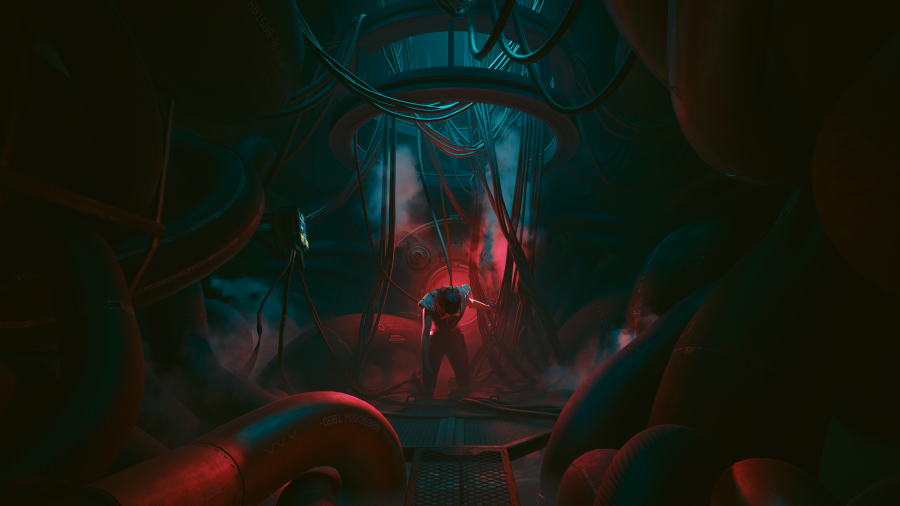
Of all the difficult choices, in all of our many games, the crux of Cyberpunk 2077: Phantom Liberty may be the toughest of all. There is no right answer, or decision of good versus evil, but simply a choice of trust, of human connection. Which of these two people — who have both worked for and against you throughout this story — do you choose to believe in?
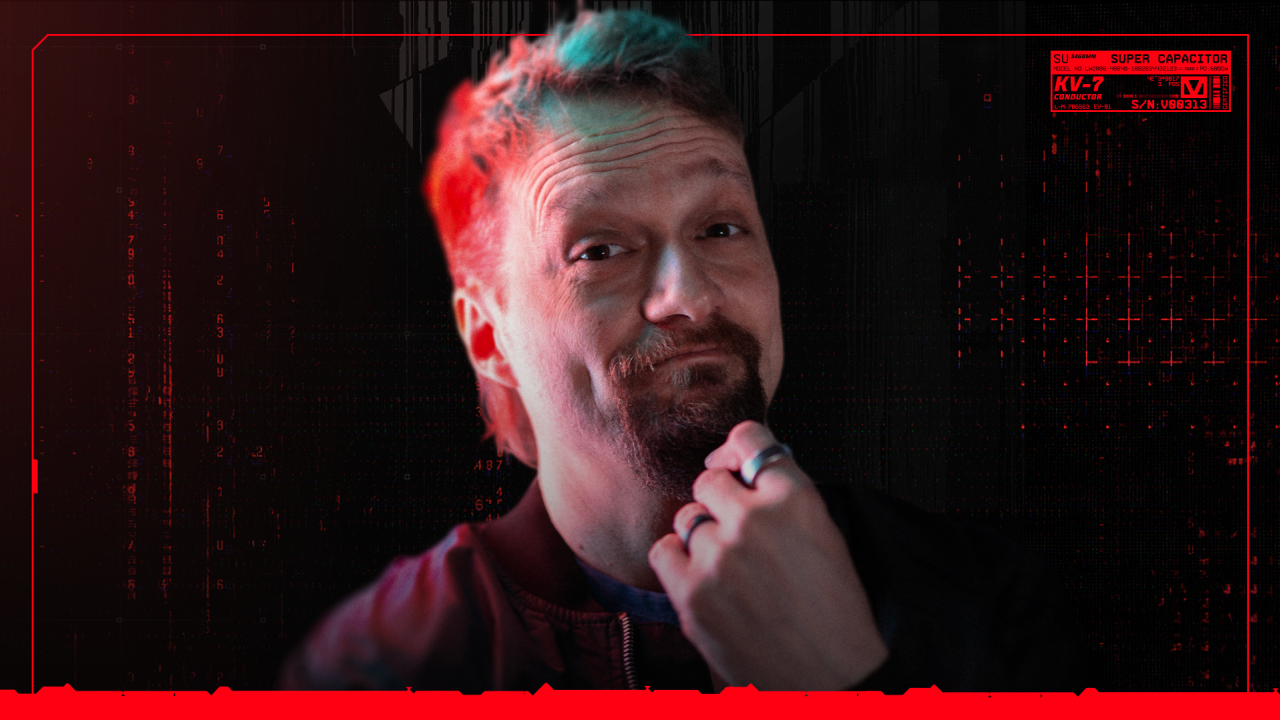
But this isn’t the toughest decision Gabe Amatangelo, our VP and Game Director on Cyberpunk 2, and before that Game Director on Phantom Liberty, has made in a video game. Flashing back to the 1980s, with Star Trek on TV and the Atari gamepad being passed between friends, a young Gabe was playing through Ultima IV: Quest of the Avatar. The goal of the game was to become the ultimate moral being, one that could guide the people of Britannia forward by displaying traits such as honesty, compassion, honor, and justice. Yet Ultima IV also made you think about things on a deeper level.
“Richard Garriott, the legendary designer, put this room in Ultima IV with starving children in cages, but if you freed them they attacked you,” Gabe says, smiling as he recalls these childhood memories. “As a kid I had no idea what this was. But it was a moral dilemma. This game had taught you how important it was to do good, but now it was letting you choose to attack these kids in order to progress. I tried a bunch of things — running past them, avoiding them, healing myself as they attacked, but it didn't work. You had to choose to succeed or choose to be good.”
These games were actually expanding my mind as a kid. From then on I was just entranced in the immersion and the moral dilemmas of role-playing games.
He points to a similar situation in Ultima VI: The False Prophet, where you’re required to find the most humble person in a village. He chose the one who said, “I’m the most humble person in the world,” and was shocked to see it didn’t work. “I remember looking up the definition of humility after,” he laughs. “So these games were actually expanding my mind as a kid. From then on I was just entranced in the immersion and the moral dilemmas of role-playing games.”
These experiences crossed Gabe’s mind more than once when making Phantom Liberty — there’s a direct throughline between the moral dilemmas experienced in the Ultima series and the ones he looked to evoke here. “Certainly back then it wasn't as nuanced; it was pretty straightforward, right? But it was the first foray, and I applaud the Ultima series for being among the first to do it,” he says. “Video games have grown, so today we can be more nuanced and sophisticated, but those emotions and decisions should still be there for the player. In Phantom Liberty, whenever something was too black or white, in quest design or the narrative or wherever, you call it out and say, ‘That's not the game we're making. That's not the scenario we're putting players in.’”
__________________________
Iteration
Being willing to say something isn’t quite right, and always challenging things to be better, is a core aspect of creating games at CD PROJEKT RED. “It’s something that I try to instill, because challenging assumptions is very important,” he says. “This is my one superpower. If someone says, ‘This is how it is,’ then I ask, ‘But why?’ Even as a child, Gabe’s parents would point out just how often he questioned things (though his grandmother would encourage it). “This is part of CD PROJEKT RED culture,” he says. “We’re always wanting to do more.”
The introduction to Phantom Liberty — the checkpoint leading into Dogtown for the first time — went through many iterations, to the point where everyone on the development team was calling it Gabe’s Wall. “It set the stage and tone for the entire expansion, so I was really focused on it for a long period of time,” he says. At one point, for example, there were too many suitcases piled up. But the entrance to Dogtown isn’t a tourist destination. So the team started here, then tweaked, and changed, and iterated again and again until it felt right. “You have to balance that with responsible development and closing, of course. But that process is important to the end product, the end experience.”
Even after getting my first job I was still modding at night — creating my own stories, my own worlds.
Gabe was 12 or 13 when he began making his own games. He taught himself BASIC programming language, and together with his brother’s art and stories, the two would tinker with different projects and make games of their own. “We put our skills together and just started making things, little side-scrollers,” he says. “I remember a helicopter dropping bombs on things, for example; it was very inspired by a Nintendo game I think I was playing at the time.”
A few years later he began modding Unreal Tournament, but Gabe’s magnum opus was in Neverwinter Nights — coincidentally, the engine from which CD PROJEKT RED’s original game, The Witcher, was created. “I put all kinds of adventures on the forums, and would see what people were responding to,” he says. One of his first, and favorites, began with the player waking up with no memories, surrounded by dead bodies in some sort of ritual gone wrong. Over the course of the game, they begin to piece together the truth, that they’d aspired to be a lich and lured friends to the ritual to sacrifice them. And in the end, the player has to decide whether they want to continue as the good guy or the bad guy. “I was making stuff like this well into my teens, and even after getting my first job I was still modding at night — creating my own stories, my own worlds.”
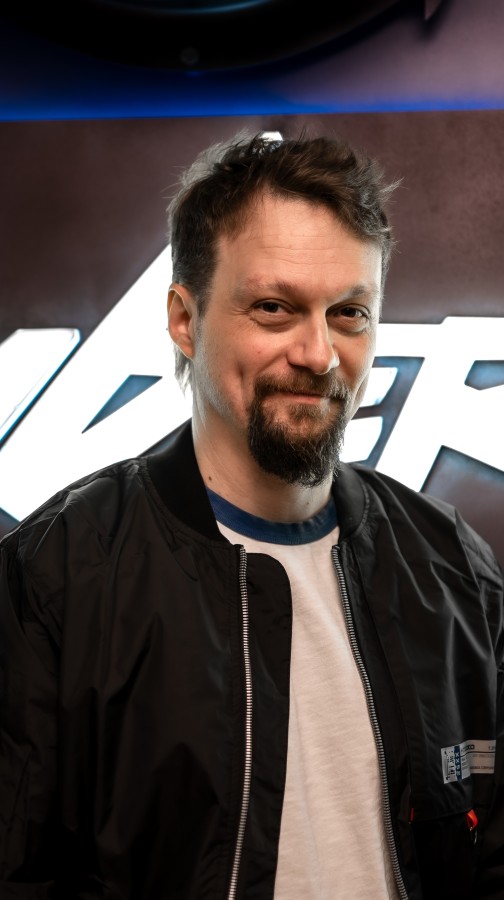
It didn’t take long for Gabe to realize he should be working in game dev full time.
__________________________
Building
Gabe’s first job in the industry was as a writer on Dark Age of Camelot from Mythic Entertainment, though he soon moved over to another of its projects, Warhammer Online: Age of Reckoning. Here he led the Public Quests team, working on environmental storytelling elements to make the world feel active and alive, and after launch Gabe was asked to take over the entire game.
“I think a lot of it had to do with the fact I had some technical and some writing skills,” he says. “I was able to balance both things, which I think is instrumental in creating video games — you need both technical understanding and creativity.” But Gabe’s success at Mythic Entertainment also came as an extension of his desire to ask questions, to push things. “I would get up and talk,” he laughs. “I'd be writing something and I'd think, ‘I want to do this, but I don't know what the environment is going to be.’ So I just decided to get up from my desk and go talk to the Environment Artist.” At the time, this was unusual. People would give funny looks, assume something was wrong, or ask what he’s doing. “But I just started doing that and, yeah, it worked out well.”
I try to focus everyone on the reason they joined CD PROJEKT RED, the thing they love about what they do, what inspires them.
Today, cross-team collaboration is a fundamental part of how we create games. This was a little simpler in the early days of Cyberpunk 2, when Gabe was one of just eight people who moved to the US to establish our Boston Hub, but there are now more than 180 developers working on the game — not including our many other Boston-based REDs. Throughout that growth, maintaining our company culture was a priority. “I try to focus everyone on the reason they joined CD PROJEKT RED, the thing they love about what they do, what inspires them,” Gabe says. “And part of it is simple — we make art. So there is a shared responsibility and shared ownership over what we’re making. And we all get along; there’s a real comradery.” Walking over to someone else’s desk isn’t unusual.
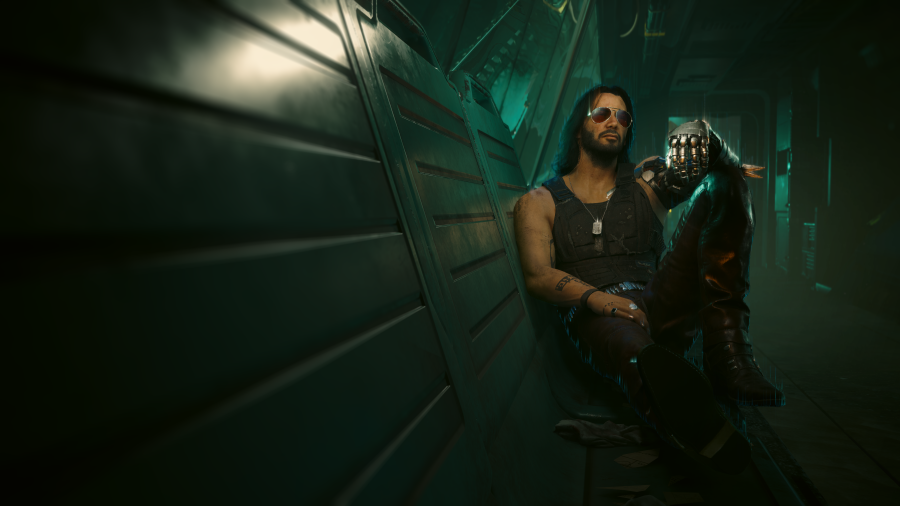
As for the top level, something Gabe wanted to tackle in particular was bottlenecked decision making. He believes that when things can’t progress without his own approval, the entire process slows down. He still gives the final say in certain moments, of course — Gabe’s Wall from Phantom Liberty is a good example. But he looks to align with his other directors as much as possible, by simply spending time talking, playing the game together, or looking at references. “If an Art Lead raises something from their team, the Art Director can make the decision,” he says. “But the Art Director also knows why we made this gameplay decision, and can explain that when neither myself or the Gameplay Director are available. I want to be so in sync with other directors that they can go and be game directors as well.”
__________________________
Ambition
When Gabe joined CD PROJEKT RED in 2020, he was looking for somewhere that fosters this creativity and makes it a priority, because he believes in its value himself. “I wanted to work somewhere that treated massive, open-world, immersive, narrative-driven games as art,” he says. “There will always be entertainment in this medium, but we need to make sure it has art as well.”
Creating an environment of trust is essential here, as Gabe wants his developers to ask questions and put forward new ideas, even if they don’t work out. “Because that helps us figure out the next step,” he says. “That safety allows for the best ideas and the most productivity.” He laughs when recalling how this emerged in the early days of Cyberpunk 2, when everyone was sharing and debating different definitions of the genre. “I had a lot of people saying, ‘Oh, cyberpunk means this.’ ‘Cyberpunk means that,’” he explains. “And I said, ‘Yes! You’re all right and you’re all wrong!’ Punk means different things to different people, but the core is the ability to pose questions — to ask why.”
There will always be entertainment in this medium, but we need to make sure it has art as well.
But what does cyberpunk mean to Gabe himself? “It’s my childhood,” he says. “Questioning things was just part of my growing up.” He was even a vocalist — a screamer, in his words — in a hardcore punk band. “And the cyber part of it is both exaggeration and expression, neon lights and loud noises. It’s about exploring the extremes of dehumanization.”
Gabe is ready to see that definition change though, when the right ideas are challenged. “I had the idea of Cyberpunk 2 in the beginning, but it evolves as I involve more people. And it evolves as I empower the team and individuals within them to contribute,” he says. “It becomes something else, right? It becomes this thing that I've shepherded, but it's ultimately a reflection of the team's hearts and souls. And I look forward to sharing that.”
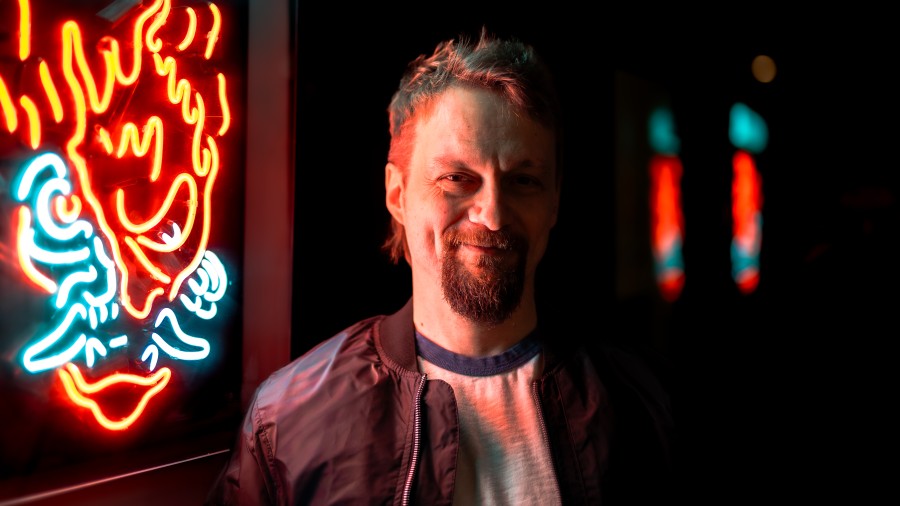
Why? “This medium of playing a video game — being immersed in a world — makes a story feel more real and impactful. It allows players, and us as developers, to experience something unique, and see other perspectives in a way that no other medium can do. Video games impacted my life. They opened my mind, and got me motivated and excited. And I want to make sure that doesn't go away for this generation or the next.”
__________________________
To hear more from Gabe, alongside Cyberpunk 2 Creative Director Igor Sarzyński, tune in to Episode 33 of AnsweRED Podcast. The pair expand on how a game’s vision takes shape and evolves, and talk about finding inspiration, learning from past projects, and more.